
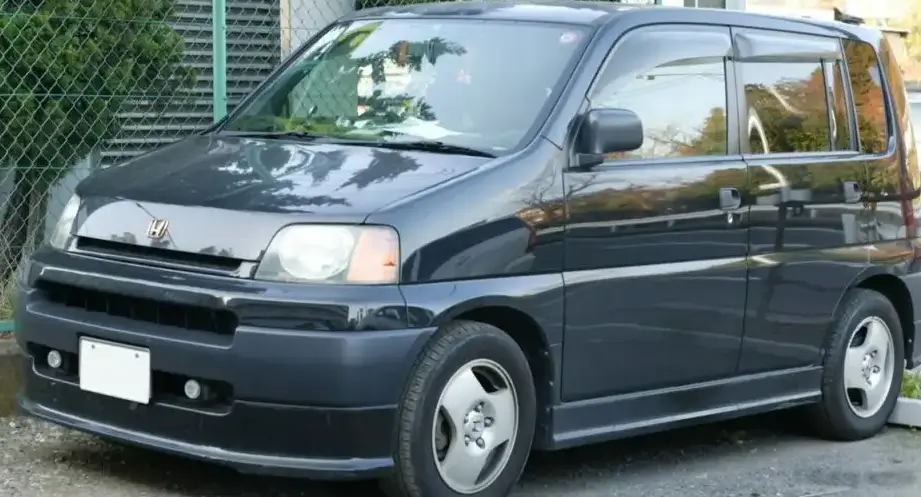
The Honda S-MX 2.0 i 16V, produced between 1996 and 2002, was a unique and somewhat unconventional offering from Honda. Categorized as a compact minivan, or “sporty multi-wagon” as Honda marketed it, the S-MX aimed to blend practicality with a more engaging driving experience than typically found in the segment. It was primarily sold in Japan, with limited grey market imports reaching other regions. The S-MX occupied a niche position, appealing to buyers seeking a versatile vehicle with a distinctive style and a focus on driver enjoyment. It was built on the Honda Civic platform, sharing many components but distinguished by its sloping roofline and innovative cabin design.
Technical Specifications
| Brand | Honda |
| Model | S-MX |
| Generation | S-MX |
| Type (Engine) | 2.0 i 16V (140 Hp) |
| Start of production | 1996 |
| End of production | 2002 |
| Powertrain Architecture | Internal Combustion engine |
| Body type | Minivan |
| Seats | 4 |
| Doors | 4 |
| Fuel consumption (urban) | 8.62 l/100 km (27.3 US mpg) |
| Fuel consumption (extra urban) | 5.35 l/100 km (44 US mpg) |
| Fuel Type | Petrol (Gasoline) |
| Maximum speed | 160 km/h (99.42 mph) |
| Weight-to-power ratio | 9.8 kg/Hp |
| Weight-to-torque ratio | 7.4 kg/Nm |
| Power | 140 Hp @ 5500 rpm |
| Power per litre | 71 Hp/l |
| Torque | 186 Nm @ 4200 rpm (137.19 lb.-ft. @ 4200 rpm) |
| Engine layout | Front, Transverse |
| Engine displacement | 1973 cm3 (120.4 cu. in.) |
| Number of cylinders | 4 |
| Engine configuration | Inline |
| Cylinder Bore | 84 mm (3.31 in.) |
| Piston Stroke | 89 mm (3.5 in.) |
| Compression ratio | 9.6:1 |
| Number of valves per cylinder | 4 |
| Fuel injection system | Multi-port manifold injection |
| Engine aspiration | Naturally aspirated engine |
| Valvetrain | DOHC |
| Kerb Weight | 1370 kg (3020.33 lbs.) |
| Max. weight | 1645 kg (3626.6 lbs.) |
| Max load | 275 kg (606.27 lbs.) |
| Trunk (boot) space – minimum | 340 l (12.01 cu. ft.) |
| Trunk (boot) space – maximum | 920 l (32.49 cu. ft.) |
| Fuel tank capacity | 65 l (17.17 US gal) |
| Length | 3935 mm (154.92 in.) |
| Width | 1695 mm (66.73 in.) |
| Height | 1735 mm (68.31 in.) |
| Wheelbase | 2500 mm (98.43 in.) |
| Front track | 1490 mm (58.66 in.) |
| Rear (Back) track | 1490 mm (58.66 in.) |
| Drivetrain Architecture | Front wheel drive |
| Number of gears | 4 |
| Type of gearbox | Automatic transmission |
| Front suspension | Spring Strut |
| Rear suspension | Double wishbone |
| Front brakes | Disc |
| Rear brakes | Drum |
| Assisting systems | ABS (Anti-lock braking system) |
| Steering type | Steering rack and pinion |
| Power steering | Hydraulic Steering |
| Tires size | 195/65 R15 |
| Wheel rims size | 15 |
Powertrain & Engine Architecture
The S-MX 2.0 i 16V was powered by Honda’s F20B inline-four cylinder engine. This engine, part of the F-series family, was a naturally aspirated 1973cc unit featuring a double overhead camshaft (DOHC) valvetrain and multi-point fuel injection. The 16 valves (four per cylinder) contributed to its relatively high output for its displacement. The engine produced 140 horsepower at 5500 rpm and 186 Nm (137.19 lb-ft) of torque at 4200 rpm. This power was delivered to the front wheels through a four-speed automatic transmission. While a five-speed manual transmission was available on other S-MX trims, the automatic was positioned as the more comfort-oriented option. The F20B engine was known for its reliability and smooth power delivery, though it wasn’t considered a particularly high-performance engine compared to some of its contemporaries.
Driving Characteristics
The S-MX 2.0 i 16V with the automatic transmission offered a comfortable and relatively relaxed driving experience. The four-speed automatic, while not offering the most aggressive gear ratios, provided smooth shifts and adequate acceleration for everyday driving. Compared to the five-speed manual version, the automatic S-MX felt less sporty and responsive. The automatic transmission dulled the engine’s performance somewhat, requiring more planning when overtaking or merging onto highways. However, the automatic was well-suited to urban driving, offering ease of use and reducing driver fatigue. The S-MX’s suspension provided a good balance between comfort and handling, making it a pleasant vehicle to drive on a variety of road surfaces.
Equipment & Trim Levels
The S-MX 2.0 i 16V typically came equipped with a reasonable level of standard features. These included power windows, power locks, air conditioning, and an AM/FM radio. Higher trim levels offered options such as alloy wheels, a sunroof, and upgraded interior upholstery. The interior design of the S-MX was notable for its innovative “dual-level” dashboard, which placed frequently used controls within easy reach of the driver. The seats were comfortable and supportive, and the cabin offered ample space for four passengers. The rear seats could be folded down to increase cargo capacity, adding to the vehicle’s versatility.
Chassis & Braking
The S-MX utilized a front-engine, front-wheel-drive layout. The front suspension consisted of MacPherson strut springs, while the rear employed a double wishbone setup. This suspension configuration provided a comfortable ride and decent handling characteristics. Braking duties were handled by disc brakes at the front and drum brakes at the rear. An Anti-lock Braking System (ABS) was standard, enhancing safety by preventing wheel lockup during hard braking. The steering was rack-and-pinion with hydraulic power assistance, providing light and precise steering feel.
Market Reception & Comparison
The S-MX was generally well-received in Japan as a stylish and practical vehicle. Critics praised its unique design, spacious interior, and comfortable ride. However, the automatic transmission was sometimes criticized for detracting from the driving experience. Compared to other trims, the 2.0 i 16V automatic offered a balance between performance and fuel economy. The manual transmission version provided more engaging driving dynamics, while the lower-powered 1.8L engine prioritized fuel efficiency. The S-MX competed with other compact minivans such as the Toyota Vista Emina and the Nissan Liberta Villa.
Legacy
The Honda S-MX, while not a mainstream success outside of Japan, has gained a cult following among enthusiasts. The F20B engine is known for its durability and relatively simple maintenance requirements. The automatic transmission, while not the sportiest option, has proven to be reliable. Today, well-maintained S-MX models are sought after by collectors and enthusiasts who appreciate their unique styling and Honda’s reputation for quality. The S-MX represents a unique chapter in Honda’s history, showcasing the company’s willingness to experiment with different vehicle concepts and designs. Its blend of practicality, style, and driving enjoyment continues to appeal to a dedicated group of fans.
