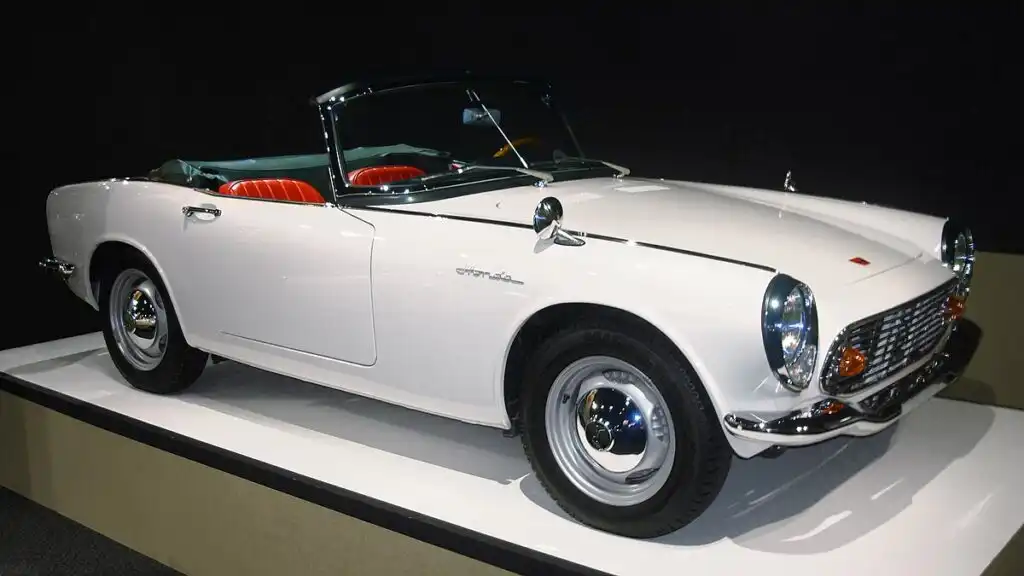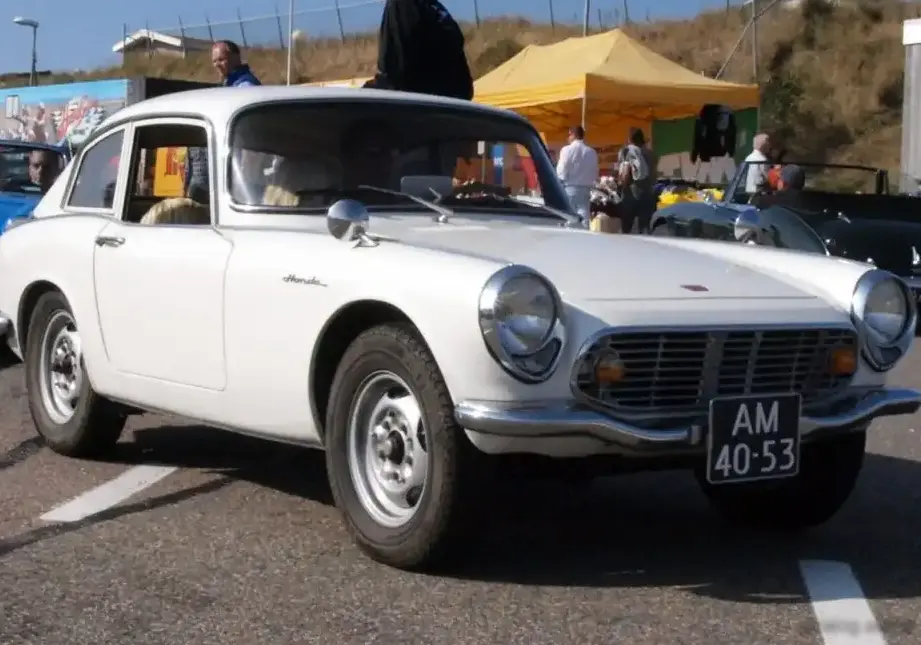
The Honda S600 Coupe, produced between 1964 and 1966, represents a pivotal moment in Honda’s early foray into sports car manufacturing. Positioned as the successor to the S500, the S600 was designed to offer a more refined and powerful driving experience while remaining accessible to a wider audience. It was a key model in establishing Honda’s reputation for engineering innovation and reliability, particularly within the burgeoning Japanese automotive export market. The S600 Coupe, a two-door, four-seater vehicle, was built on a dedicated platform and served as a precursor to the later S800, further solidifying Honda’s commitment to small, sporty roadsters. This specific variant, equipped with the 606cc engine producing 57 horsepower, was the entry point into the S600 range.
Technical Specifications
| Brand | Honda |
| Model | S600 |
| Generation | S600 Coupe |
| Type (Engine) | 0.6 (57 Hp) |
| Start of production | 1964 |
| End of production | 1966 |
| Powertrain Architecture | Internal Combustion engine |
| Body type | Coupe |
| Seats | 4 |
| Doors | 2 |
| Fuel consumption (combined) | 6.6 l/100 km (35.6 US mpg, 42.8 UK mpg, 15.2 km/l) |
| Fuel Type | Petrol (Gasoline) |
| Maximum speed | 145 km/h (90.1 mph) |
| Weight-to-power ratio | 12.8 kg/Hp, 78.1 Hp/tonne |
| Weight-to-torque ratio | 14.3 kg/Nm, 69.9 Nm/tonne |
| Power | 57 Hp @ 8500 rpm |
| Power per litre | 94.1 Hp/l |
| Torque | 51 Nm @ 5500 rpm (37.62 lb.-ft. @ 5500 rpm) |
| Engine layout | Front, Longitudinal |
| Engine displacement | 606 cm3 (36.98 cu. in.) |
| Number of cylinders | 4 |
| Engine configuration | Inline |
| Cylinder Bore | 54.61 mm (2.15 in.) |
| Piston Stroke | 65.02 mm (2.56 in.) |
| Compression ratio | 9.5:1 |
| Number of valves per cylinder | 4 |
| Fuel injection system | Carburettor |
| Engine aspiration | Naturally aspirated engine |
| Valvetrain | DOHC |
| Engine oil capacity | 3.2 l (3.38 US qt | 2.82 UK qt) |
| Coolant | 6 l (6.34 US qt | 5.28 UK qt) |
| Kerb Weight | 730 kg (1609.37 lbs.) |
| Fuel tank capacity | 32 l (8.45 US gal | 7.04 UK gal) |
| Length | 3302 mm (130 in.) |
| Width | 1397 mm (55 in.) |
| Height | 1194 mm (47.01 in.) |
| Wheelbase | 2007 mm (79.02 in.) |
| Front track | 1151 mm (45.31 in.) |
| Rear track | 1128 mm (44.41 in.) |
| Ride height (ground clearance) | 160 mm (6.3 in.) |
| Minimum turning circle | 8.6 m (28.22 ft.) |
| Drivetrain Architecture | Rear wheel drive |
| Drive wheel | Rear wheel drive |
| Number of gears and type of gearbox | 4 gears, manual transmission |
| Front suspension | Wishbone, Torsion |
| Rear suspension | Coil spring |
| Front brakes | Disc |
| Rear brakes | Disc |
| Steering type | Steering rack and pinion |
Powertrain & Engine Architecture
The heart of the S600 Coupe was its 606cc inline-four cylinder engine. Designated as the engine code, this engine was a significant advancement for Honda, featuring a double overhead camshaft (DOHC) valvetrain – a relatively sophisticated design for a car of this displacement and era. This DOHC configuration, coupled with four valves per cylinder, allowed for improved breathing and higher engine speeds, contributing to the engine’s impressive 8500 rpm redline. Fuel delivery was managed by a pair of Mikuni carburetors. The engine’s longitudinal front-engine, rear-wheel-drive layout was a common configuration for sports cars of the time, providing a balanced weight distribution. The S600 was exclusively offered with a four-speed manual transmission, designed to maximize the engine’s potential and provide a direct connection between driver and machine.
Driving Characteristics
The 57 horsepower output of the S600 Coupe, while modest by modern standards, was substantial for a car weighing just over 730 kg (1609 lbs). This resulted in a lively and engaging driving experience. The engine’s high-revving nature demanded frequent gear changes to stay within its powerband, but the responsive throttle and precise manual gearbox made this a rewarding process. Compared to the later S800, which offered more power, the S600 prioritized nimble handling and a more accessible driving experience. The relatively short wheelbase contributed to quick steering response, making the car feel agile and playful on winding roads. While not a high-speed tourer, the S600 was perfectly suited for spirited driving on backroads and offered a unique and enjoyable connection to the driving experience.
Equipment & Trim Levels
The S600 Coupe was relatively spartan in terms of standard equipment, reflecting its focus on performance and affordability. The interior featured simple, functional instrumentation, including a speedometer, tachometer, and fuel gauge. Seats were typically upholstered in vinyl, and the dashboard was constructed from durable materials. Optional extras included a radio, heater, and upgraded interior trim. The Coupe body style offered a degree of practicality compared to the open-top roadster, with a usable rear seat (though space was limited) and a more secure cabin. The S600 wasn’t about luxury; it was about providing a pure, unadulterated sports car experience.
Chassis & Braking
The S600 Coupe utilized a robust chassis construction, featuring a ladder frame with independent front suspension utilizing wishbones and torsion bars. The rear suspension employed a coil spring setup. Braking duties were handled by disc brakes on all four wheels, a relatively advanced feature for a car in this class during the 1960s. The steering system was a rack and pinion setup, providing precise and responsive steering feel. The car’s lightweight construction and well-tuned suspension contributed to its excellent handling characteristics.
Market Reception & Comparison
The Honda S600 Coupe was generally well-received by automotive critics, who praised its lively performance, nimble handling, and innovative engine design. It was often compared to other small sports cars of the era, such as the MG Midget and the Triumph Spitfire. The S600 offered a more sophisticated engine and a higher level of engineering refinement than many of its competitors. Fuel economy was reasonable for a sports car of the time, and reliability was generally good. However, the S600’s relatively small size and limited practicality meant it wasn’t a car for everyone. The S800, with its larger engine and improved performance, eventually superseded the S600 in the Honda lineup.
Legacy
The Honda S600 Coupe holds a significant place in automotive history as one of the first Japanese sports cars to gain widespread recognition in international markets. Its innovative engine design and engaging driving dynamics helped to establish Honda as a serious player in the automotive industry. Today, the S600 Coupe is a highly sought-after classic car, prized by collectors for its rarity, historical significance, and unique driving experience. The 606cc engine, while requiring regular maintenance, is generally considered to be a durable and reliable unit when properly cared for. The S600’s legacy continues to inspire Honda’s commitment to building sporty and innovative vehicles.