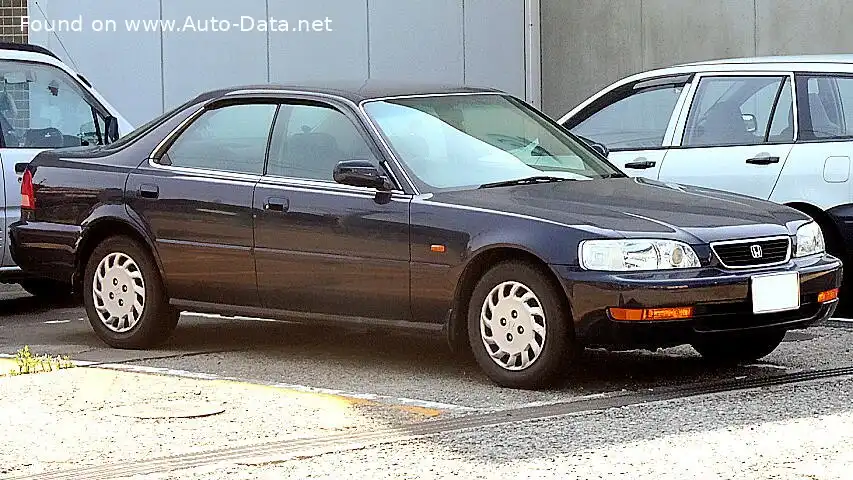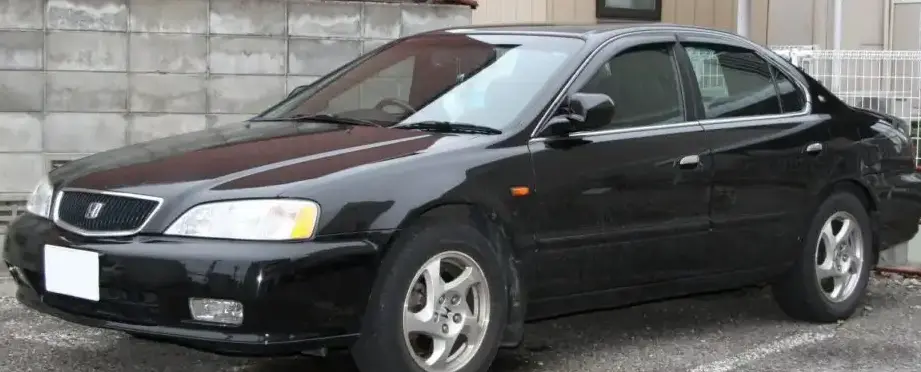
The Honda Saber (UA4) 2.5 i V6 24V, produced between 1998 and 2003, represents a significant offering from Honda during a period of increasing sophistication in Japanese automotive design. Positioned as a comfortable and relatively luxurious sedan, the Saber aimed to provide a more upscale experience than Honda’s more mainstream offerings like the Accord. The UA4 generation, specifically with the 2.5-liter V6 engine and four-speed automatic transmission, was primarily marketed in Japan, catering to buyers seeking a blend of performance, refinement, and spaciousness. It was built on the platform shared with the Honda Inspire, offering a similar driving experience but with slightly different styling and trim levels.
Technical Specifications
| Brand | Honda |
| Model | Saber |
| Generation | Saber (UA4) |
| Type (Engine) | 2.5 i V6 24V (200 Hp) |
| Start of production | 1998 year |
| End of production | 2003 year |
| Powertrain Architecture | Internal Combustion engine |
| Body type | Sedan |
| Seats | 5 |
| Doors | 4 |
| Fuel consumption (urban) | 9.8 l/100 km (24 US mpg, 28.8 UK mpg, 10.2 km/l) |
| Fuel Type | Petrol (Gasoline) |
| Weight-to-power ratio | 7.5 kg/Hp, 133.3 Hp/tonne |
| Weight-to-torque ratio | 6.3 kg/Nm, 160 Nm/tonne |
| Power | 200 Hp @ 6200 rpm |
| Power per litre | 80.2 Hp/l |
| Torque | 240 Nm @ 4600 rpm (177.01 lb.-ft. @ 4600 rpm) |
| Engine layout | Front, Longitudinal |
| Engine displacement | 2495 cm3 (152.25 cu. in.) |
| Number of cylinders | 6 |
| Engine configuration | V-engine |
| Cylinder Bore | 86 mm (3.39 in.) |
| Piston Stroke | 71.6 mm (2.82 in.) |
| Compression ratio | 10.5:1 |
| Number of valves per cylinder | 4 |
| Fuel injection system | Multi-port manifold injection |
| Engine aspiration | Naturally aspirated engine |
| Valvetrain | OHC |
| Kerb Weight | 1500 kg (3306.93 lbs.) |
| Max. weight | 1775 kg (3913.21 lbs.) |
| Max load | 275 kg (606.27 lbs.) |
| Fuel tank capacity | 65 l (17.17 US gal | 14.3 UK gal) |
| Length | 4840 mm (190.55 in.) |
| Width | 1785 mm (70.28 in.) |
| Height | 1420 mm (55.91 in.) |
| Wheelbase | 2745 mm (108.07 in.) |
| Front track | 1555 mm (61.22 in.) |
| Rear track | 1535 mm (60.43 in.) |
| Drivetrain Architecture | The Internal combustion engine (ICE) drives the front wheels of the vehicle. |
| Drive wheel | Front wheel drive |
| Number of gears and type of gearbox | 4 gears, automatic transmission |
| Front suspension | Coil spring |
| Rear suspension | Coil spring |
| Front brakes | Ventilated discs |
| Rear brakes | Disc |
| Assisting systems | ABS (Anti-lock braking system) |
| Steering type | Steering rack and pinion |
| Power steering | Hydraulic Steering |
| Tires size | 205/60 R15 |
Powertrain & Engine Architecture
The heart of the UA4 Saber 2.5 i is the J35A engine, a 2.5-liter V6 boasting 200 horsepower at 6200 rpm and 240 Nm (177 lb-ft) of torque at 4600 rpm. This engine utilizes a naturally aspirated configuration with a multi-port fuel injection system and an overhead camshaft (OHC) valvetrain. The J35A is known for its relatively smooth operation and decent power output for its displacement. The four-speed automatic transmission, while not as sophisticated as modern transmissions with more gears, was chosen for its reliability and focus on comfortable cruising. This transmission featured typical torque converter lock-up for improved fuel efficiency at highway speeds. The engine is longitudinally mounted, driving the front wheels.
Driving Characteristics
The Saber 2.5 i with the automatic transmission offered a comfortable and refined driving experience. Acceleration was adequate for everyday driving, but it wasn’t particularly sporty. The four-speed automatic, while smooth, lacked the responsiveness of manual transmissions or more modern automatics. The gear ratios were tuned for fuel efficiency and relaxed cruising rather than aggressive acceleration. Compared to the manual transmission versions of the Saber, or higher-performance variants, the automatic felt noticeably less engaging. However, it provided a more accessible and user-friendly experience for drivers prioritizing comfort and ease of use.
Equipment & Trim Levels
The UA4 Saber 2.5 i typically came equipped with a respectable level of standard features. These included power windows, power locks, air conditioning, and a basic audio system. Higher trim levels offered upgrades such as leather upholstery, woodgrain interior trim, a sunroof, and more advanced audio systems. The interior design was generally conservative and focused on providing a comfortable and spacious environment for both driver and passengers. Optional extras often included navigation systems, upgraded sound systems, and various cosmetic enhancements.
Chassis & Braking
The Saber UA4 utilized a conventional suspension setup with coil springs at all four corners. The front suspension employed a MacPherson strut design, while the rear featured a multi-link setup. This configuration aimed to balance ride comfort with handling stability. Braking duties were handled by ventilated discs at the front and solid discs at the rear, supplemented by an Anti-lock Braking System (ABS) for enhanced safety. The steering system was a rack-and-pinion setup with hydraulic power assistance, providing a reasonably direct and responsive feel.
Market Reception & Comparison
The Honda Saber 2.5 i V6 Automatic was generally well-received in the Japanese market. Critics praised its comfortable ride, spacious interior, and refined engine. However, some noted that the automatic transmission lacked the responsiveness of the manual option and that the overall driving experience wasn’t particularly sporty. Compared to other sedans in its class, such as the Toyota Camry Gracia or the Nissan Cefiro, the Saber offered a similar level of refinement and features. Fuel economy was reasonable for a V6 engine of this size, averaging around 9.8 l/100 km in urban conditions.
Legacy
The Honda Saber UA4, particularly the 2.5 i V6 Automatic variant, has developed a modest following among enthusiasts. The J35A engine is known for its reliability, and with proper maintenance, these engines can last for many years. However, like any older vehicle, they are susceptible to age-related issues such as oil leaks and worn suspension components. In the used car market, the Saber UA4 represents a relatively affordable and comfortable option for those seeking a well-built Japanese sedan from the late 1990s and early 2000s. Its blend of practicality, refinement, and reliability has ensured its continued presence on roads today, though finding well-maintained examples is becoming increasingly challenging.