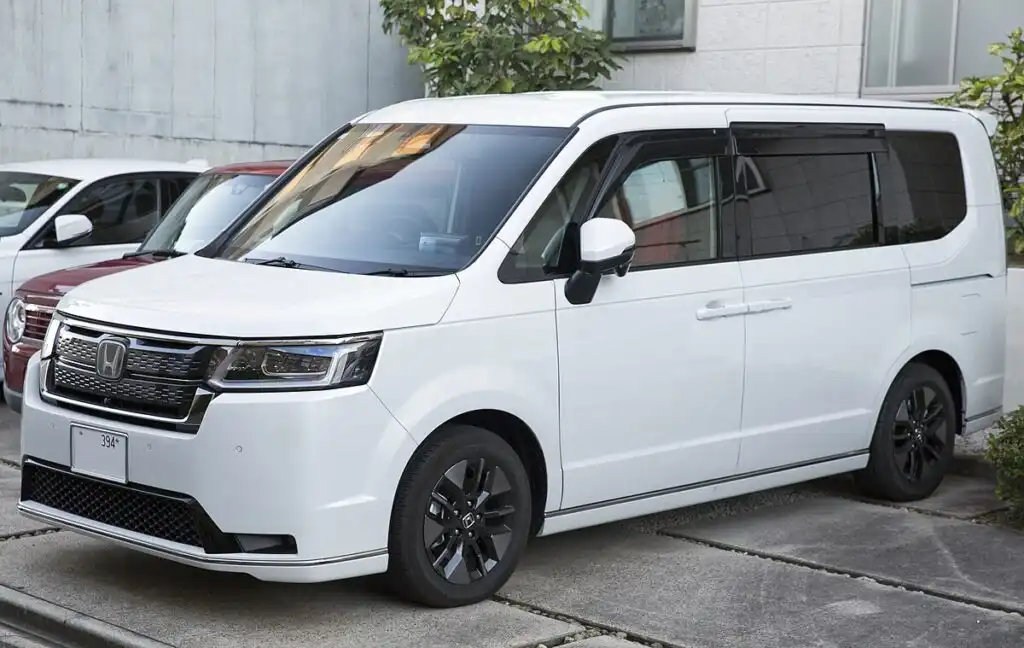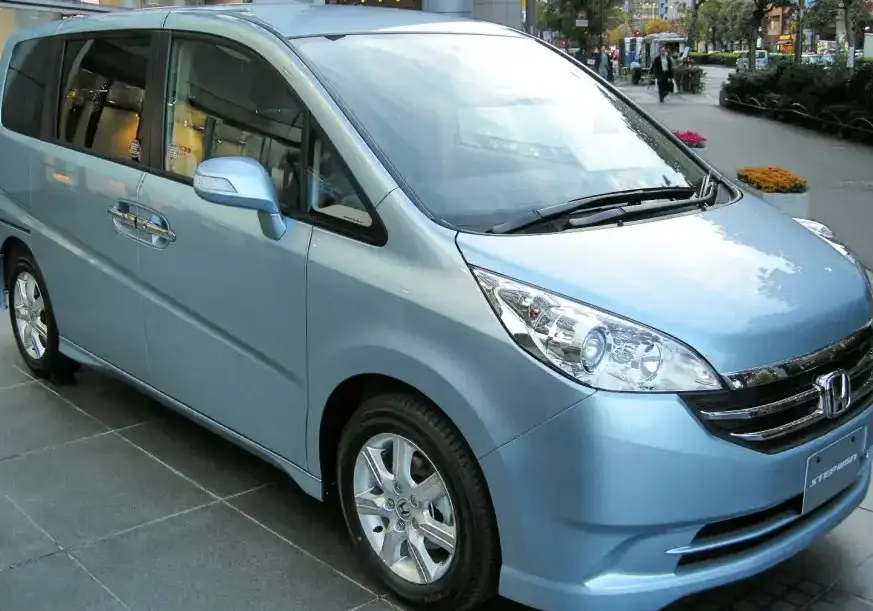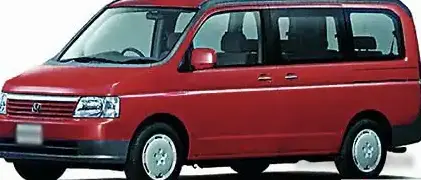
The Honda Stepwgn I (RF) 2.0 i 16V, produced between 1996 and 2001, represents Honda’s initial foray into the compact minivan segment, primarily targeted at the Japanese domestic market (JDM). This first-generation Stepwgn, designated chassis code RF, aimed to provide a spacious and practical vehicle for families, blending the functionality of a minivan with Honda’s reputation for reliability and engineering. The 2.0 i 16V variant, equipped with a 125 horsepower engine and a four-speed automatic transmission, occupied a mid-range position within the Stepwgn lineup, offering a balance between affordability and performance. It was positioned above the base 1.6L models and below the more powerful 2.2L options.
Technical Specifications
| Brand | Honda |
| Model | Stepwgn |
| Generation | Stepwgn I (RF) |
| Type (Engine) | 2.0 i 16V (125 Hp) |
| Start of production | 1996 |
| End of production | 2001 |
| Powertrain Architecture | Internal Combustion engine |
| Body type | Minivan |
| Seats | 8 |
| Doors | 4 |
| Fuel consumption (urban) | 8.93 l/100 km (26.3 US mpg) |
| Fuel consumption (extra urban) | 5.62 l/100 km (41.9 US mpg) |
| Fuel Type | Petrol (Gasoline) |
| Maximum speed | 160 km/h (99.42 mph) |
| Weight-to-power ratio | 11.6 kg/Hp |
| Weight-to-torque ratio | 8 kg/Nm |
| Power | 125 Hp @ 5500 rpm |
| Power per litre | 63.4 Hp/l |
| Torque | 181 Nm @ 4200 rpm (133.5 lb.-ft. @ 4200 rpm) |
| Engine layout | Front, Transverse |
| Engine displacement | 1973 cm3 (120.4 cu. in.) |
| Number of cylinders | 4 |
| Engine configuration | Inline |
| Cylinder Bore | 84 mm (3.31 in.) |
| Piston Stroke | 89 mm (3.5 in.) |
| Compression ratio | 9.2:1 |
| Number of valves per cylinder | 4 |
| Fuel injection system | Multi-port manifold injection |
| Engine aspiration | Naturally aspirated engine |
| Kerb Weight | 1450 kg (3196.7 lbs.) |
| Fuel tank capacity | 65 l (17.17 US gal) |
| Length | 4750 mm (187.01 in.) |
| Width | 1790 mm (70.47 in.) |
| Height | 1640 mm (64.57 in.) |
| Wheelbase | 2830 mm (111.42 in.) |
| Front track | 1520 mm (59.84 in.) |
| Rear track | 1545 mm (60.83 in.) |
| Drivetrain Architecture | Front wheel drive |
| Number of gears | 4 |
| Gearbox type | Automatic transmission |
| Front suspension | Coil spring |
| Rear suspension | Coil spring |
| Front brakes | Disc |
| Rear brakes | Drum |
| Assisting systems | ABS (Anti-lock braking system) |
| Steering type | Steering rack and pinion |
| Power steering | Hydraulic Steering |
| Tires size | 195/65 R15 |
Powertrain & Engine Architecture
The heart of the Stepwgn 2.0 i 16V is the Honda F20B inline-four cylinder engine. This engine, part of Honda’s F-series, is a naturally aspirated 1.973-liter (120.4 cubic inches) powerplant. It features a single overhead camshaft (SOHC) design with four valves per cylinder, contributing to its relatively high output for its displacement. The engine utilizes multi-point fuel injection, ensuring efficient fuel delivery and smooth operation. The F20B produces 125 horsepower at 5500 rpm and 181 Nm (133.5 lb-ft) of torque at 4200 rpm. This engine was known for its reliability and relatively simple maintenance requirements. The four-speed automatic transmission, while providing convenience, was not known for its sportiness. It was geared towards smooth, comfortable shifts rather than aggressive acceleration.
Driving Characteristics
The 2.0L automatic Stepwgn offered adequate, but not exhilarating, performance. Acceleration was sufficient for everyday driving and highway merging, but the automatic transmission did detract from the engine’s potential. The four-speed gearbox, while reliable, lacked the responsiveness of a manual transmission or a more modern automatic with additional gears. The gear ratios were optimized for fuel efficiency and comfortable cruising, resulting in a somewhat leisurely driving experience. Compared to the manual transmission versions of the Stepwgn, the automatic felt noticeably slower. The higher-output 2.2L engine variants provided a significant performance boost, but at a higher price point.
Equipment & Trim Levels
The 2.0 i 16V Stepwgn typically came equipped with features considered standard for a family minivan of its era. These included power windows and locks, air conditioning, and a basic audio system. Interior upholstery was typically cloth, with a focus on durability and practicality. Higher trim levels offered options such as upgraded audio systems, alloy wheels, and more luxurious interior appointments. The Stepwgn’s interior was designed with functionality in mind, offering flexible seating arrangements and ample storage space. The eight-seat configuration was a key selling point, making it ideal for larger families.
Chassis & Braking
The Stepwgn I utilized a front-wheel-drive layout with a relatively simple suspension setup. Both the front and rear suspensions employed coil springs and shock absorbers. The front suspension featured independent struts, while the rear utilized a torsion beam axle. Braking duties were handled by disc brakes on the front wheels and drum brakes on the rear. An Anti-lock Braking System (ABS) was included as a standard safety feature. The suspension was tuned for comfort, prioritizing a smooth ride over sporty handling. The steering system was a rack-and-pinion setup with hydraulic power assistance, providing relatively light and easy steering.
Market Reception & Comparison
The Honda Stepwgn I was well-received in the Japanese market as a practical and reliable family vehicle. Critics praised its spacious interior, flexible seating arrangements, and Honda’s reputation for build quality. The 2.0L automatic variant was considered a good all-around choice, offering a balance between performance, fuel economy, and affordability. However, some reviewers noted that the automatic transmission detracted from the engine’s potential and that the overall driving experience was not particularly engaging. Compared to other minivans in the Japanese market, such as the Toyota Estima, the Stepwgn offered a more affordable and compact alternative.
Legacy
The Honda Stepwgn I laid the foundation for subsequent generations of the Stepwgn, establishing it as a popular choice in the compact minivan segment. The F20B engine, while not a high-performance unit, proved to be remarkably durable and reliable. Today, well-maintained examples of the Stepwgn I are still found on the used car market, particularly in Japan. The 2.0L automatic variant remains a relatively affordable and practical option for those seeking a spacious and dependable family vehicle. Its simple mechanical design and readily available parts contribute to its continued viability as a used car. While not a collector’s item, the Stepwgn I represents an important chapter in Honda’s history and a significant contribution to the evolution of the minivan.