
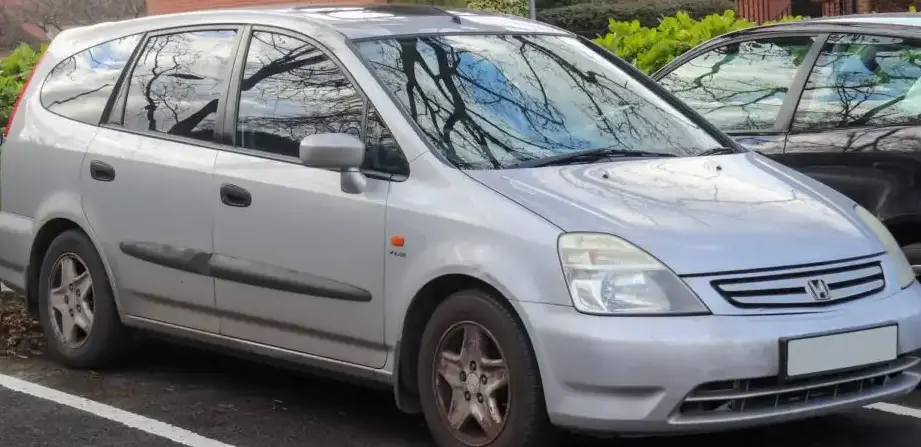
The Honda Stream 1.7i, produced between 2001 and 2007, was a compact minivan designed to offer a spacious and versatile option for families. Positioned as an entry-level variant within the Stream lineup, the 1.7i (125 hp) model aimed to provide affordable practicality without sacrificing Honda’s reputation for reliability. It was primarily marketed in Japan and several Asian and European markets, offering a unique blend of minivan functionality in a relatively small package. The Stream, in general, sought to bridge the gap between a traditional minivan and a more manageable, car-like vehicle, appealing to buyers who didn’t require the bulk of larger MPVs.
Technical Specifications
| Brand | Honda |
| Model | Stream |
| Generation | Stream |
| Type (Engine) | 1.7i (125 Hp) |
| Start of production | 2001 |
| End of production | 2007 |
| Powertrain Architecture | Internal Combustion engine |
| Body type | Minivan |
| Seats | 7 |
| Doors | 5 |
| Fuel consumption (urban) | 9.9 l/100 km (23.8 US mpg) |
| Fuel consumption (extra urban) | 6.5 l/100 km (36.2 US mpg) |
| Fuel consumption (combined) | 7.7 l/100 km (30.5 US mpg) |
| Fuel Type | Petrol (Gasoline) |
| Acceleration 0 – 100 km/h | 11.1 sec |
| Acceleration 0 – 62 mph | 11.1 sec |
| Acceleration 0 – 60 mph | 10.5 sec |
| Maximum speed | 190 km/h (118.06 mph) |
| Weight-to-power ratio | 11.5 kg/Hp |
| Weight-to-torque ratio | 9.3 kg/Nm |
| Power | 125 Hp @ 6300 rpm |
| Torque | 154 Nm @ 4800 rpm (113.58 lb.-ft. @ 4800 rpm) |
| Engine layout | Front, Transverse |
| Engine displacement | 1668 cm3 (101.79 cu. in.) |
| Number of cylinders | 4 |
| Engine configuration | Inline |
| Cylinder Bore | 75 mm (2.95 in.) |
| Piston Stroke | 94.4 mm (3.72 in.) |
| Compression ratio | 9.9:1 |
| Number of valves per cylinder | 4 |
| Fuel injection system | Multi-port manifold injection |
| Engine aspiration | Naturally aspirated engine |
| Valvetrain | DOHC |
| Engine oil capacity | 3.5 l (3.7 US qt | 3.08 UK qt) |
| Coolant capacity | 4.1 l (4.33 US qt | 3.61 UK qt) |
| Kerb Weight | 1433 kg (3159.22 lbs.) |
| Max. weight | 1990 kg (4387.2 lbs.) |
| Max load | 557 kg (1227.97 lbs.) |
| Trunk (boot) space – minimum | 158 l (5.58 cu. ft.) |
| Trunk (boot) space – maximum | 1520 l (53.68 cu. ft.) |
| Fuel tank capacity | 55 l (14.53 US gal | 12.1 UK gal) |
| Length | 4570 mm (179.92 in.) |
| Width | 1695 mm (66.73 in.) |
| Height | 1590 mm (62.6 in.) |
| Wheelbase | 2720 mm (107.09 in.) |
| Front track | 1470 mm (57.87 in.) |
| Rear track | 1490 mm (58.66 in.) |
| Drivetrain Architecture | Front wheel drive |
| Number of gears | 5 |
| Gearbox type | Manual transmission |
| Front suspension | Spring Strut |
| Rear suspension | Wishbone |
| Front brakes | Ventilated discs |
| Rear brakes | Disc |
| Assisting systems | ABS (Anti-lock braking system) |
| Steering type | Steering rack and pinion |
| Power steering | Hydraulic Steering |
| Tires size | 195/65 R15 |
Powertrain & Engine Architecture
The heart of the Stream 1.7i was the Honda D17A engine, a 1.7-liter inline-four cylinder gasoline engine. This engine utilized a single overhead camshaft (SOHC) design, although later iterations of the D17 series moved to a dual overhead camshaft (DOHC) configuration. The 1.7i employed multi-point fuel injection, delivering fuel directly to each intake port for improved combustion efficiency. The engine produced 125 horsepower at 6300 rpm and 154 Nm (113.58 lb-ft) of torque at 4800 rpm. This engine was known for its reliability and relatively simple design, making it a cost-effective choice for Honda. The Stream 1.7i was exclusively offered with a five-speed manual transmission, providing drivers with direct control over gear selection. This transmission was chosen to maximize fuel efficiency and provide a reasonably engaging driving experience, given the engine’s modest power output.
Driving Characteristics
The 1.7i Stream, with its 125 hp engine and five-speed manual transmission, offered adequate performance for everyday driving. Acceleration from 0 to 60 mph took around 10.5 seconds, and top speed was approximately 118 mph. While not particularly sporty, the engine provided sufficient power for merging onto highways and navigating city streets. The manual transmission allowed drivers to keep the engine in its optimal power band, enhancing responsiveness. Compared to higher-trim Stream models equipped with larger engines (like the 2.0L), the 1.7i felt noticeably less powerful, especially when fully loaded with passengers and cargo. However, the lighter engine weight contributed to slightly better fuel economy and handling balance. The gear ratios were tuned for efficiency, prioritizing fuel savings over outright acceleration.
Equipment & Trim Levels
The Stream 1.7i typically came with a fairly basic level of equipment, reflecting its position as the entry-level model. Standard features generally included power windows, power door locks, and air conditioning. Interior upholstery was typically cloth, and the dashboard featured a straightforward design with easy-to-use controls. Optional extras, depending on the market, could include alloy wheels, a CD player, and upgraded interior trim. The seven-seat configuration was standard, with the third-row seats folding flat to maximize cargo space. Safety features included ABS brakes and dual front airbags.
Chassis & Braking
The Stream 1.7i utilized a front-engine, front-wheel-drive layout. Suspension consisted of MacPherson struts at the front and a multi-link setup at the rear, providing a comfortable ride quality. The braking system featured ventilated discs on the front wheels and solid discs on the rear. The ABS system helped to maintain steering control during emergency braking situations. The chassis was designed to balance ride comfort with handling stability, offering a predictable and safe driving experience. The relatively lightweight engine contributed to a balanced weight distribution, further enhancing handling.
Market Reception & Comparison
The Honda Stream 1.7i was generally well-received as a practical and affordable family vehicle. Critics praised its spacious interior, versatile seating configuration, and Honda’s reputation for reliability. However, some reviewers noted that the 1.7-liter engine felt underpowered, especially when the vehicle was fully loaded. Compared to other compact minivans available at the time, the Stream offered a unique blend of practicality and driving dynamics. The 1.7i’s fuel economy was competitive, averaging around 30.5 US mpg in combined driving conditions. The higher-trim Stream models, with their larger engines, offered more performance but at the cost of increased fuel consumption and a higher purchase price.
Legacy
The Honda Stream 1.7i has proven to be a durable and reliable vehicle, with many examples still on the road today. The D17A engine is known for its longevity, and routine maintenance is relatively straightforward and inexpensive. In the used car market, the Stream 1.7i represents a good value for buyers seeking a practical and affordable family vehicle. While it may not offer the performance of higher-trim models, its reliability and fuel efficiency make it a compelling choice. The Stream, as a whole, carved out a niche for itself as a compact minivan that offered a unique alternative to larger, more cumbersome MPVs.
