
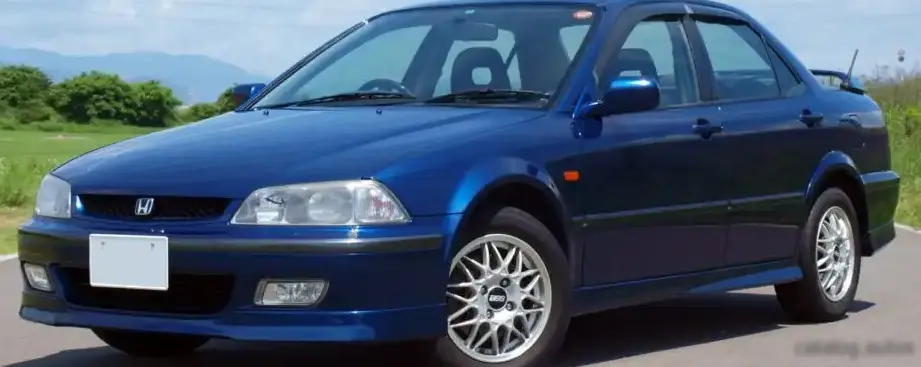
The Honda Torneo, produced between 1997 and 2002, was a mid-size sedan primarily aimed at the Japanese domestic market (JDM). Positioned as a more upscale alternative to the Honda Accord, the Torneo offered a blend of comfort, performance, and technology. The “E-CF” designation refers to the chassis code for this generation. Within the Torneo lineup, the 2.0 i 16V SiR variant, boasting 180 horsepower, represented a performance-oriented trim, slotting above the base models and offering a sportier driving experience. This model competed with other Japanese sedans like the Toyota Camry and Nissan Cefiro, offering a distinct Honda driving feel and reputation for reliability.
Technical Specifications
| Brand | Honda |
| Model | Torneo |
| Generation | Torneo (E-CF) |
| Type (Engine) | 2.0 i 16V SiR (180 Hp) |
| Start of production | 1997 |
| End of production | 2002 |
| Powertrain Architecture | Internal Combustion engine |
| Body type | Sedan |
| Seats | 5 |
| Doors | 4 |
| Fuel consumption (urban) | 8.47 l/100 km (27.8 US mpg) |
| Fuel consumption (extra urban) | 5.18 l/100 km (45.4 US mpg) |
| Fuel Type | Petrol (Gasoline) |
| Weight-to-power ratio | 7.2 kg/Hp |
| Weight-to-torque ratio | 6.8 kg/Nm |
| Power | 180 Hp @ 7000 rpm |
| Power per litre | 90.1 Hp/l |
| Torque | 192 Nm @ 5500 rpm (141.61 lb.-ft. @ 5500 rpm) |
| Engine layout | Front, Transverse |
| Engine displacement | 1997 cm3 (121.86 cu. in.) |
| Number of cylinders | 4 |
| Engine configuration | Inline |
| Cylinder Bore | 85 mm (3.35 in.) |
| Piston Stroke | 88 mm (3.46 in.) |
| Compression ratio | 11:1 |
| Number of valves per cylinder | 4 |
| Fuel injection system | Multi-port manifold injection |
| Engine aspiration | Naturally aspirated engine |
| Valvetrain | DOHC |
| Kerb Weight | 1300 kg (2866.01 lbs.) |
| Max. weight | 1575 kg (3472.28 lbs.) |
| Max load | 275 kg (606.27 lbs.) |
| Fuel tank capacity | 60 l (15.85 US gal) |
| Length | 4635 mm (182.48 in.) |
| Width | 1695 mm (66.73 in.) |
| Height | 1420 mm (55.91 in.) |
| Wheelbase | 2665 mm (104.92 in.) |
| Front track | 1480 mm (58.27 in.) |
| Rear track | 1480 mm (58.27 in.) |
| Drivetrain Architecture | Front wheel drive |
| Drive wheel | Front wheel drive |
| Number of gears | 4 |
| Type of gearbox | automatic transmission |
| Front suspension | Wishbone |
| Rear suspension | Wishbone |
| Front brakes | Ventilated discs |
| Rear brakes | Disc |
| Assisting systems | ABS (Anti-lock braking system) |
| Steering type | Steering rack and pinion |
| Tires size | 195/60 R15 |
Powertrain & Engine Architecture
The heart of the Torneo 2.0 i 16V SiR is the F20B inline-four cylinder engine. This 1997cc engine utilizes a naturally aspirated configuration with a double overhead camshaft (DOHC) valvetrain and four valves per cylinder. The engine employs multi-point fuel injection, delivering precise fuel metering for optimal combustion. The 11:1 compression ratio contributes to the engine’s spirited performance. The engine’s output of 180 horsepower at 7000 rpm and 192 Nm (141.61 lb-ft) of torque at 5500 rpm was considered respectable for its time. The engine is paired with a four-speed automatic transmission, designed for smooth shifts and ease of use. While not as engaging as a manual transmission, the automatic was favored by many buyers seeking a comfortable driving experience.
Driving Characteristics
The 2.0 i 16V SiR, equipped with the automatic transmission, offered a balance between performance and convenience. Acceleration was brisk, though not as immediate as the manual transmission variants. The automatic transmission’s gear ratios were tuned for everyday drivability, prioritizing smooth transitions over outright speed. Compared to lower-spec Torneos with smaller engines, the SiR provided noticeably more power for overtaking and highway cruising. However, it didn’t quite match the responsiveness of the manual transmission models, which allowed for more driver control. The front-wheel-drive layout provided predictable handling, although it could exhibit some torque steer under hard acceleration.
Equipment & Trim Levels
The SiR trim level came reasonably well-equipped for its era. Standard features typically included power windows, power locks, air conditioning, and a basic audio system. Interior upholstery was usually cloth, with a sporty design. The dashboard layout was functional and driver-focused. Optional extras could include alloy wheels, a sunroof, upgraded audio systems, and even leather upholstery, depending on the specific package selected. The SiR trim also often featured subtle exterior styling enhancements, such as a rear spoiler and unique badging, to differentiate it from the base models.
Chassis & Braking
The Torneo E-CF utilized a front independent suspension with wishbone configuration, providing a comfortable ride and decent handling. The rear suspension also employed a wishbone setup. Braking duties were handled by ventilated discs at the front and solid discs at the rear, providing adequate stopping power for the vehicle’s weight and performance. An Anti-lock Braking System (ABS) was standard on the SiR trim, enhancing safety by preventing wheel lockup during hard braking. The steering system was a rack and pinion setup, offering precise and responsive steering feel.
Market Reception & Comparison
The Honda Torneo 2.0 i 16V SiR was generally well-received in the Japanese market. Critics praised its comfortable ride, spacious interior, and reliable engine. The automatic transmission was seen as a positive feature by many buyers, particularly those who prioritized convenience over sporty driving dynamics. Compared to other trims in the Torneo lineup, the SiR offered a significant performance upgrade, justifying its higher price point. Fuel economy was respectable for a 2.0-liter engine, averaging around 28 mpg in urban driving and 45 mpg on the highway. Reliability was a strong point, as with most Honda vehicles of this era.
Legacy
The Honda Torneo, while not widely exported outside of Japan, remains a popular choice among enthusiasts seeking a reliable and well-built JDM sedan. The F20B engine is known for its durability and relatively simple maintenance requirements. The automatic transmission, while not the most exciting, has proven to be quite robust over time. Today, well-maintained Torneo 2.0 i 16V SiR models are sought after by collectors and enthusiasts, commanding reasonable prices in the used car market. Its reputation for reliability and comfortable driving experience ensures its continued appeal for years to come.
