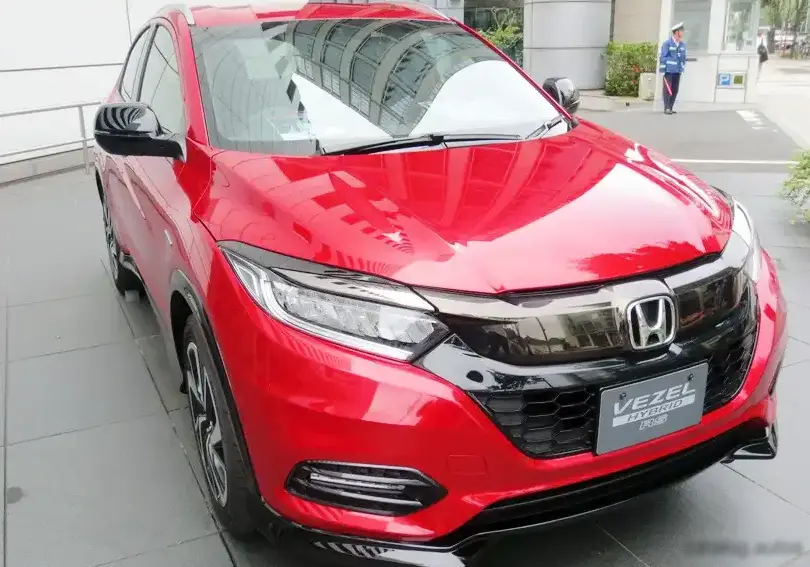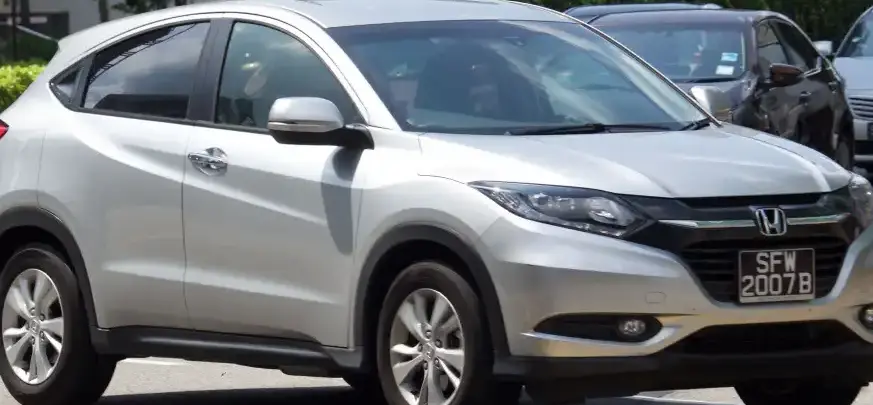
The Honda Vezel 1.5 i-VTEC (131 Hp) 4WD CVT, marketed as the Honda HR-V in many regions including North America, represents a significant entry in the subcompact crossover SUV segment. Produced between 2014 and 2018, this variant played a crucial role in establishing the Vezel/HR-V as a popular choice for buyers seeking a versatile, fuel-efficient, and technologically advanced vehicle. It was positioned as a mid-range offering within the broader Vezel lineup, slotting between the base 1.5L front-wheel-drive models and the more performance-oriented (in some markets) 1.6L options.
Technical Specifications
| Brand | Honda |
| Model | Vezel |
| Generation | Vezel |
| Type (Engine) | 1.5 i-VTEC (131 Hp) 4WD CVT |
| Start of production | 2014 |
| End of production | 2018 |
| Powertrain Architecture | Internal Combustion engine |
| Body type | SUV |
| Seats | 5 |
| Doors | 5 |
| Fuel consumption (combined) | 5.3 l/100 km (44.4 US mpg, 53.3 UK mpg, 18.9 km/l) |
| Fuel Type | Petrol (Gasoline) |
| Weight-to-power ratio | 9.7 kg/Hp, 103.1 Hp/tonne |
| Weight-to-torque ratio | 8.2 kg/Nm, 122 Nm/tonne |
| Power | 131 Hp @ 6600 rpm |
| Power per litre | 87.6 Hp/l |
| Torque | 155 Nm @ 4600 rpm (114.32 lb.-ft. @ 4600 rpm) |
| Engine layout | Front, Transverse |
| Engine Model/Code | L15B |
| Engine displacement | 1496 cm3 (91.29 cu. in.) |
| Number of cylinders | 4 |
| Engine configuration | Inline |
| Cylinder Bore | 73 mm (2.87 in.) |
| Piston Stroke | 89.4 mm (3.52 in.) |
| Compression ratio | 11.5:1 |
| Number of valves per cylinder | 4 |
| Fuel injection system | Direct injection |
| Engine aspiration | Naturally aspirated engine |
| Valvetrain | DOHC, i-VTEC |
| Engine oil capacity | 3.3 l (3.49 US qt | 2.9 UK qt) |
| Coolant | 3.63 l (3.84 US qt | 3.19 UK qt) |
| Kerb Weight | 1270 kg (2799.87 lbs.) |
| Fuel tank capacity | 40 l (10.57 US gal | 8.8 UK gal) |
| Length | 4295 mm (169.09 in.) |
| Width | 1770 mm (69.69 in.) |
| Height | 1605 mm (63.19 in.) |
| Wheelbase | 2610 mm (102.76 in.) |
| Front track | 1535 mm (60.43 in.) |
| Rear track | 1540 mm (60.63 in.) |
| Ride height (ground clearance) | 170 mm (6.69 in.) |
| Minimum turning circle | 10.6 m (34.78 ft.) |
| Drive wheel | All wheel drive (4×4) |
| Number of gears and type of gearbox | automatic transmission CVT |
| Front suspension | Independent type McPherson |
| Rear suspension | Torsion |
| Front brakes | Ventilated discs |
| Rear brakes | Disc |
| Assisting systems | ABS (Anti-lock braking system) |
| Steering type | Steering rack and pinion |
| Power steering | Electric Steering |
| Tires size | 215/60 R16 95H |
| Wheel rims size | 16 |
INTRODUCTION
The Honda Vezel, launched in 2014, represented Honda’s entry into the burgeoning subcompact crossover market, particularly strong in Asia and Europe. The 1.5 i-VTEC 4WD CVT variant was a key component of the initial lineup, offering a balance of fuel efficiency, practicality, and all-weather capability. Built on the Global Small Platform (GSP), shared with the Honda Fit/Jazz, the Vezel aimed to provide a spacious interior and versatile cargo area within a relatively small footprint. This generation (RU series) was notable for its distinctive styling, particularly the hidden rear door handles which contributed to a coupe-like profile.
Powertrain & Engine Architecture
At the heart of the Vezel 1.5 i-VTEC 4WD CVT lies the L15B engine, a 1.5-liter inline-four cylinder gasoline engine. This engine is part of Honda’s Earth Dreams Technology series, focusing on efficiency and reduced emissions. The L15B utilizes direct injection, enhancing combustion efficiency and power output. The engine features a double overhead camshaft (DOHC) valvetrain and Honda’s intelligent Variable Valve Timing and Lift Electronic Control (i-VTEC) system. i-VTEC allows for optimized valve timing and lift based on engine speed and load, improving both fuel economy and performance. The engine is paired with a Continuously Variable Transmission (CVT), designed to provide smooth, seamless acceleration and maximize fuel efficiency. The CVT in this application is electronically controlled and features simulated shift points to mimic the feel of a traditional automatic transmission. The all-wheel-drive system is a real-time system, engaging the rear wheels when traction is needed, enhancing stability in slippery conditions.
Driving Characteristics
The 131 horsepower and 155 Nm (114 lb-ft) of torque produced by the 1.5L engine and CVT combination resulted in adequate, but not exhilarating, performance. Acceleration was generally smooth and linear, but the CVT could sometimes feel slightly sluggish during quick overtaking maneuvers. The CVT’s programming prioritized fuel economy over outright performance. Compared to the available manual transmission options (in some markets) or the more powerful 1.6L engine, the 1.5L CVT felt less responsive. However, the CVT’s smooth operation and the all-wheel-drive system provided a comfortable and confident driving experience, particularly in urban environments and inclement weather. The gear ratios were optimized for fuel efficiency, resulting in a relaxed cruising experience on the highway.
Equipment & Trim Levels
The 1.5 i-VTEC 4WD CVT trim typically included standard features such as air conditioning, power windows and locks, a multi-function steering wheel, and a basic audio system. Higher trim levels offered upgrades like alloy wheels, a touchscreen infotainment system with Bluetooth connectivity, a rearview camera, and automatic climate control. Interior upholstery was typically cloth, with optional leather available on higher trims. Safety features included ABS, airbags, and stability control. Optional extras often included a sunroof, navigation system, and advanced driver-assistance systems (ADAS) depending on the market.
Chassis & Braking
The Vezel’s chassis utilized a McPherson strut front suspension and a torsion beam rear suspension. This setup provided a good balance of ride comfort and handling. The torsion beam rear suspension was a cost-effective solution that minimized complexity while still offering acceptable handling characteristics. Braking duties were handled by ventilated discs at the front and solid discs at the rear. The ABS system helped to prevent wheel lockup during hard braking, enhancing safety. The vehicle’s relatively light weight (1270 kg / 2799.87 lbs) contributed to its nimble handling and reasonable braking performance.
Market Reception & Comparison
The Honda Vezel 1.5 i-VTEC 4WD CVT was generally well-received by critics and consumers alike. It was praised for its fuel efficiency, spacious interior, and versatile cargo area. However, some reviewers noted that the engine lacked outright power, particularly when fully loaded or driving uphill. Compared to other subcompact crossovers, the Vezel offered a compelling combination of features and value. The 1.5L CVT variant was often seen as a practical and economical choice for buyers who prioritized fuel efficiency and all-weather capability over sporty performance. The 1.6L models offered more power but came at a higher price point and with slightly lower fuel economy.
Legacy
The Honda Vezel/HR-V quickly became a sales success for Honda, establishing itself as a key player in the subcompact crossover segment. The 1.5 i-VTEC 4WD CVT powertrain proved to be relatively reliable, with few widespread mechanical issues reported. In the used car market, these models continue to be sought after for their fuel efficiency, practicality, and Honda’s reputation for reliability. While the CVT transmission requires regular maintenance (fluid changes), it generally holds up well over time. The Vezel’s innovative design and versatile interior have contributed to its enduring popularity, making it a solid choice for buyers seeking a compact and efficient SUV.