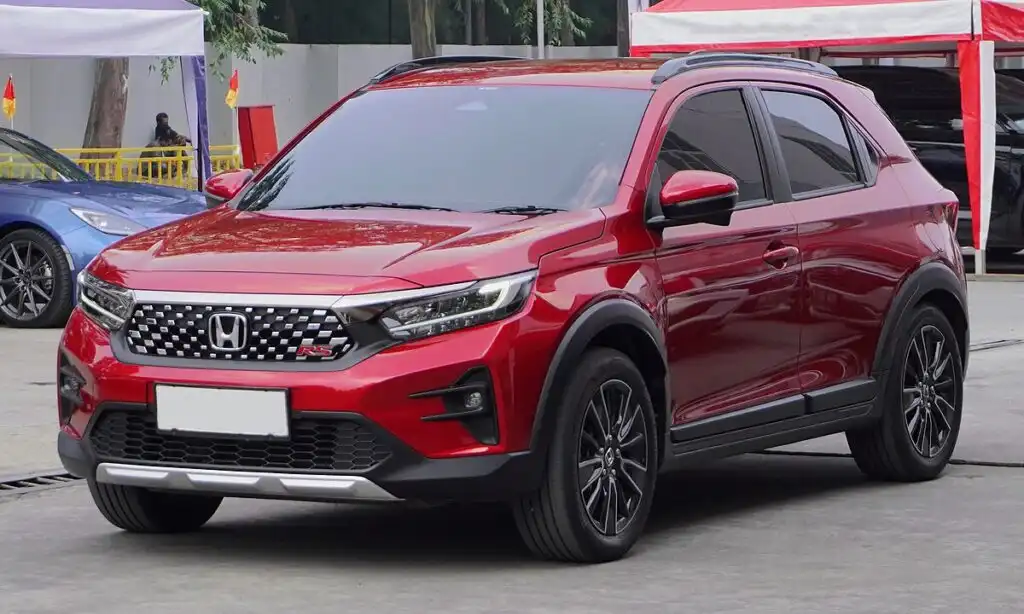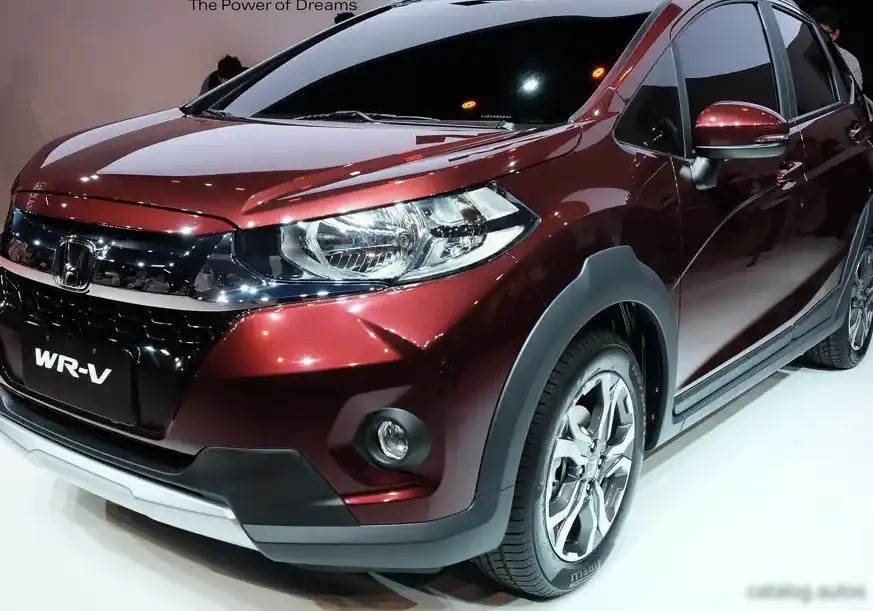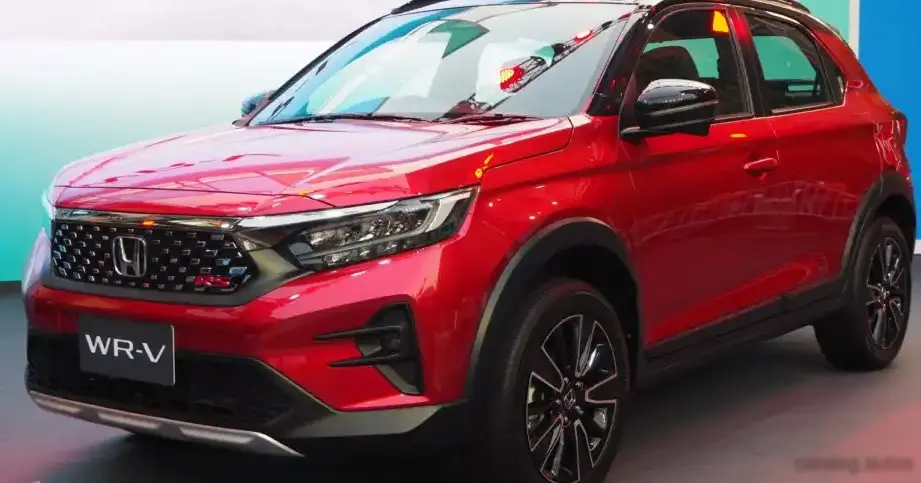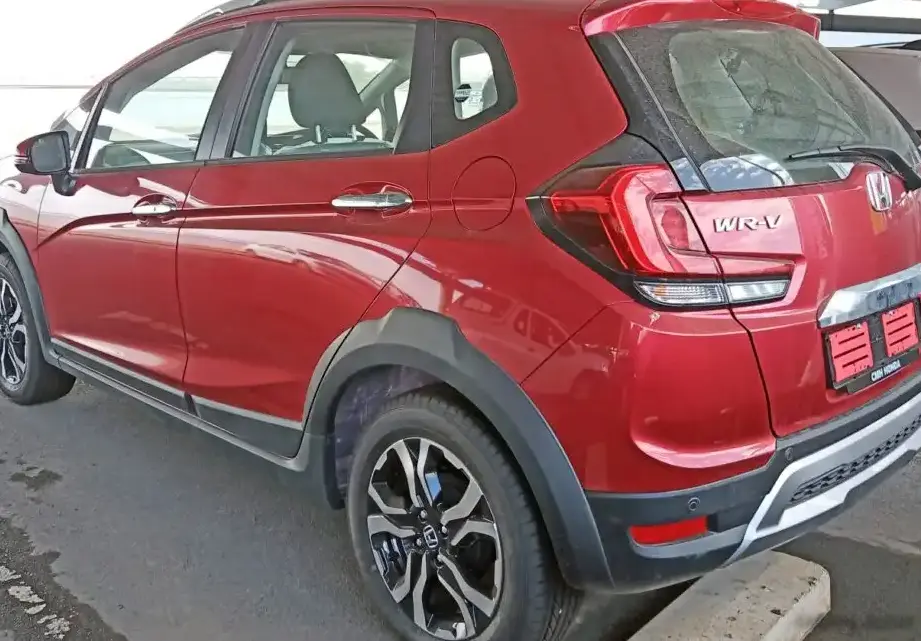
The Honda WR-V I (GL, facelift 2020) 1.2 i-VTEC (90 Hp) represents Honda’s entry-level subcompact SUV offering, primarily targeted towards emerging markets, particularly in South America, India, and parts of Asia. Introduced in March 2020 as a facelift to the original WR-V launched in 2017, this variant aimed to provide an affordable and practical vehicle for urban environments. Production continued through November 2022. It’s built upon the same platform as the Honda Jazz/Fit, offering a higher ride height and more rugged styling. This specific 1.2L engine and five-speed manual transmission combination positioned it as the base model within the WR-V lineup, appealing to buyers prioritizing fuel efficiency and affordability over outright performance.
Technical Specifications
| Brand | Honda |
| Model | WR-V |
| Generation | WR-V I (GL, facelift 2020) |
| Type (Engine) | 1.2 i-VTEC (90 Hp) |
| Start of production | March, 2020 |
| End of production | November, 2022 |
| Powertrain Architecture | Internal Combustion engine |
| Body type | SUV |
| Seats | 5 |
| Doors | 5 |
| Fuel consumption (combined) | 6.1 l/100 km (38.6 US mpg, 46.3 UK mpg, 16.4 km/l) |
| Fuel Type | Petrol (Gasoline) |
| Weight-to-power ratio | 12.1 kg/Hp, 82.8 Hp/tonne |
| Weight-to-torque ratio | 9.9 kg/Nm, 101.2 Nm/tonne |
| Power | 90 Hp @ 6000 rpm |
| Power per litre | 75.1 Hp/l |
| Torque | 110 Nm @ 4800 rpm (81.13 lb.-ft. @ 4800 rpm) |
| Engine layout | Front, Transverse |
| Engine Model/Code | L12B |
| Engine displacement | 1199 cm3 (73.17 cu. in.) |
| Number of cylinders | 4 |
| Engine configuration | Inline |
| Number of valves per cylinder | 4 |
| Engine aspiration | Naturally aspirated engine |
| Valvetrain | SOHC, i-VTEC |
| Engine oil capacity | 3.2 l (3.38 US qt | 2.82 UK qt) |
| Engine oil specification | (Information not provided) |
| Coolant | 3.6 l (3.8 US qt | 3.17 UK qt) |
| Engine systems | Start & Stop System |
| Kerb Weight | 1087-1106 kg (2396.42 – 2438.31 lbs.) |
| Trunk (boot) space – minimum | 363 l (12.82 cu. ft.) |
| Fuel tank capacity | 40 l (10.57 US gal | 8.8 UK gal) |
| Length | 3999 mm (157.44 in.) |
| Width | 1734 mm (68.27 in.) |
| Height | 1601 mm (63.03 in.) |
| Wheelbase | 2555 mm (100.59 in.) |
| Minimum turning circle | 10.6 m (34.78 ft.) |
| Drivetrain Architecture | Front wheel drive, Internal Combustion engine (ICE) |
| Drive wheel | Front wheel drive |
| Number of gears and type of gearbox | 5 gears, manual transmission |
| Front suspension | Independent type McPherson |
| Rear suspension | Torsion |
| Front brakes | Ventilated discs |
| Rear brakes | Drum |
| Assisting systems | ABS (Anti-lock braking system) |
| Steering type | Steering rack and pinion |
| Power steering | Electric Steering |
| Tires size | 195/60 R16 |
| Wheel rims size | 6J x 16 |
Powertrain & Engine Architecture
The heart of this WR-V variant is Honda’s L12B 1.2-liter inline-four cylinder engine. This engine is a member of Honda’s ‘Earth Dreams’ technology series, focusing on efficiency and reduced emissions. It utilizes a single overhead camshaft (SOHC) configuration and Honda’s intelligent Variable Valve Timing and Lift Electronic Control (i-VTEC) system. The i-VTEC system allows for variable valve timing and lift, optimizing engine performance across a wider range of engine speeds. Fuel delivery is managed by a multi-point fuel injection system. The engine produces 90 horsepower at 6000 rpm and 110 Nm (81.13 lb-ft) of torque at 4800 rpm. This power is then sent to the front wheels via a five-speed manual transmission. The transmission is chosen for its simplicity and cost-effectiveness, contributing to the vehicle’s affordability.
Driving Characteristics
The 1.2L i-VTEC engine, paired with the five-speed manual transmission, delivers adequate performance for city driving and light highway use. Acceleration is not brisk, with a focus on fuel economy rather than outright speed. The gear ratios are tuned to prioritize low-end torque, making it relatively easy to navigate urban traffic. Compared to higher-spec WR-V models equipped with larger engines, this variant feels noticeably less powerful, especially when fully loaded or climbing hills. The manual transmission provides drivers with more control over the engine’s power band, but requires more driver involvement than an automatic. The relatively light weight of the vehicle (1087-1106 kg) helps to mitigate the effects of the modest engine output.
Equipment & Trim Levels
The GL trim level, representing the base model, typically included standard features such as air conditioning, power windows, central locking, and a basic audio system. Safety features generally included dual front airbags and ABS (Anti-lock Braking System). Interior upholstery was typically cloth, and the dashboard featured a functional, if somewhat basic, design. Optional extras, depending on the market, could include alloy wheels, a touchscreen infotainment system, and rear parking sensors. The focus of the GL trim was on providing essential features at an affordable price point.
Chassis & Braking
The WR-V utilizes a front-wheel-drive configuration with an independent McPherson strut suspension at the front and a torsion beam suspension at the rear. This suspension setup provides a comfortable ride quality, suitable for varied road conditions. The front brakes are ventilated discs, offering good stopping power, while the rear brakes are drums, a cost-saving measure common in entry-level vehicles. Electric power steering provides light and easy steering feel, making it convenient for maneuvering in tight spaces. The tires are typically 195/60 R16, offering a balance between comfort and grip.
Market Reception & Comparison
The Honda WR-V 1.2 i-VTEC (90 Hp) was generally well-received in its target markets as an affordable and practical subcompact SUV. Critics praised its fuel efficiency and comfortable ride, but noted its lack of outright performance. Compared to other trims in the WR-V lineup, such as those equipped with larger engines, this variant offered a more economical option for buyers prioritizing fuel costs and affordability. It competed with other subcompact SUVs like the Hyundai Venue, Kia Sonet, and Maruti Suzuki Vitara Brezza, often undercutting them in price.
Legacy
The L12B engine has proven to be a relatively reliable powertrain, with good long-term durability. The WR-V, as a whole, has established a reputation for being a practical and dependable vehicle. In the used car market, the 1.2L i-VTEC variant remains a popular choice for buyers seeking an affordable and fuel-efficient SUV. Maintenance costs are generally low, and parts availability is good. While not a performance-oriented vehicle, the WR-V 1.2L offers a compelling combination of practicality, affordability, and reliability, making it a solid choice in the subcompact SUV segment.