
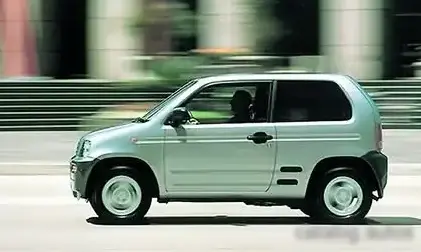
The Honda Z, specifically the 0.7 12V variant producing 52 horsepower, was a compact hatchback produced between 1998 and 2002. Positioned as an entry-level vehicle, it represented Honda’s attempt to offer an affordable and fuel-efficient option, primarily targeted towards younger drivers and urban commuters. The Z was unique for Honda at the time, being a relatively small, all-wheel drive vehicle, and it played a niche role in the company’s lineup during its production run. It was built exclusively as a 3-door hatchback, offering limited practicality but emphasizing a sporty, youthful image.
Technical Specifications
| Brand | Honda |
| Model | Z |
| Generation | Z |
| Type (Engine) | 0.7 12V (52 Hp) |
| Start of production | 1998 |
| End of production | 2002 |
| Powertrain Architecture | Internal Combustion engine |
| Body type | Hatchback |
| Seats | 4 |
| Doors | 3 |
| Fuel consumption (urban) | 10 l/100 km (23.5 US mpg) |
| Fuel consumption (extra urban) | 6 l/100 km (39.2 US mpg) |
| Fuel Type | Petrol (Gasoline) |
| Maximum speed | 130 km/h (80.78 mph) |
| Weight-to-power ratio | 18.5 kg/Hp |
| Weight-to-torque ratio | 15.7 kg/Nm |
| Power | 52 Hp @ 7200 rpm |
| Power per litre | 79.3 Hp/l |
| Torque | 61 Nm @ 4500 rpm (44.99 lb.-ft. @ 4500 rpm) |
| Engine layout | Middle, Longitudinal |
| Engine displacement | 656 cm3 (40.03 cu. in.) |
| Number of cylinders | 3 |
| Engine configuration | Inline |
| Cylinder Bore | 66 mm (2.6 in.) |
| Piston Stroke | 64 mm (2.52 in.) |
| Compression ratio | 10.5:1 |
| Number of valves per cylinder | 4 |
| Fuel injection system | Multi-port manifold injection |
| Engine aspiration | Naturally aspirated |
| Valvetrain | OHC |
| Kerb Weight | 960 kg (2116.44 lbs.) |
| Max. weight | 1180 kg (2601.45 lbs.) |
| Max load | 220 kg (485.02 lbs.) |
| Fuel tank capacity | 35 l (9.25 US gal) |
| Length | 3395 mm (133.66 in.) |
| Width | 1475 mm (58.07 in.) |
| Height | 1675 mm (65.94 in.) |
| Wheelbase | 2360 mm (92.91 in.) |
| Front track | 1280 mm (50.39 in.) |
| Rear track | 1290 mm (50.79 in.) |
| Minimum turning circle | 9.2 m (30.18 ft.) |
| Drive wheel | All wheel drive (4×4) |
| Number of gears | 4 |
| Gearbox type | Automatic transmission |
| Front suspension | Wishbone |
| Rear suspension | Coil spring |
| Front brakes | Disc |
| Rear brakes | Drum |
| Assisting systems | ABS (Anti-lock braking system) |
| Steering type | Steering rack and pinion |
| Power steering | Hydraulic |
| Tires size | 175/80 R15 |
Powertrain & Engine Architecture
The heart of the Honda Z 0.7 was a 656cc inline-three cylinder engine, designated as part of the Honda D-series engine family. This engine, utilizing a 12-valve configuration (4 valves per cylinder), was naturally aspirated and employed multi-port fuel injection. The engine’s longitudinal mounting and all-wheel drive configuration were unusual for a vehicle of this size and price point. The 0.7L engine produced 52 horsepower at 7200 rpm and 61 Nm (44.99 lb-ft) of torque at 4500 rpm. The engine’s relatively high compression ratio of 10.5:1 contributed to its modest power output and fuel efficiency. Paired with this engine was a 4-speed automatic transmission. This transmission was chosen to provide ease of use, particularly for novice drivers, but at the expense of performance and fuel economy compared to the available manual transmission.
Driving Characteristics
The 0.7L engine and automatic transmission combination resulted in leisurely acceleration. The Z 0.7 Automatic wasn’t designed for speed; its 0-60 mph time was estimated to be well over 15 seconds. The automatic transmission featured relatively tall gear ratios, prioritizing fuel economy over responsiveness. The all-wheel drive system provided enhanced traction, particularly in inclement weather, but added to the vehicle’s weight and slightly hampered performance. Compared to the manual transmission version, the automatic felt noticeably slower and less engaging. The power delivery was smooth but lacked the punch found in larger-displacement engines. The vehicle was best suited for city driving and short commutes, where its compact size and maneuverability were advantageous.
Equipment & Trim Levels
The Honda Z 0.7 Automatic was typically offered with a fairly basic level of equipment. Standard features generally included power steering, central locking, and an AM/FM radio. Air conditioning was often an optional extra. Interior upholstery was typically cloth, and the dashboard featured a simple, functional design. Higher trim levels, if available, might have included features like electric windows and upgraded audio systems. The focus was on providing a functional and affordable vehicle, rather than luxury or extensive features.
Chassis & Braking
The Honda Z featured a relatively simple chassis design. Front suspension utilized a wishbone setup, while the rear employed a coil spring arrangement. The braking system consisted of disc brakes on the front wheels and drum brakes on the rear. Anti-lock Braking System (ABS) was included as a standard safety feature. The vehicle’s relatively light weight helped to compensate for the less powerful engine and drum brakes on the rear. Stabilizer bars were relatively thin, contributing to a softer ride but also increased body roll during cornering.
Market Reception & Comparison
The Honda Z 0.7 Automatic received mixed reviews. Critics praised its fuel efficiency and all-wheel drive capability, but criticized its lack of power and slow acceleration. Compared to other small hatchbacks of the time, such as the Fiat Punto or Peugeot 206, the Z offered a unique combination of features but often fell short in terms of performance. The automatic transmission was seen as a compromise, sacrificing responsiveness for ease of use. Fuel economy was competitive, averaging around 39.2 US mpg on the extra-urban cycle. Reliability was generally good, consistent with Honda’s reputation, but maintenance costs could be higher due to the all-wheel drive system.
Legacy
The Honda Z, while not a massive sales success, remains a somewhat quirky and collectible vehicle today. The 0.7L Automatic variant is less sought after than the manual transmission or higher-powered versions, but it still holds appeal for enthusiasts looking for a unique and affordable classic. The engine and transmission combination, while not particularly powerful, proved to be relatively reliable. Used examples are becoming increasingly rare, and well-maintained vehicles can command a premium. The Z’s all-wheel drive system and compact size make it a surprisingly capable vehicle for its age, and it continues to offer a distinctive driving experience.
