
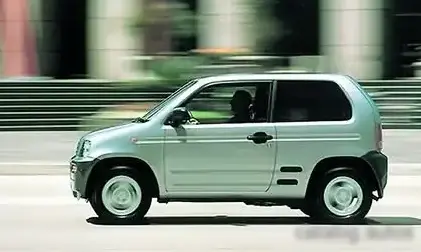
The Honda Z 0.7 12V T (64 hp) was a compact hatchback produced between 1998 and 2002, primarily aimed at the European market. It represented Honda’s entry-level offering, positioned below the larger Civic models. This variant, characterized by its small-displacement turbocharged engine and automatic transmission, was designed for urban driving and fuel efficiency. It was part of the broader Honda Z series, which sought to provide affordable and practical transportation. The “Z” designation signified a focus on simplicity and value, differentiating it from Honda’s more technologically advanced offerings.
Technical Specifications
| Brand | Honda |
| Model | Z |
| Generation | Z |
| Type (Engine) | 0.7 12V T (64 Hp) |
| Start of production | 1998 |
| End of production | 2002 |
| Powertrain Architecture | Internal Combustion engine |
| Body type | Hatchback |
| Seats | 4 |
| Doors | 3 |
| Fuel consumption (urban) | 10 l/100 km (23.5 US mpg) |
| Fuel consumption (extra urban) | 6 l/100 km (39.2 US mpg) |
| Fuel Type | Petrol (Gasoline) |
| Maximum speed | 130 km/h (80.78 mph) |
| Weight-to-power ratio | 15.2 kg/Hp |
| Weight-to-torque ratio | 10.4 kg/Nm |
| Power | 64 Hp @ 6000 rpm |
| Power per litre | 97.1 Hp/l |
| Torque | 93 Nm @ 3700 rpm (68.59 lb.-ft. @ 3700 rpm) |
| Engine layout | Inline, Longitudinal |
| Engine displacement | 659 cm3 (40.21 cu. in.) |
| Number of cylinders | 3 |
| Cylinder Bore | 66 mm (2.6 in.) |
| Piston Stroke | 64 mm (2.52 in.) |
| Compression ratio | 8.5:1 |
| Number of valves per cylinder | 4 |
| Fuel injection system | Multi-port manifold injection |
| Engine aspiration | Turbocharger |
| Valvetrain | OHC |
| Kerb Weight | 970 kg (2138.48 lbs.) |
| Max. weight | 1190 kg (2623.5 lbs.) |
| Max load | 220 kg (485.02 lbs.) |
| Fuel tank capacity | 35 l (9.25 US gal | 7.7 UK gal) |
| Length | 3395 mm (133.66 in.) |
| Width | 1475 mm (58.07 in.) |
| Height | 1675 mm (65.94 in.) |
| Wheelbase | 2360 mm (92.91 in.) |
| Front track | 1280 mm (50.39 in.) |
| Rear track | 1290 mm (50.79 in.) |
| Minimum turning circle | 9.2 m (30.18 ft.) |
| Drive wheel | All wheel drive (4×4) |
| Number of gears | 4 |
| Gearbox type | Automatic transmission |
| Front suspension | Wishbone |
| Rear suspension | Coil spring |
| Front brakes | Disc |
| Rear brakes | Drum |
| Assisting systems | ABS (Anti-lock braking system) |
| Steering type | Steering rack and pinion |
| Power steering | Hydraulic |
| Tires size | 175/80 R15 |
Powertrain & Engine Architecture
The heart of the Honda Z 0.7 was its 659cc inline-three cylinder engine, designated as part of the 12V T series. This engine was notable for being turbocharged, a relatively uncommon feature in this class of vehicle at the time. The turbocharger, a small unit, was designed to provide a boost in power and torque without significantly increasing fuel consumption. The engine utilized a multi-port fuel injection system, delivering fuel directly to each cylinder for improved combustion efficiency. The overhead camshaft (OHC) valvetrain operated four valves per cylinder, optimizing gas flow. The engine’s relatively high compression ratio of 8.5:1 further contributed to its performance. The four-speed automatic transmission was chosen for its ease of use, catering to the target audience who prioritized convenience over sporty driving dynamics. This transmission was a conventional hydraulic automatic, lacking the more advanced electronic controls found in higher-end vehicles.
Driving Characteristics
The 64 horsepower output and 93 Nm (68.59 lb-ft) of torque delivered by the 0.7L engine, coupled with the four-speed automatic, resulted in modest but adequate performance. Acceleration was leisurely, with a 0-60 mph time estimated to be around 14-16 seconds. The automatic transmission’s gear ratios were optimized for fuel economy rather than outright speed. In real-world driving, the turbocharger provided a noticeable boost in power during overtaking maneuvers, but the engine could feel strained at higher speeds. Compared to the manual transmission versions of the Honda Z, the automatic variant offered less driver engagement and slightly reduced fuel efficiency. However, it provided a smoother and more comfortable driving experience, particularly in congested urban environments. The all-wheel drive system, while adding weight, enhanced traction and stability, especially on slippery surfaces.
Equipment & Trim Levels
The Honda Z 0.7 12V T (64 hp) was typically offered with a relatively basic level of equipment, reflecting its position as an entry-level model. Standard features generally included power steering, central locking, and an anti-lock braking system (ABS). The interior was functional and utilitarian, with cloth upholstery and a simple dashboard layout. Air conditioning was often an optional extra, as were power windows and a radio/cassette player. The trim levels were usually limited, with minor variations in interior color schemes and the availability of optional equipment. The focus was on providing a practical and affordable vehicle rather than luxurious amenities.
Chassis & Braking
The Honda Z featured a relatively simple chassis design. The front suspension utilized a wishbone configuration, while the rear suspension employed a coil spring setup. This suspension arrangement provided a reasonable balance between ride comfort and handling. The braking system consisted of disc brakes on the front wheels and drum brakes on the rear wheels. While adequate for the vehicle’s weight and performance, the rear drum brakes were a cost-saving measure. The all-wheel drive system added to the vehicle’s weight but improved its stability and traction, particularly in adverse weather conditions.
Market Reception & Comparison
The Honda Z 0.7 12V T (64 hp) received mixed reviews from automotive critics. While praised for its fuel efficiency and affordability, it was often criticized for its lack of power and somewhat basic interior. Compared to other small hatchbacks available in Europe at the time, such as the Peugeot 106 or the Renault Clio, the Honda Z offered a unique combination of turbocharged power and all-wheel drive. However, its higher price point and less refined driving experience limited its appeal. Fuel economy was a strong point, with reported figures of around 39.2 US mpg on the extra-urban cycle. Reliability was generally good, typical of Honda products, but the turbocharged engine required more diligent maintenance than naturally aspirated alternatives.
Legacy
The Honda Z 0.7 12V T (64 hp) remains a relatively uncommon vehicle today. While not a particularly sought-after classic, it has gained a following among enthusiasts who appreciate its unique combination of features and its status as a representative of Honda’s early efforts in the small hatchback segment. The turbocharged engine, while small, proved to be reasonably durable, and many examples are still on the road today. However, finding parts can be challenging, and maintenance costs may be higher due to the complexity of the turbocharger system. The vehicle’s legacy lies in its demonstration of Honda’s ability to offer innovative technology, such as turbocharging and all-wheel drive, in an affordable and practical package.
