
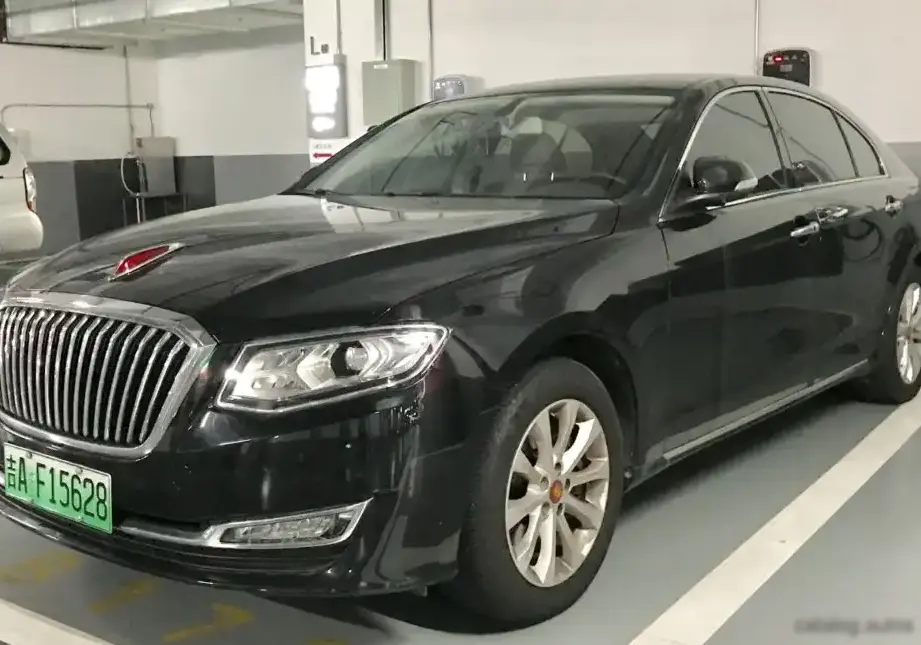
The Hongqi H7 (facelift 2017) 3.0 V6 Automatic represents a significant iteration of Hongqi’s flagship sedan, aimed at re-establishing the brand as a premier luxury vehicle manufacturer in the Chinese domestic market. Introduced in 2017, this facelift built upon the original H7 launched in 2012, incorporating styling refinements and updated technology. The 3.0 V6 Automatic variant occupied a mid-to-upper position within the H7 lineup, offering a balance of performance and comfort intended to appeal to discerning buyers seeking a domestically produced alternative to established international luxury brands. It was built on the Hongqi H7 platform, a rear-wheel drive sedan designed to evoke classic luxury car proportions.
Technical Specifications
| Brand | Hongqi |
| Model | H7 |
| Generation | H7 (facelift 2017) |
| Type (Engine) | 3.0 V6 (231 Hp) Automatic |
| Start of production | 2017 |
| Powertrain Architecture | Internal Combustion engine |
| Body type | Sedan |
| Seats | 5 |
| Doors | 4 |
| Fuel Type | Petrol (Gasoline) |
| Weight-to-power ratio | 7.8 kg/Hp, 128 Hp/tonne |
| Weight-to-torque ratio | 6 kg/Nm, 166.2 Nm/tonne |
| Power | 231 Hp @ 6000 rpm |
| Power per litre | 77.2 Hp/l |
| Torque | 300 Nm @ 3000 rpm, 221.27 lb.-ft. @ 3000 rpm |
| Engine layout | Front, Longitudinal |
| Engine Model/Code | CA6GV1 |
| Engine displacement | 2993 cm3, 182.64 cu. in. |
| Number of cylinders | 6 |
| Engine configuration | V-engine |
| Compression ratio | 10.3:1 |
| Number of valves per cylinder | 4 |
| Fuel injection system | Multi-port manifold injection |
| Engine aspiration | Naturally aspirated engine |
| Valvetrain | DOHC |
| Kerb Weight | 1805 kg, 3979.34 lbs |
| Trunk (boot) space – minimum | 430 l, 15.19 cu. ft |
| Trunk (boot) space – maximum | 512 l, 18.08 cu. ft |
| Fuel tank capacity | 70 l, 18.49 US gal | 15.4 UK gal |
| Length | 5095 mm, 200.59 in |
| Width | 1875 mm, 73.82 in |
| Height | 1485 mm, 58.46 in |
| Wheelbase | 2970 mm, 116.93 in |
| Front track | 1610 mm, 63.39 in |
| Rear (Back) track | 1608 mm, 63.31 in |
| Ride height (ground clearance) | 142 mm, 5.59 in |
| Drivetrain Architecture | The Internal combustion engine (ICE) drives the rear wheels of the vehicle. |
| Drive wheel | Rear wheel drive |
| Number of gears and type of gearbox | 6 gears, automatic transmission |
| Front suspension | Double wishbone |
| Rear suspension | Independent multi-link suspension |
| Front brakes | Ventilated discs |
| Rear brakes | Ventilated discs |
| Assisting systems | ABS (Anti-lock braking system) |
| Power steering | Electric Steering |
| Tires size | 235/45 R18 |
| Wheel rims size | 18 |
Powertrain & Engine Architecture
The heart of the H7 3.0 V6 Automatic is the CA6GV1 engine, a 2.993-liter naturally aspirated V6. This engine utilizes a 60-degree V-angle configuration, contributing to a relatively compact engine bay layout. The engine employs a multi-port fuel injection system, delivering fuel directly into the intake ports, and a double overhead camshaft (DOHC) valvetrain, optimizing airflow for improved performance. The compression ratio of 10.3:1 strikes a balance between efficiency and power output. The engine produces 231 horsepower at 6000 rpm and 300 Nm (221.27 lb-ft) of torque at 3000 rpm. This power is then channeled through a six-speed automatic transmission, designed for smooth and refined gear changes. The transmission is calibrated to prioritize comfort and ease of driving, rather than aggressive performance.
Driving Characteristics
The H7 3.0 V6 Automatic delivers a comfortable and composed driving experience. While not overtly sporty, the engine provides adequate power for effortless cruising and overtaking maneuvers. The automatic transmission, while smooth, isn’t particularly quick to downshift, resulting in a slightly less responsive feel compared to manual transmission variants. The rear-wheel-drive configuration contributes to balanced handling, although it doesn’t offer the dynamic agility of some European competitors. The weight of the vehicle (1805 kg) is noticeable, particularly during spirited driving. The gear ratios are tuned for fuel efficiency and relaxed highway cruising, rather than maximizing acceleration.
Equipment & Trim Levels
The 3.0 V6 Automatic trim of the H7 facelift typically included a generous array of standard features. These commonly included leather upholstery, power-adjustable front seats, a multi-function steering wheel, automatic climate control, and a premium audio system. Infotainment systems featured a central touchscreen display, offering navigation, Bluetooth connectivity, and smartphone integration. Safety features such as ABS, electronic stability control, and multiple airbags were standard. Optional extras often included a panoramic sunroof, upgraded audio systems, and advanced driver-assistance systems like adaptive cruise control and lane departure warning.
Chassis & Braking
The H7 utilizes a double wishbone suspension setup at the front and an independent multi-link suspension at the rear, designed to provide a comfortable ride and stable handling. Ventilated disc brakes are fitted on all four wheels, providing adequate stopping power. The electric power steering system offers a light and easy steering feel, although it lacks the feedback of a hydraulic system. The vehicle’s ride height is relatively low (142mm), contributing to its stable handling characteristics. Stabilizer bars are present on both axles to reduce body roll during cornering.
Market Reception & Comparison
The Hongqi H7 3.0 V6 Automatic was generally well-received in the Chinese market, particularly among government officials and those seeking a domestically produced luxury sedan. Critics praised the vehicle’s comfortable ride, spacious interior, and generous equipment levels. However, some reviewers noted that the engine lacked the refinement and performance of its European and Japanese rivals. Fuel economy was also considered average for its class. Compared to other H7 variants, the 3.0 V6 Automatic offered a significant performance upgrade over the smaller 1.8-liter turbocharged engine, but at a higher price point. It positioned itself as a more luxurious and powerful alternative to the more affordable trims.
Legacy
The Hongqi H7 3.0 V6 Automatic played a crucial role in Hongqi’s resurgence as a luxury car brand in China. While not a high-volume seller, it established the brand’s commitment to quality and sophistication. The CA6GV1 engine, while not known for exceptional reliability issues, requires regular maintenance to ensure optimal performance. On the used car market, these vehicles are generally sought after by enthusiasts and collectors interested in Chinese automotive history. The H7’s legacy lies in its contribution to the revitalization of a historically significant Chinese automotive brand and its demonstration of the country’s growing capabilities in luxury car manufacturing.
