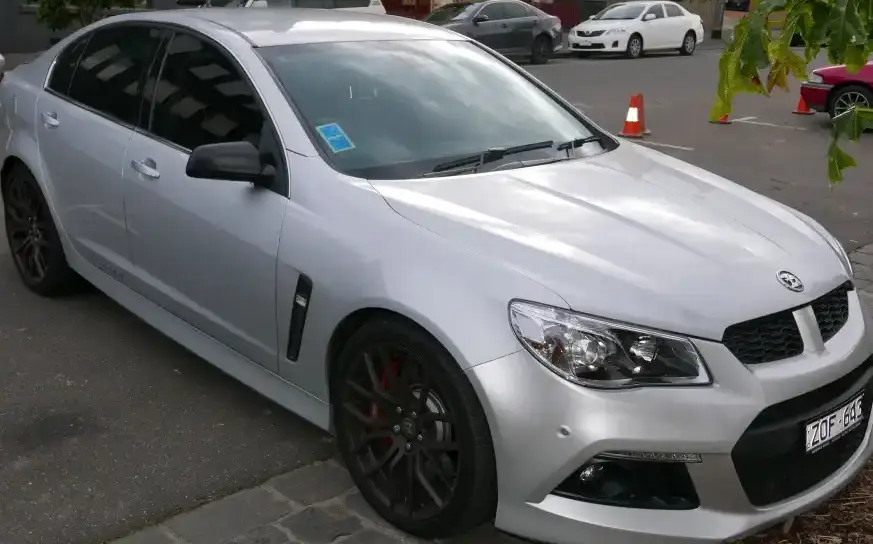
The HSV Clubsport Tourer Gen-F R8 6.2 V8, produced between 2013 and 2016, represents a unique and powerful offering from the Australian performance vehicle manufacturer, HSV (Holden Special Vehicles). It was the wagon variant of the Gen-F Clubsport lineup, positioned as the ultimate performance estate car for the Australian market. Built on the foundation of the VF Commodore, the Tourer R8 combined practicality with a substantial V8 engine, offering a compelling alternative to traditional sports sedans. This model marked a high point in Australian-made performance cars before the closure of Holden’s manufacturing facilities.
Technical Specifications
| Brand | HSV |
| Model | Clubsport |
| Generation | Clubsport Tourer Gen-F |
| Type (Engine) | R8 6.2 V8 (442 Hp) |
| Start of production | 2013 |
| End of production | 2016 |
| Powertrain Architecture | Internal Combustion engine |
| Body type | Station wagon (estate) |
| Seats | 5 |
| Doors | 5 |
| Fuel Type | Petrol (Gasoline) |
| Weight-to-power ratio | 4.3 kg/Hp, 235.1 Hp/tonne |
| Weight-to-torque ratio | 3.4 kg/Nm, 292.6 Nm/tonne |
| Power | 442 Hp @ 6000 rpm |
| Power per litre | 71.7 Hp/l |
| Torque | 550 Nm @ 4600 rpm (405.66 lb.-ft. @ 4600 rpm) |
| Engine layout | Front, Longitudinal |
| Engine Model/Code | LS3 325 |
| Engine displacement | 6162 cm3 (376.03 cu. in.) |
| Number of cylinders | 8 |
| Engine configuration | V-engine |
| Cylinder Bore | 103.25 mm (4.06 in.) |
| Piston Stroke | 92 mm (3.62 in.) |
| Compression ratio | 10.7:1 |
| Number of valves per cylinder | 2 |
| Fuel injection system | Multi-port manifold injection |
| Engine aspiration | Naturally aspirated engine |
| Kerb Weight | 1880 kg (4144.69 lbs.) |
| Fuel tank capacity | 71 l (18.76 US gal | 15.62 UK gal) |
| Permitted trailer load with brakes (12%) | 1600 kg (3527.4 lbs.) |
| Permitted trailer load without brakes | 750 kg (1653.47 lbs.) |
| Length | 4971 mm (195.71 in.) |
| Width | 1899 mm (74.76 in.) |
| Height | 1465 mm (57.68 in.) |
| Wheelbase | 2915 mm (114.76 in.) |
| Minimum turning circle (turning diameter) | 11.4 m (37.4 ft.) |
| Drivetrain Architecture | The Internal combustion engine (ICE) drives the rear wheels of the vehicle. |
| Drive wheel | Rear wheel drive |
| Number of gears and type of gearbox | 6 gears, manual transmission |
| Front suspension | Independent, type McPherson with coil spring and anti-roll bar |
| Rear suspension | Independent multi-link suspension |
| Front brakes | Ventilated discs |
| Rear brakes | Ventilated discs |
| Assisting systems | ABS (Anti-lock braking system) |
| Steering type | Steering rack and pinion |
| Tires size | 245/35 R20; 275/30 R20 |
| Wheel rims size | 8.5J x 20; 9.5J x 20 |
Powertrain & Engine Architecture
At the heart of the Clubsport Tourer Gen-F R8 lies the LS3 6.2-liter V8 engine. This naturally aspirated powerplant, bearing the engine code LS3 325, is a cornerstone of HSV’s performance identity. The LS3 features a cast iron block with aluminum cylinder heads, and utilizes a multi-port fuel injection system. The engine produces 442 horsepower at 6000 rpm and 550 Nm (405.66 lb-ft) of torque at 4600 rpm. The engine’s robust design and relatively simple architecture contribute to its reliability and ease of maintenance. The R8 variant was exclusively offered with a six-speed manual transmission, delivering direct control and enhancing the driving experience. The longitudinal engine layout and rear-wheel drive configuration are traditional for performance vehicles, providing a balanced weight distribution and responsive handling.
Driving Characteristics
The combination of the powerful LS3 V8 and the six-speed manual transmission results in exhilarating performance. The Tourer R8 delivers strong acceleration throughout the rev range, with the peak torque available relatively low in the rpm band. The manual gearbox allows for precise gear selection, enabling drivers to fully exploit the engine’s capabilities. Compared to a hypothetical automatic version, the manual transmission provides a more engaging and connected driving experience. While the wagon body style adds some weight compared to the Clubsport sedan, the impact on performance is minimal. The suspension tuning, featuring McPherson struts at the front and a multi-link setup at the rear, provides a firm but controlled ride, balancing comfort and handling.
Equipment & Trim Levels
The Clubsport Tourer Gen-F R8 was generously equipped, reflecting its position as the flagship wagon variant. Standard features included leather sports seats, a leather-wrapped steering wheel, a premium audio system, and climate control. HSV-specific interior trim elements, such as unique badging and stitching, further distinguished the R8 from standard Commodore wagons. Optional extras included a sunroof, satellite navigation, and upgraded sound systems. The interior design prioritized a sporty aesthetic while maintaining a level of practicality suitable for a wagon.
Chassis & Braking
The chassis of the Tourer Gen-F R8 is based on the VF Commodore platform, but with significant enhancements by HSV. The suspension system was specifically tuned to handle the increased power and provide improved handling characteristics. The front suspension utilizes McPherson struts with coil springs and an anti-roll bar, while the rear features an independent multi-link setup. Braking duties are handled by ventilated discs on all four wheels, providing ample stopping power. The inclusion of ABS (Anti-lock Braking System) further enhances safety and control. The R8 model benefitted from larger brake rotors and calipers compared to lower-spec Clubsport variants.
Market Reception & Comparison
The HSV Clubsport Tourer Gen-F R8 was well-received by Australian motoring journalists and enthusiasts. Critics praised its powerful engine, engaging driving dynamics, and unique blend of performance and practicality. Compared to the Clubsport sedan, the Tourer offered increased cargo space and versatility without sacrificing performance. Against international performance wagons, such as the Audi RS6 or BMW M5 Touring, the HSV offered a compelling value proposition, albeit with a more raw and less refined driving experience. Fuel economy, unsurprisingly, was not a strong point, with combined cycle figures typically around 14-16 liters per 100 kilometers. Reliability was generally good, benefiting from the proven LS3 engine architecture, though maintenance costs could be higher than for standard Commodore wagons due to the specialized HSV components.
Legacy
The HSV Clubsport Tourer Gen-F R8 represents a significant chapter in Australian automotive history. As one of the last high-performance wagons produced domestically, it has become a highly sought-after vehicle in the used car market. The LS3 engine is renowned for its durability and tunability, making the R8 a popular choice for enthusiasts seeking a powerful and reliable performance car. The combination of a spacious wagon body, a potent V8 engine, and a manual transmission has cemented its status as a modern classic, and a testament to HSV’s engineering prowess. Values have generally held strong, and well-maintained examples are expected to appreciate in value as the years pass, solidifying its place in Australian motoring folklore.