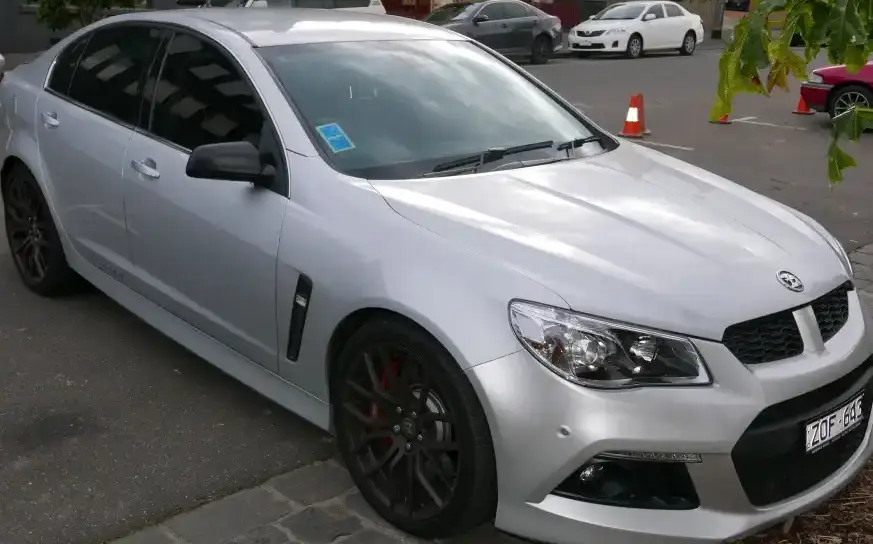
The HSV Clubsport Tourer Gen-F R8 6.2 V8 Automatic, produced between 2013 and 2016, represents a unique and powerful offering from the Australian performance vehicle manufacturer, HSV (Holden Special Vehicles). Positioned as the flagship variant of the Clubsport Tourer range, it combined the practicality of a station wagon (estate) body style with the potent performance of HSV’s 6.2-liter LS3 V8 engine and a six-speed automatic transmission. This model was a key part of the final generation of Australian-made performance cars before the closure of Holden’s manufacturing facilities. It catered to enthusiasts seeking a high-performance vehicle capable of both spirited driving and everyday utility.
Technical Specifications
| Brand | HSV |
| Model | Clubsport |
| Generation | Clubsport Tourer Gen-F |
| Type (Engine) | R8 6.2 V8 (442 Hp) Automatic |
| Start of production | 2013 |
| End of production | 2016 |
| Powertrain Architecture | Internal Combustion engine |
| Body type | Station wagon (estate) |
| Seats | 5 |
| Doors | 5 |
| Fuel Type | Petrol (Gasoline) |
| Weight-to-power ratio | 4.3 kg/Hp, 233.9 Hp/tonne |
| Weight-to-torque ratio | 3.4 kg/Nm, 291 Nm/tonne |
| Power | 442 Hp @ 6000 rpm |
| Power per litre | 71.7 Hp/l |
| Torque | 550 Nm @ 4600 rpm, 405.66 lb.-ft. @ 4600 rpm |
| Engine layout | Front, Longitudinal |
| Engine Model/Code | LS3 325 |
| Engine displacement | 6162 cm3, 376.03 cu. in. |
| Number of cylinders | 8 |
| Engine configuration | V-engine |
| Cylinder Bore | 103.25 mm, 4.06 in. |
| Piston Stroke | 92 mm, 3.62 in. |
| Compression ratio | 10.7:1 |
| Number of valves per cylinder | 2 |
| Fuel injection system | Multi-port manifold injection |
| Engine aspiration | Naturally aspirated engine |
| Kerb Weight | 1890 kg, 4166.74 lbs |
| Fuel tank capacity | 71 l, 18.76 US gal | 15.62 UK gal |
| Permitted trailer load with brakes (12%) | 1600 kg, 3527.4 lbs |
| Permitted trailer load without brakes | 750 kg, 1653.47 lbs |
| Length | 4971 mm, 195.71 in |
| Width | 1899 mm, 74.76 in |
| Height | 1465 mm, 57.68 in |
| Wheelbase | 2915 mm, 114.76 in |
| Minimum turning circle (turning diameter) | 11.4 m, 37.4 ft |
| Drivetrain Architecture | The Internal combustion engine (ICE) drives the rear wheels of the vehicle. |
| Drive wheel | Rear wheel drive |
| Number of gears and type of gearbox | 6 gears, automatic transmission |
| Front suspension | Independent, type McPherson with coil spring and anti-roll bar |
| Rear suspension | Independent multi-link suspension |
| Front brakes | Ventilated discs |
| Rear brakes | Ventilated discs |
| Assisting systems | ABS (Anti-lock braking system) |
| Steering type | Steering rack and pinion |
| Tires size | 245/35 R20; 275/30 R20 |
| Wheel rims size | 8.5J x 20; 9.5J x 20 |
Powertrain & Engine Architecture
At the heart of the Clubsport Tourer Gen-F R8 lies the LS3 6.2-liter V8 engine. This naturally aspirated powerplant, derived from the Chevrolet Corvette, is renowned for its robust construction and strong power delivery. The LS3 utilizes an aluminum cylinder block and heads, contributing to a relatively lightweight design. Fuel delivery is managed by a multi-port fuel injection system, ensuring precise fuel metering for optimal combustion. The engine boasts a 10.7:1 compression ratio and features two valves per cylinder. The engine code, LS3 325, designates specific calibrations and components for the Australian market. Paired with the LS3 is a six-speed automatic transmission, specifically a 6L80E unit. This transmission is known for its durability and smooth shifting characteristics, although it prioritizes comfortable cruising over outright performance compared to a manual gearbox.
Driving Characteristics
The combination of the 442 horsepower LS3 and the six-speed automatic results in a driving experience that blends impressive acceleration with relative ease of use. While not as engaging as a manual transmission, the automatic provides smooth and predictable gear changes. The 0-100 km/h (0-62 mph) sprint is typically achieved in around 4.6-4.8 seconds. The automatic transmission’s gear ratios are tuned for a balance between acceleration and fuel efficiency. Compared to the six-speed manual version, the automatic offers slightly slower acceleration due to inherent transmission losses. However, it provides a more relaxed driving experience, particularly in urban traffic. The rear-wheel-drive configuration contributes to a sporty feel, but requires careful throttle control, especially in wet conditions.
Equipment & Trim Levels
The R8 variant of the Clubsport Tourer Gen-F represented the highest level of equipment. Standard features included leather sports seats with R8 embroidery, a premium audio system, dual-zone climate control, and a comprehensive suite of safety features including ABS, traction control, and stability control. The interior featured unique R8-specific trim elements, including a sports steering wheel and alloy pedal covers. Optional extras included a sunroof, satellite navigation, and upgraded sound systems. The exterior was distinguished by unique R8 badging, a rear spoiler, and distinctive alloy wheels (8.5J x 20 front, 9.5J x 20 rear) wrapped in performance tires (245/35 R20 front, 275/30 R20 rear).
Chassis & Braking
The Clubsport Tourer Gen-F R8 utilizes a robust chassis derived from the Holden Commodore platform. The suspension system features independent McPherson struts at the front and an independent multi-link setup at the rear, providing a good balance between ride comfort and handling performance. Stabilizer bars are fitted to both axles to reduce body roll during cornering. Braking duties are handled by ventilated discs on all four wheels, providing ample stopping power. The ABS (Anti-lock Braking System) enhances braking performance and stability, particularly on slippery surfaces.
Market Reception & Comparison
The HSV Clubsport Tourer Gen-F R8 was generally well-received by automotive critics. It was praised for its powerful engine, comfortable ride, and practical wagon body style. However, some critics noted that the automatic transmission didn’t fully exploit the engine’s potential. Compared to the manual version, the automatic offered slightly lower performance but greater convenience. Against other performance wagons, such as the European-market Audi RS6 or BMW M5 Touring, the HSV offered a more affordable price point but lacked the same level of refinement and technological sophistication. Fuel economy was typical for a large-displacement V8, averaging around 12-15 liters per 100 kilometers (19-23 mpg) in mixed driving.
Legacy
The HSV Clubsport Tourer Gen-F R8 6.2 V8 Automatic holds a significant place in Australian automotive history as one of the last high-performance wagons produced domestically. The LS3 engine is known for its reliability and durability, and well-maintained examples continue to command strong prices in the used car market. The 6L80E automatic transmission is also generally considered to be a robust unit. However, as with any high-performance vehicle, regular maintenance is crucial to ensure long-term reliability. Today, these vehicles are sought after by collectors and enthusiasts who appreciate their unique combination of performance, practicality, and Australian heritage.