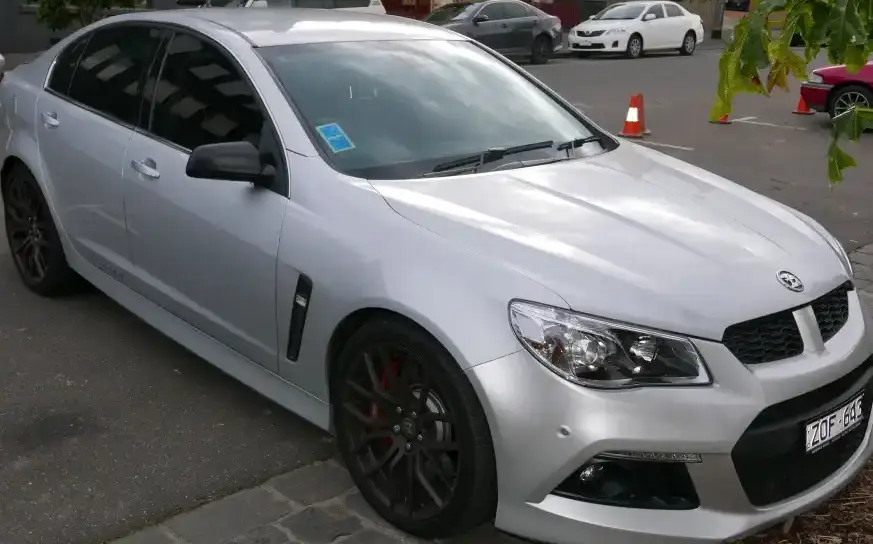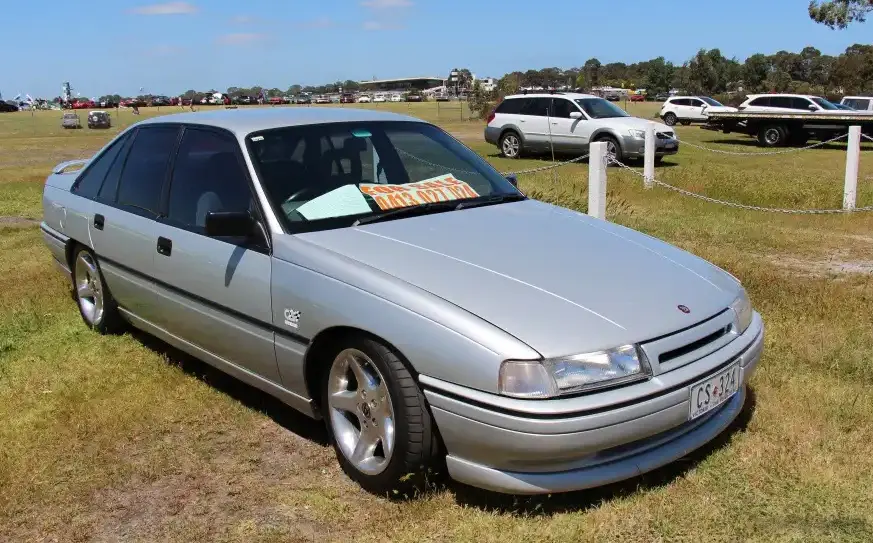
The HSV Clubsport (VN, VP) 5.0 V8, produced between 1991 and 1993, represents a pivotal moment in the history of Australian performance sedans. Developed by Holden Special Vehicles (HSV), the Clubsport was designed to bridge the gap between the standard Holden Commodore and the more track-focused GTS models. Positioned as a mid-range performance offering, it provided a significant upgrade in power and handling while remaining relatively accessible to a wider audience. The VN and VP series represent the first generation of the Clubsport, built on the GM V platform (internally known as VN for the first series and VP for the second). This article will focus specifically on the variant equipped with the 5.0-liter V8 engine producing 245 horsepower.
Technical Specifications
| Brand | HSV |
| Model | Clubsport |
| Generation | Clubsport (VN, VP) |
| Type (Engine) | 5.0 V8 (245 Hp) |
| Start of production | 1991 |
| End of production | 1993 |
| Powertrain Architecture | Internal Combustion engine |
| Body type | Sedan |
| Seats | 5 |
| Doors | 4 |
| Fuel Type | Petrol (Gasoline) |
| Acceleration 0 – 100 km/h | 6.3 sec |
| Acceleration 0 – 62 mph | 6.3 sec |
| Acceleration 0 – 60 mph | 6 sec |
| Maximum speed | 248 km/h (154.1 mph) |
| Weight-to-power ratio | 5.9 kg/Hp, 169 Hp/tonne |
| Weight-to-torque ratio | 3.6 kg/Nm, 275.9 Nm/tonne |
| Power | 245 Hp @ 4600 rpm |
| Power per litre | 49.1 Hp/l |
| Torque | 400 Nm @ 3800 rpm (295.02 lb.-ft. @ 3800 rpm) |
| Engine displacement | 4987 cm3 (304.33 cu. in.) |
| Number of cylinders | 8 |
| Engine configuration | V-engine |
| Cylinder Bore | 101.6 mm (4 in.) |
| Piston Stroke | 76.8 mm (3.02 in.) |
| Compression ratio | 8.4:1 |
| Number of valves per cylinder | 2 |
| Fuel injection system | Multi-port manifold injection |
| Engine aspiration | Naturally aspirated engine |
| Kerb Weight | 1450 kg (3196.7 lbs.) |
| Fuel tank capacity | 80 l (21.13 US gal | 17.6 UK gal) |
| Length | 4865 mm (191.54 in.) |
| Width | 1812 mm (71.34 in.) |
| Height | 1403 mm (55.24 in.) |
| Wheelbase | 2731 mm (107.52 in.) |
| Front track | 1451 mm (57.13 in.) |
| Rear track | 1478 mm (58.19 in.) |
| Drag coefficient (Cd) | 0.32 |
| Minimum turning circle | 10.4 m (34.12 ft.) |
| Drivetrain Architecture | Rear wheel drive |
| Number of gears | 5 gears, manual transmission |
| Front suspension | Independent, type McPherson with coil spring and anti-roll bar |
| Rear suspension | Independent coil spring |
| Front brakes | Ventilated discs |
| Rear brakes | Ventilated discs |
| Tires size | 225/50 R16 92V |
| Wheel rims size | 7J x 16 ET48 |
Powertrain & Engine Architecture
The heart of the Clubsport 5.0 V8 is the 4.987-liter (304.33 cubic inch) naturally aspirated V8 engine. This engine, designated as the 5.0L, was based on the Holden’s traditional V8 architecture but received significant upgrades from HSV. It utilized a cast iron block and aluminum cylinder heads. The engine employed multi-port fuel injection, a system that delivers fuel directly into each intake port, improving efficiency and power delivery compared to earlier carbureted designs. The valvetrain consisted of two valves per cylinder, operated by a single camshaft. The engine produced 245 horsepower at 4600 rpm and 400 Nm (295 lb-ft) of torque at 3800 rpm. The engine was mated to a robust 5-speed manual transmission, providing precise gear changes and enhancing the driving experience. An automatic transmission was also available, but the manual was favored by enthusiasts for its greater control.
Driving Characteristics
The Clubsport 5.0 V8 offered a compelling blend of performance and usability. The 5-speed manual transmission allowed drivers to fully exploit the engine’s powerband. Acceleration from 0 to 60 mph was achieved in around 6 seconds, and the car could reach a top speed of 154.1 mph. While not as brutally fast as some contemporary European sports cars, the Clubsport delivered a satisfying surge of power, particularly in the mid-range. The rear-wheel-drive configuration provided a traditional sports car feel, with a tendency towards oversteer when pushed hard. Compared to the later, more powerful Clubsport variants (like those with the 5.7L V8), the 5.0L version offered a more manageable and predictable driving experience, making it a good choice for drivers who wanted performance without being overwhelmed. The automatic transmission, while offering convenience, did slightly diminish the car’s acceleration and responsiveness.
Equipment & Trim Levels
The Clubsport 5.0 V8 came reasonably well-equipped for its time. Standard features included power steering, central locking, and an upgraded sound system. The interior featured sports seats with unique cloth upholstery, and a leather-wrapped steering wheel. Optional extras included air conditioning, power windows, and a sunroof. The dashboard layout was largely similar to the standard Commodore, but with unique HSV badging and instrumentation. The Clubsport’s interior was focused on functionality and durability rather than outright luxury, reflecting its performance-oriented nature.
Chassis & Braking
The Clubsport benefited from a number of chassis and suspension upgrades compared to the standard Commodore. It featured a lowered ride height, stiffer springs, and upgraded shock absorbers. The front suspension utilized McPherson struts with an anti-roll bar, while the rear suspension employed an independent coil spring setup. Braking duties were handled by ventilated disc brakes on all four wheels, providing ample stopping power. The tires were 225/50 R16, mounted on 7J x 16 inch alloy wheels. These upgrades resulted in improved handling and stability, allowing the Clubsport to corner with greater confidence.
Market Reception & Comparison
The HSV Clubsport 5.0 V8 was generally well-received by Australian motoring journalists and enthusiasts. It was praised for its strong performance, improved handling, and relatively affordable price. Critics noted that the 5.0L engine provided a good balance of power and drivability, making it a suitable choice for everyday use. Compared to the higher-spec GTS models, the Clubsport offered a more accessible entry point into the world of HSV performance. Compared to the later VP series, the VN Clubsport was often seen as slightly more raw and visceral. Fuel economy was typical for a V8 of that era, averaging around 15-20 mpg in mixed driving. Reliability was generally good, although regular maintenance was essential to keep the engine in top condition.
Legacy
The HSV Clubsport (VN, VP) 5.0 V8 holds a significant place in Australian automotive history. It established the Clubsport as a popular and respected performance model, and paved the way for future generations of the car. Today, well-maintained examples are highly sought after by collectors and enthusiasts. The 5.0L V8 engine is known for its durability and relatively simple mechanical design, making it a relatively easy engine to maintain. While parts availability can be a challenge, a thriving aftermarket exists to support these vehicles. The Clubsport 5.0 V8 remains a testament to the enduring appeal of Australian-made performance cars.