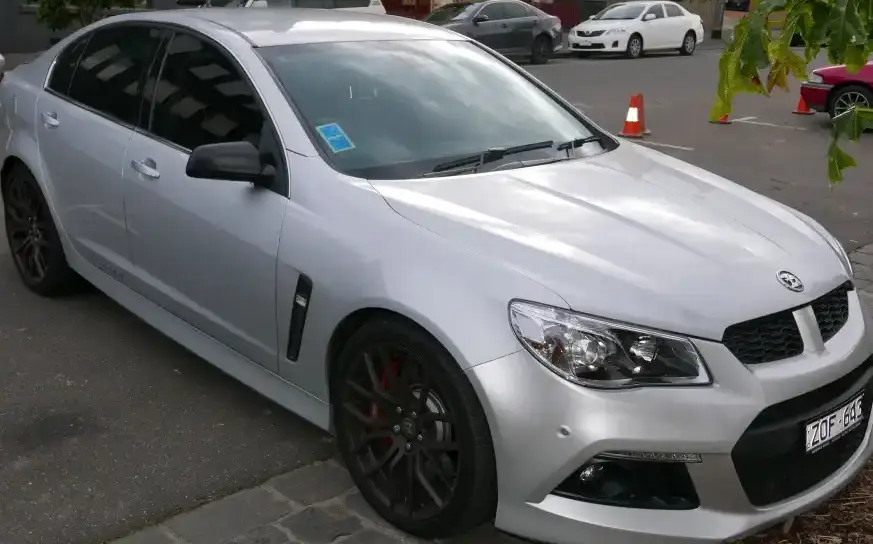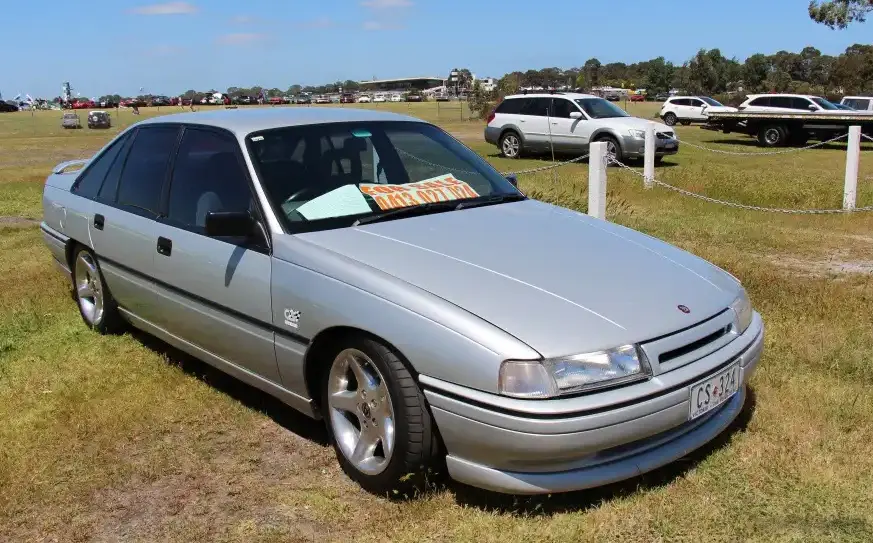
The HSV Clubsport (VN, VP) 5.0 V8 Automatic, produced between 1990 and 1993, represents a pivotal moment in the history of Australian performance sedans. Developed by Holden Special Vehicles (HSV), the Clubsport was designed to bridge the gap between Holden’s mainstream Commodore and the more focused, track-oriented GTS models. This variant, equipped with the 5.0-liter V8 engine and a four-speed automatic transmission, offered a compelling blend of performance and everyday usability, appealing to a broader audience than its manual transmission or higher-specification siblings. It was built on the GM V platform, specifically the VN and VP series Commodore chassis, and played a significant role in establishing HSV’s reputation for building uniquely Australian muscle cars.
Technical Specifications
| Brand | HSV |
| Model | Clubsport |
| Generation | Clubsport (VN, VP) |
| Type (Engine) | 5.0 V8 (245 Hp) Automatic |
| Start of production | 1990 |
| End of production | 1993 |
| Powertrain Architecture | Internal Combustion engine |
| Body type | Sedan |
| Seats | 5 |
| Doors | 4 |
| Fuel Type | Petrol (Gasoline) |
| Acceleration 0 – 100 km/h | 7.1 sec |
| Acceleration 0 – 62 mph | 7.1 sec |
| Acceleration 0 – 60 mph | 6.7 sec |
| Maximum speed | 236 km/h (146.64 mph) |
| Weight-to-power ratio | 6.1 kg/Hp, 164.8 Hp/tonne |
| Weight-to-torque ratio | 3.7 kg/Nm, 269 Nm/tonne |
| Power | 245 Hp @ 4600 rpm |
| Power per litre | 49.1 Hp/l |
| Torque | 400 Nm @ 3800 rpm (295.02 lb.-ft. @ 3800 rpm) |
| Engine displacement | 4987 cm3 (304.33 cu. in.) |
| Number of cylinders | 8 |
| Engine configuration | V-engine |
| Cylinder Bore | 101.6 mm (4 in.) |
| Piston Stroke | 76.8 mm (3.02 in.) |
| Compression ratio | 9.4:1 |
| Number of valves per cylinder | 2 |
| Fuel injection system | Multi-port manifold injection |
| Engine aspiration | Naturally aspirated engine |
| Kerb Weight | 1487 kg (3278.27 lbs.) |
| Trunk (boot) space – minimum | 555 l (19.6 cu. ft.) |
| Fuel tank capacity | 63 l (16.64 US gal | 13.86 UK gal) |
| Length | 4865 mm (191.54 in.) |
| Width | 1812 mm (71.34 in.) |
| Height | 1403 mm (55.24 in.) |
| Wheelbase | 2731 mm (107.52 in.) |
| Front track | 1451 mm (57.13 in.) |
| Rear (Back) track | 1478 mm (58.19 in.) |
| Drag coefficient (Cd) | 0.34 |
| Minimum turning circle | 10.4 m (34.12 ft.) |
| Drivetrain Architecture | Rear wheel drive |
| Number of gears and type of gearbox | 4 gears, automatic transmission |
| Front suspension | Independent, type McPherson with coil spring and anti-roll bar |
| Rear suspension | Independent coil spring |
| Front brakes | Ventilated discs |
| Rear brakes | Disc |
| Tires size | 235/45 ZR17 |
| Wheel rims size | 8J x 17 |
Powertrain & Engine Architecture
The heart of the Clubsport 5.0 V8 Automatic is Holden’s 4.987-liter (304 cubic inch) V8 engine. This engine, designated as the 308, was a mainstay of Australian motoring for decades. The VN and VP versions received upgrades over earlier iterations, including improved cylinder heads and a revised intake manifold. The multi-port fuel injection system, controlled by a Holden engine control unit, delivered fuel directly to each cylinder, optimizing combustion and power delivery. The engine produced 245 horsepower at 4600 rpm and 400 Nm (295 lb-ft) of torque at 3800 rpm. This power was then channeled through a four-speed automatic transmission, a GM-sourced unit known for its durability. While not as sporty as a manual transmission, the automatic offered a smoother, more convenient driving experience, making the Clubsport appealing to a wider range of buyers.
Driving Characteristics
The Clubsport 5.0 V8 Automatic offered a distinct driving experience. The automatic transmission, while providing ease of use, did slightly diminish the raw acceleration compared to the five-speed manual version. However, the torque-rich V8 engine provided ample power for everyday driving and spirited acceleration. The gear ratios were tuned for a balance between performance and fuel economy, with the automatic shifting smoothly through the gears. The rear-wheel-drive configuration contributed to a balanced feel, although it required careful throttle control in wet conditions. Compared to the higher-performance GTS models, the Clubsport Automatic felt more relaxed and refined, prioritizing comfort and usability over outright track performance.
Equipment & Trim Levels
The Clubsport, even in its 5.0 V8 Automatic guise, was reasonably well-equipped for its time. Standard features included power steering, central locking, and a basic sound system. The interior typically featured cloth upholstery, although leather was available as an option. The dashboard layout was functional and straightforward, with clear instrumentation. Optional extras included air conditioning, power windows, and a sunroof. The Clubsport’s interior was designed to be comfortable and practical, reflecting its positioning as a performance sedan for everyday use.
Chassis & Braking
The Clubsport utilized the Commodore’s robust chassis, which was modified by HSV to enhance handling and stability. The suspension featured McPherson struts at the front and an independent coil spring setup at the rear. A thicker anti-roll bar was fitted to reduce body roll during cornering. The braking system consisted of ventilated discs at the front and solid discs at the rear, providing adequate stopping power for most driving situations. The 235/45 ZR17 tires, mounted on 8J x 17 inch alloy wheels, offered good grip and contributed to the car’s overall handling characteristics.
Market Reception & Comparison
The HSV Clubsport 5.0 V8 Automatic was generally well-received by Australian motoring journalists and enthusiasts. Critics praised its powerful engine, comfortable ride, and relatively affordable price. Compared to the manual transmission Clubsport, the automatic version was seen as a more accessible option for drivers who preferred the convenience of an automatic gearbox. It also offered a more refined driving experience than the more basic Commodore variants. Fuel economy, however, was a common criticism, as the V8 engine consumed a significant amount of fuel, especially during spirited driving. Reliability was generally good, although regular maintenance was essential to keep the engine in optimal condition.
Legacy
The HSV Clubsport (VN, VP) 5.0 V8 Automatic holds a significant place in Australian automotive history. It represents a golden era of Australian-made performance cars and helped to establish HSV as a leading manufacturer of high-performance vehicles. Today, these cars are highly sought after by collectors and enthusiasts. The 5.0-liter V8 engine is known for its durability and tunability, making it a popular choice for restoration projects and performance upgrades. While fuel economy may not be a strong point, the Clubsport’s combination of power, comfort, and Australian heritage ensures its continued appeal in the used car market.