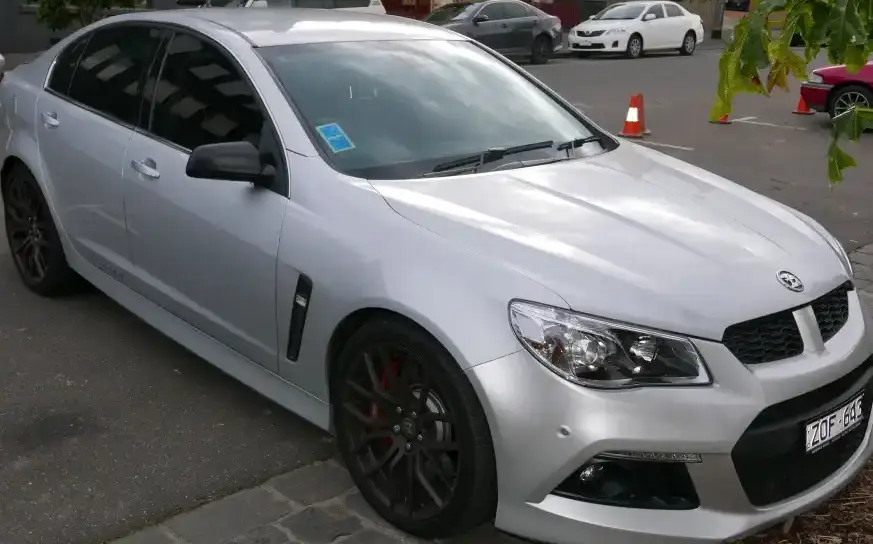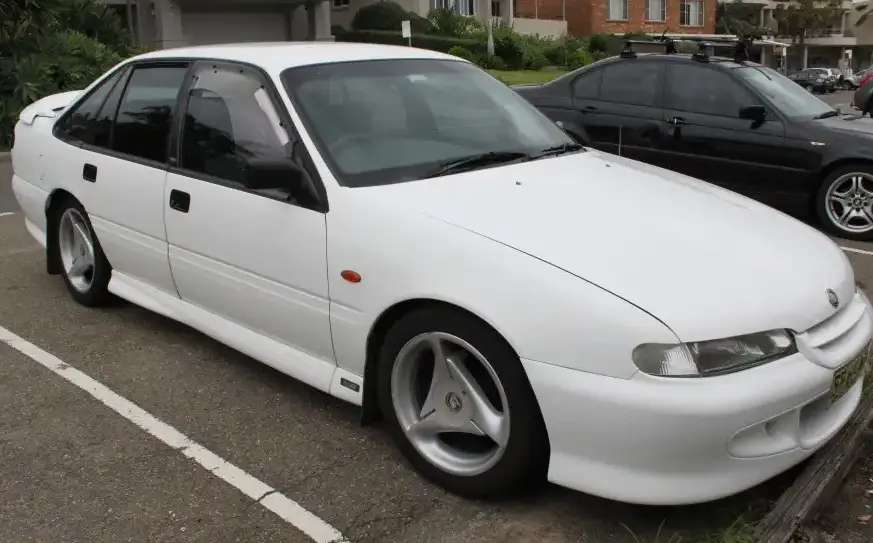
The HSV Clubsport (VR, VS) 185i V8, produced between 1993 and 1997, represents a pivotal moment in the history of Australian performance sedans. Developed by Holden Special Vehicles (HSV), the Clubsport was designed to bridge the gap between the standard Holden Commodore and the more track-focused GTS models. The VR and VS series, representing the first and second iterations of this model, quickly became icons of Australian motoring, offering a potent combination of V8 power, sporty handling, and practical family car usability. This specific 185i variant, equipped with the 5.0-liter V8 engine producing 252 horsepower, served as a mid-range offering within the Clubsport lineup, appealing to enthusiasts seeking a significant performance upgrade over the standard Commodore without the higher price tag of the GTS.
Technical Specifications
| Brand | HSV |
| Model | Clubsport |
| Generation | Clubsport (VR, VS) |
| Type (Engine) | 185i V8 (252 Hp) |
| Start of production | 1993 |
| End of production | 1997 |
| Powertrain Architecture | Internal Combustion engine |
| Body type | Sedan |
| Seats | 5 |
| Doors | 4 |
| Fuel Type | Petrol (Gasoline) |
| Acceleration 0 – 100 km/h | 6.7 sec |
| Acceleration 0 – 62 mph | 6.7 sec |
| Acceleration 0 – 60 mph | 6.4 sec |
| Maximum speed | 247 km/h (153.48 mph) |
| Weight-to-power ratio | 6.2 kg/Hp, 162.6 Hp/tonne |
| Weight-to-torque ratio | 3.9 kg/Nm, 258.1 Nm/tonne |
| Power | 252 Hp @ 4600 rpm |
| Power per litre | 50.5 Hp/l |
| Torque | 400 Nm @ 3800 rpm (295.02 lb.-ft. @ 3800 rpm) |
| Engine displacement | 4987 cm3 (304.33 cu. in.) |
| Number of cylinders | 8 |
| Engine configuration | V-engine |
| Cylinder Bore | 101.6 mm (4 in.) |
| Piston Stroke | 76.8 mm (3.02 in.) |
| Compression ratio | 8.4:1 |
| Number of valves per cylinder | 2 |
| Fuel injection system | Multi-port manifold injection |
| Engine aspiration | Naturally aspirated engine |
| Kerb Weight | 1550 kg (3417.17 lbs.) |
| Trunk (boot) space – minimum | 555 l (19.6 cu. ft.) |
| Fuel tank capacity | 80 l (21.13 US gal | 17.6 UK gal) |
| Length | 4861 mm (191.38 in.) |
| Width | 1794 mm (70.63 in.) |
| Height | 1448 mm (57.01 in.) |
| Wheelbase | 2736 mm (107.72 in.) |
| Front track | 1485 mm (58.46 in.) |
| Rear (Back) track | 1485 mm (58.46 in.) |
| Drag coefficient (Cd) | 0.32 |
| Drivetrain Architecture | The Internal combustion engine (ICE) drives the rear wheels of the vehicle. |
| Drive wheel | Rear wheel drive |
| Number of gears and type of gearbox | 5 gears, manual transmission |
| Front suspension | Independent, type McPherson with coil spring and anti-roll bar |
| Rear suspension | Independent coil spring |
| Front brakes | Ventilated discs |
| Rear brakes | Ventilated discs |
| Tires size | 235/45 R17 93V |
| Wheel rims size | 8J x 17 ET48 |
Powertrain & Engine Architecture
At the heart of the Clubsport 185i lay the Holden-sourced 5.0-liter (4987cc) V8 engine. This engine, designated as the 5.0L V8, was a staple of Australian motoring for decades. The ‘185i’ designation referred to the engine’s output in kilowatts (approximately 252 horsepower). The engine utilized a cast iron block and aluminum cylinder heads, featuring a two-valve per cylinder configuration and multi-port fuel injection. This system, while not as sophisticated as later sequential injection systems, provided adequate fuel delivery for the engine’s power output. The engine’s 8.4:1 compression ratio was a compromise between performance and the ability to run on the readily available 91 octane unleaded petrol common in Australia at the time. The standard transmission for the 185i was a robust 5-speed manual gearbox, providing direct control over the engine’s power. While an automatic transmission was offered as an option, the manual was favored by enthusiasts for its more engaging driving experience.
Driving Characteristics
The Clubsport 185i offered a noticeable step up in performance compared to the standard Commodore. The 252 hp V8 provided ample torque, making it a capable performer in both city and highway driving. Acceleration from 0-60 mph was achieved in around 6.4 seconds, a respectable figure for the early 1990s. The manual transmission allowed for precise gear changes, maximizing the engine’s power output. The suspension, featuring McPherson struts at the front and independent coil springs at the rear, provided a firm but comfortable ride. While not as aggressively tuned as the GTS, the Clubsport offered a significant improvement in handling over the standard Commodore, thanks to its stiffer springs and dampers. The rear-wheel-drive configuration contributed to a balanced chassis, making it enjoyable to drive on winding roads.
Equipment & Trim Levels
The Clubsport 185i was positioned as a sporty, yet relatively affordable, performance sedan. Standard equipment included power steering, central locking, and an upgraded sound system. The interior featured sports seats with unique cloth upholstery, and a leather-wrapped steering wheel. Air conditioning was typically standard, though some early models may have required it as an option. Optional extras included a sunroof, upgraded sound system, and various cosmetic enhancements. The dashboard layout was largely similar to the standard Commodore, but with unique instrument cluster graphics and a sports steering wheel.
Chassis & Braking
The Clubsport utilized the Commodore’s robust chassis, but with several key upgrades. Stiffer springs and dampers were fitted to improve handling and reduce body roll. The front suspension featured a thicker anti-roll bar, further enhancing cornering stability. Braking duties were handled by ventilated disc brakes on all four wheels, providing ample stopping power. The 17-inch alloy wheels, shod with 235/45 R17 tires, contributed to both the car’s sporty appearance and improved grip.
Market Reception & Comparison
The HSV Clubsport 185i was well-received by Australian motoring journalists and enthusiasts. It was praised for its potent V8 engine, improved handling, and relatively affordable price. Compared to the higher-spec GTS, the Clubsport offered a more accessible entry point into the world of HSV performance. The 185i was also seen as a more practical option than the GTS, with a slightly softer suspension setup that made it more comfortable for everyday driving. Fuel economy, while not a primary concern for buyers of a V8 performance sedan, was reasonable for the time, averaging around 18-22 mpg. Reliability was generally good, although the V8 engine required regular maintenance to ensure optimal performance.
Legacy
The HSV Clubsport VR and VS 185i V8 holds a significant place in Australian automotive history. It represents a golden era of Australian-made performance cars, and remains a popular choice among collectors and enthusiasts. Today, well-maintained examples of the Clubsport 185i are highly sought after, and values have been steadily increasing in recent years. The 5.0-liter V8 engine, while not the most technologically advanced, is known for its durability and relatively simple maintenance requirements. The Clubsport 185i continues to be a testament to the engineering prowess and passion for performance that defined HSV during the 1990s.