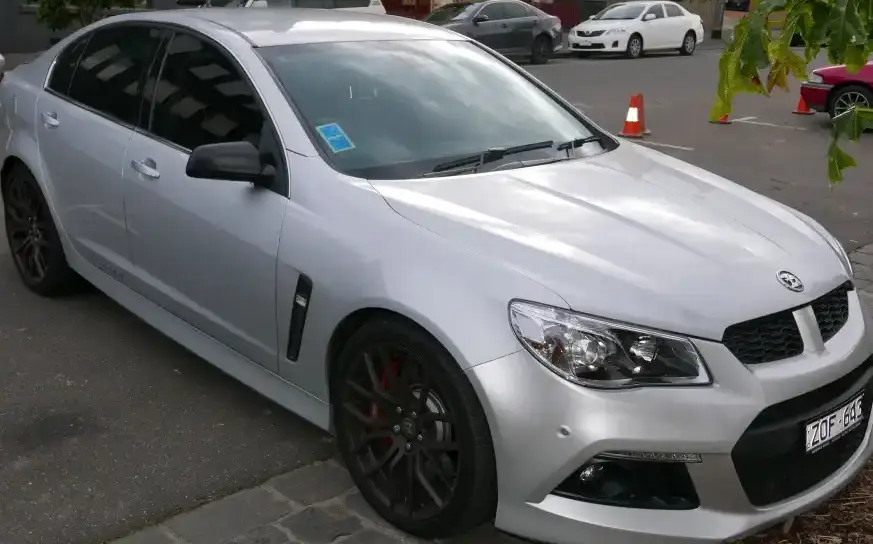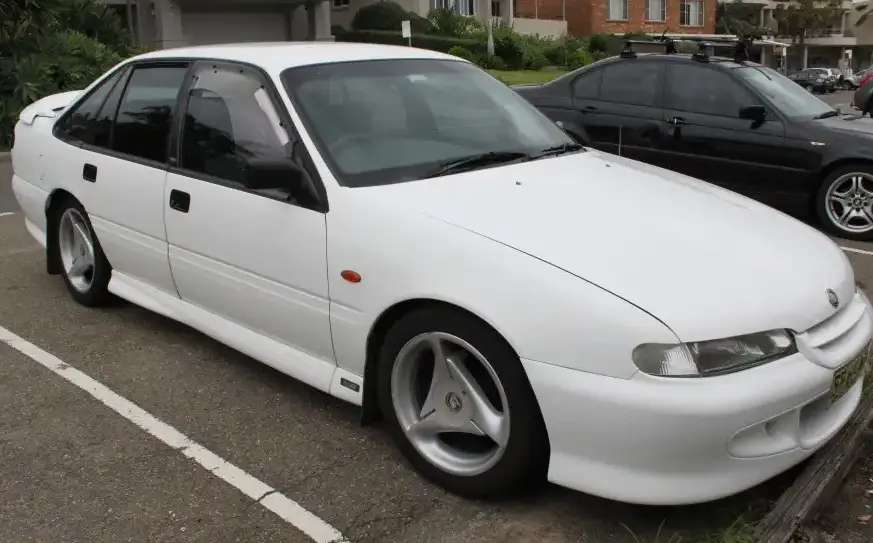
The HSV Clubsport (VR, VS) 185i, produced between 1993 and 1997, represented a significant offering from Holden Special Vehicles (HSV), the performance car division of General Motors’ Australian subsidiary, Holden. Positioned as a performance-oriented sedan, the 185i variant occupied a middle ground within the broader Clubsport lineup, offering a compelling blend of V8 power and relative affordability. It was based on the Holden Commodore (VR and VS series) and aimed to deliver a more engaging driving experience than the standard Commodore while remaining accessible to a wider audience than the more expensive and track-focused HSV models. The VR series ran from 1993-1996, with the VS series following from 1996-1997, receiving minor cosmetic and mechanical updates.
Technical Specifications
| Brand | HSV |
| Model | Clubsport |
| Generation | Clubsport (VR, VS) |
| Type (Engine) | 185i V8 (252 Hp) Automatic |
| Start of production | 1993 |
| End of production | 1997 |
| Powertrain Architecture | Internal Combustion engine |
| Body type | Sedan |
| Seats | 5 |
| Doors | 4 |
| Fuel Type | Petrol (Gasoline) |
| Acceleration 0 – 100 km/h | 7.4 sec |
| Acceleration 0 – 62 mph | 7.4 sec |
| Acceleration 0 – 60 mph | 7 sec |
| Maximum speed | 238 km/h (147.89 mph) |
| Weight-to-power ratio | 6.3 kg/Hp, 160 Hp/tonne |
| Weight-to-torque ratio | 3.9 kg/Nm, 254 Nm/tonne |
| Power | 252 Hp @ 4800 rpm |
| Power per litre | 50.5 Hp/l |
| Torque | 400 Nm @ 3800 rpm (295.02 lb.-ft. @ 3800 rpm) |
| Engine displacement | 4987 cm3 (304.33 cu. in.) |
| Number of cylinders | 8 |
| Engine configuration | V-engine |
| Cylinder Bore | 101.6 mm (4 in.) |
| Piston Stroke | 76.8 mm (3.02 in.) |
| Compression ratio | 8.4:1 |
| Number of valves per cylinder | 2 |
| Fuel injection system | Multi-port manifold injection |
| Engine aspiration | Naturally aspirated engine |
| Kerb Weight | 1575 kg (3472.28 lbs.) |
| Trunk (boot) space – minimum | 555 l (19.6 cu. ft.) |
| Fuel tank capacity | 80 l (21.13 US gal | 17.6 UK gal) |
| Length | 4861 mm (191.38 in.) |
| Width | 1794 mm (70.63 in.) |
| Height | 1448 mm (57.01 in.) |
| Wheelbase | 2736 mm (107.72 in.) |
| Front track | 1485 mm (58.46 in.) |
| Rear (Back) track | 1485 mm (58.46 in.) |
| Drag coefficient (Cd) | 0.32 |
| Drivetrain Architecture | Rear wheel drive |
| Drive wheel | Rear wheel drive |
| Number of gears and type of gearbox | 4 gears, automatic transmission |
| Front suspension | Independent, type McPherson with coil spring and anti-roll bar |
| Rear suspension | Independent coil spring |
| Front brakes | Ventilated discs |
| Rear brakes | Ventilated discs |
| Tires size | 235/45 R17 93V |
| Wheel rims size | 8J x 17 ET48 |
Powertrain & Engine Architecture
The heart of the Clubsport 185i was Holden’s 5.0-liter (4987cc) V8 engine, designated as the 5.0L. This engine, internally known as the Holden V8, was a naturally aspirated, pushrod V8 with a 90-degree V-angle. The 185i version produced 252 horsepower at 4800 rpm and 400 Nm (295 lb-ft) of torque at 3800 rpm. It utilized multi-port fuel injection and a relatively conservative 8.4:1 compression ratio. The engine’s architecture was relatively simple and robust, prioritizing reliability and low-end torque over outright peak power. The automatic transmission paired with the 185i was a four-speed unit, a GM 4L60-E. This transmission was chosen for its durability and suitability for everyday driving, although it wasn’t as responsive as the available five-speed manual.
Driving Characteristics
The Clubsport 185i with the automatic transmission offered a comfortable and relatively effortless driving experience. While not as aggressively geared as the manual versions, the automatic provided smooth shifts and made the V8’s power accessible in a wider range of driving situations. Acceleration to 100 km/h (62 mph) took approximately 7.4 seconds, which was respectable for the time but noticeably slower than the manual-equipped Clubsport. The automatic transmission’s torque converter did sap some power, but it also contributed to a more relaxed cruising experience. The suspension, while firm enough to provide good body control, wasn’t overly harsh, making it suitable for daily use. The rear-wheel-drive configuration provided a balanced feel, but required careful throttle control in wet conditions.
Equipment & Trim Levels
The Clubsport 185i came standard with a number of features designed to enhance both comfort and performance. These included sports seats, a leather-wrapped steering wheel, power windows and mirrors, and air conditioning. HSV also added unique styling cues, such as a body kit (including front and rear spoilers), unique badging, and a sports exhaust system. Optional extras included a sunroof, upgraded sound system, and various interior trim upgrades. The interior generally featured a dark color scheme with a focus on functionality rather than luxury. The VR series had a slightly more basic dashboard layout compared to the later VS series, which received a more integrated and modern design.
Chassis & Braking
The Clubsport 185i utilized the Commodore’s chassis, but with several key enhancements. The suspension was retuned with stiffer springs and dampers, and a larger diameter anti-roll bar was fitted to the front. This resulted in reduced body roll and improved handling. Braking was handled by ventilated disc brakes on all four wheels, providing adequate stopping power for the car’s weight and performance. The standard tire size was 235/45 R17, mounted on 17-inch alloy wheels. While the braking system was effective, it wasn’t as sophisticated as those found on some contemporary European performance cars.
Market Reception & Comparison
The Clubsport 185i was generally well-received by Australian motoring journalists and enthusiasts. It was praised for its strong V8 engine, comfortable ride, and relatively affordable price. Compared to the higher-spec Clubsport variants (such as the VR-GSS and VS GTS), the 185i offered a more accessible entry point into the HSV lineup. The manual transmission versions were often preferred by enthusiasts for their greater responsiveness and driver engagement. However, the automatic version appealed to buyers who prioritized comfort and ease of use. Fuel economy was typical for a V8 of the era, averaging around 14-16 liters per 100 kilometers (17-20 mpg) in mixed driving.
Legacy
The HSV Clubsport VR and VS 185i have become increasingly collectible in the years since their production ended. The 5.0-liter Holden V8 is renowned for its durability and relative simplicity, making these cars relatively easy and affordable to maintain. While not the fastest or most technologically advanced performance car of its time, the Clubsport 185i represents a significant chapter in Australian automotive history. It embodies the spirit of Australian muscle cars and continues to provide a rewarding driving experience for enthusiasts today. Well-maintained examples command strong prices on the used car market, particularly those with low mileage and a complete service history. The automatic transmission, while not as desirable as the manual, doesn’t significantly detract from the car’s appeal, and many examples remain on the road, testament to the robustness of the powertrain.