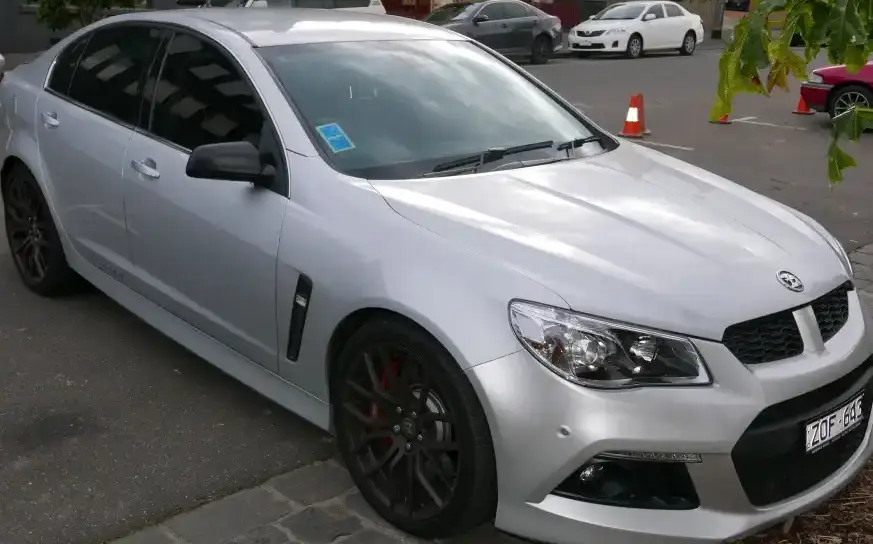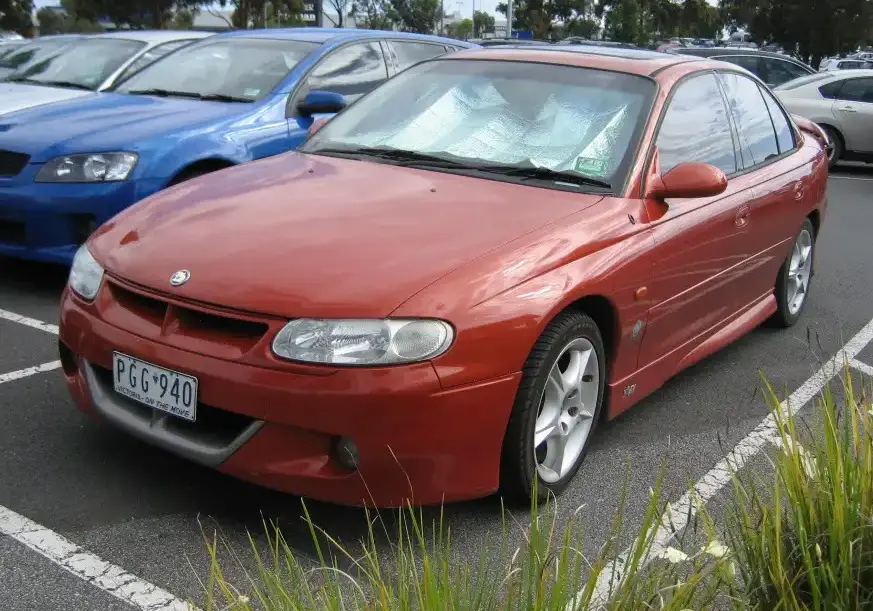
The HSV Clubsport (VT) 5.0 V8, produced between 1997 and 1999, represents a pivotal moment in the history of Holden Special Vehicles (HSV), the performance car division of General Motors’ Australian subsidiary, Holden. Based on the Holden Commodore (VT series), the Clubsport was designed to offer a more aggressive and performance-focused alternative to the standard Commodore range. It occupied a key position in HSV’s lineup, positioned as the entry-level performance model, below the more luxurious and powerful GTS and Senator models. The VT series marked a significant upgrade for the Clubsport, introducing a larger displacement V8 engine and revised styling, solidifying its reputation as a formidable Australian muscle car.
Technical Specifications
| Brand | HSV |
| Model | Clubsport |
| Generation | Clubsport (VT) |
| Type (Engine) | 5.0 V8 (265 Hp) |
| Start of production | 1997 |
| End of production | 1999 |
| Powertrain Architecture | Internal Combustion engine |
| Body type | Sedan |
| Seats | 5 |
| Doors | 4 |
| Fuel Type | Petrol (Gasoline) |
| Acceleration 0 – 100 km/h | 6.4 sec |
| Acceleration 0 – 62 mph | 6.4 sec |
| Acceleration 0 – 60 mph | 6.1 sec |
| Maximum speed | 249 km/h (154.72 mph) |
| Weight-to-power ratio | 6.4 kg/Hp, 155.2 Hp/tonne |
| Weight-to-torque ratio | 4 kg/Nm, 251.8 Nm/tonne |
| Power | 265 Hp @ 5200 rpm |
| Power per litre | 53.1 Hp/l |
| Torque | 430 Nm @ 3600 rpm (317.15 lb.-ft. @ 3600 rpm) |
| Engine displacement | 4987 cm3 (304.33 cu. in.) |
| Number of cylinders | 8 |
| Engine configuration | V-engine |
| Cylinder Bore | 101.6 mm (4 in.) |
| Piston Stroke | 76.8 mm (3.02 in.) |
| Compression ratio | 8.8:1 |
| Number of valves per cylinder | 2 |
| Fuel injection system | Multi-port manifold injection |
| Engine aspiration | Naturally aspirated engine |
| Kerb Weight | 1708 kg (3765.5 lbs.) |
| Trunk (boot) space – minimum | 475 l (16.77 cu. ft.) |
| Fuel tank capacity | 75 l (19.81 US gal | 16.5 UK gal) |
| Length | 4919 mm (193.66 in.) |
| Width | 1842 mm (72.52 in.) |
| Height | 1450 mm (57.09 in.) |
| Wheelbase | 2788 mm (109.76 in.) |
| Front track | 1558 mm (61.34 in.) |
| Rear (Back) track | 1574 mm (61.97 in.) |
| Drag coefficient (Cd) | 0.32 |
| Drivetrain Architecture | The Internal combustion engine (ICE) drives the rear wheels of the vehicle. |
| Drive wheel | Rear wheel drive |
| Number of gears and type of gearbox | 5 gears, manual transmission |
| Front suspension | Independent, type McPherson with coil spring and anti-roll bar |
| Rear suspension | Independent coil spring |
| Front brakes | Ventilated discs |
| Rear brakes | Ventilated discs |
| Tires size | 235/45 ZR17 |
| Wheel rims size | 8.0J x 17 |
Powertrain & Engine Architecture
The heart of the VT Clubsport was the 5.0-liter (4987cc) Holden V8 engine, designated as the 5.0L. This engine represented a significant upgrade from the 3.8-liter V6 offered in some earlier Clubsport models. The engine utilized a cast iron block and aluminum cylinder heads, featuring a two-valve per cylinder configuration and multi-port fuel injection. The 5.0L produced 265 horsepower at 5200 rpm and 430 Nm (317 lb-ft) of torque at 3600 rpm. The engine code is generally identified as the 5.0L, though variations existed within the VT series. The Clubsport was exclusively offered with a five-speed manual transmission, providing a direct and engaging driving experience. This transmission was a Borg-Warner T5, known for its robustness and relatively short gear ratios, optimized for performance.
Driving Characteristics
The VT Clubsport 5.0L delivered a distinctly muscular driving experience. The 5.0L V8 provided strong acceleration, with a 0-60 mph time of around 6.1 seconds. The manual transmission allowed for precise control over the engine’s power, making it a rewarding car to drive on both the street and the track. Compared to the later, more refined HSV models, the VT Clubsport felt more raw and visceral. The gear ratios were well-suited to maximizing the engine’s torque, providing strong pull throughout the rev range. While not as technologically advanced as some of its European or Japanese counterparts, the Clubsport offered a uniquely Australian brand of performance – powerful, straightforward, and engaging.
Equipment & Trim Levels
The VT Clubsport came reasonably well-equipped, though it was positioned as the more accessible performance model. Standard features included air conditioning, power windows and mirrors, central locking, and a sports steering wheel. The interior featured unique Clubsport-specific trim, including sports seats with distinctive bolstering. Optional extras included a sunroof, upgraded sound system, and leather upholstery. The dashboard layout was largely similar to the standard VT Commodore, but with unique instrument cluster graphics and HSV badging. The exterior was distinguished by a unique body kit, including a front lip spoiler, side skirts, and a rear spoiler, along with HSV-specific alloy wheels.
Chassis & Braking
The Clubsport’s chassis benefited from HSV’s engineering expertise. It featured a revised suspension setup compared to the standard Commodore, with stiffer springs and dampers, and a larger diameter anti-roll bar. This resulted in improved handling and reduced body roll. The braking system consisted of ventilated disc brakes on all four wheels, providing ample stopping power. The tires were 235/45 ZR17, mounted on 8.0J x 17 inch alloy wheels, offering a good balance of grip and ride comfort. The rear suspension utilized a coil-sprung independent setup, contributing to improved handling dynamics.
Market Reception & Comparison
The VT Clubsport was well-received by Australian motoring journalists and enthusiasts. It was praised for its powerful engine, engaging driving experience, and aggressive styling. Critics noted that it offered excellent value for money, providing a significant performance upgrade over the standard Commodore at a relatively affordable price. Compared to the HSV GTS, the Clubsport offered a more accessible entry point into the HSV brand, appealing to a wider range of buyers. The Clubsport’s fuel economy was typical for a V8 performance car of the era, averaging around 15-18 liters per 100 kilometers. Reliability was generally good, although the 5.0L V8 engine could be prone to oil leaks as it aged.
Legacy
The VT Clubsport 5.0 V8 remains a highly sought-after Australian muscle car. Its combination of performance, affordability, and iconic styling has made it a favorite among collectors and enthusiasts. The 5.0L V8 engine is known for its durability and relatively simple mechanical design, making it a popular choice for restoration and modification projects. Well-maintained examples of the VT Clubsport continue to command strong prices in the used car market, reflecting their enduring appeal and status as a significant piece of Australian automotive history. The VT series, and the Clubsport in particular, helped solidify HSV’s reputation as a leading manufacturer of high-performance vehicles in Australia.