Technical Specifications
| Brand | Hummer |
| Model | H2 |
| Generation | H2 (GMT 840) |
| Type (Engine) | 6.0i V8 (321 Hp) |
| Start of production | 2002 |
| End of production | 2004 |
| Powertrain Architecture | Internal Combustion engine |
| Body type | Off-road vehicle, SUV |
| Seats | 4 |
| Doors | 5 |
| Fuel consumption (urban) | 25 l/100 km (9.4 US mpg) |
| Fuel consumption (extra urban) | 12 l/100 km (19.6 US mpg) |
| Fuel Type | Petrol (Gasoline) |
| Acceleration 0 – 100 km/h | 11 sec |
| Acceleration 0 – 62 mph | 11 sec |
| Acceleration 0 – 60 mph | 10.5 sec |
| Maximum speed | 160 km/h (99.42 mph) |
| Weight-to-power ratio | 9 kg/Hp |
| Weight-to-torque ratio | 5.9 kg/Nm |
| Power | 321 Hp @ 5200 rpm |
| Torque | 488 Nm @ 4000 rpm (359.93 lb.-ft. @ 4000 rpm) |
| Engine layout | Front, Longitudinal |
| Engine Model/Code | LQ4 |
| Engine displacement | 5967 cm3 (364.13 cu. in.) |
| Number of cylinders | 8 |
| Engine configuration | V-engine |
| Cylinder Bore | 101.6 mm (4 in.) |
| Piston Stroke | 92 mm (3.62 in.) |
| Compression ratio | 9.4:1 |
| Number of valves per cylinder | 2 |
| Fuel injection system | Multi-port manifold injection |
| Engine aspiration | Naturally aspirated engine |
| Valvetrain | OHV |
| Engine oil capacity | 5.7 l (6.02 US qt | 5.02 UK qt) |
| Coolant capacity | 14 l (14.79 US qt | 12.32 UK qt) |
| Kerb Weight | 2901 kg (6395.61 lbs.) |
| Max. weight | 3901 kg (8600.23 lbs.) |
| Max load | 1000 kg (2204.62 lbs.) |
| Trunk (boot) space – maximum | 2451 l (86.56 cu. ft.) |
| Fuel tank capacity | 121 l (31.96 US gal | 26.62 UK gal) |
| Length | 4820 mm (189.76 in.) |
| Width | 2063 mm (81.22 in.) |
| Height | 2080 mm (81.89 in.) |
| Wheelbase | 3118 mm (122.76 in.) |
| Front track | 1763 mm (69.41 in.) |
| Rear track | 1763 mm (69.41 in.) |
| Drag coefficient (Cd) | 0.6 |
| Minimum turning circle | 13.25 m (43.47 ft.) |
| Drive wheel | All wheel drive (4×4) |
| Number of gears | 4 |
| Gearbox type | Automatic transmission |
| Front suspension | Torsion |
| Rear suspension | Coil spring |
| Front brakes | Ventilated discs |
| Rear brakes | Ventilated discs |
| Assisting systems | ABS (Anti-lock braking system) |
| Tires size | 315/70 R17 |
| Wheel rims size | 17 |
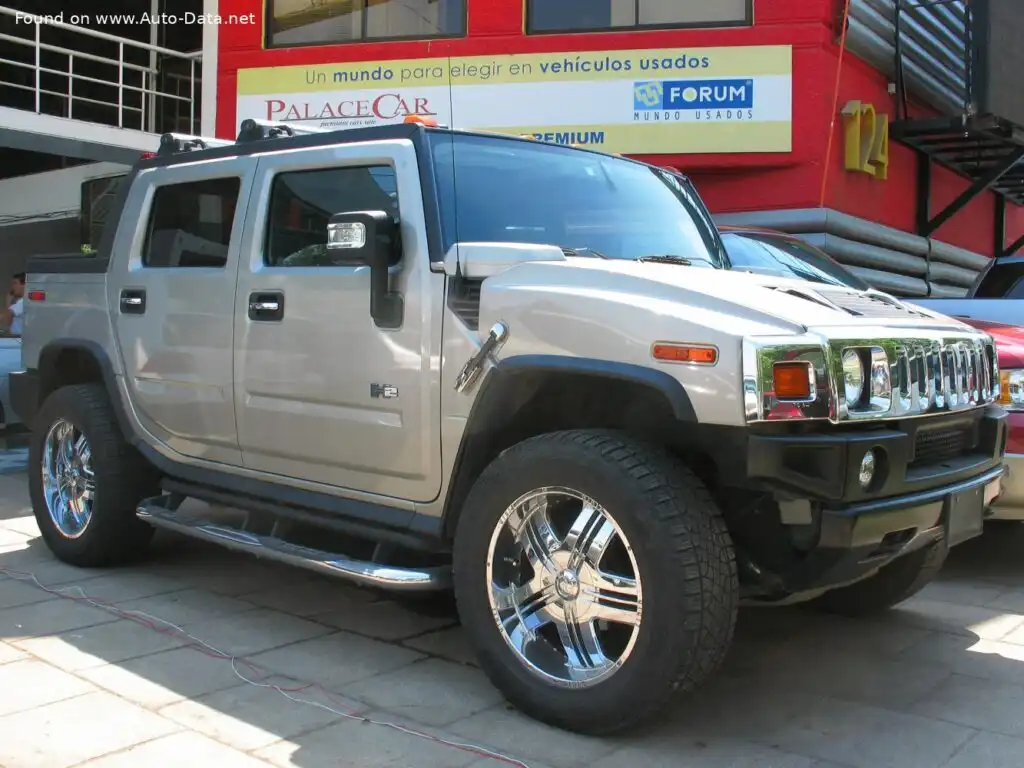
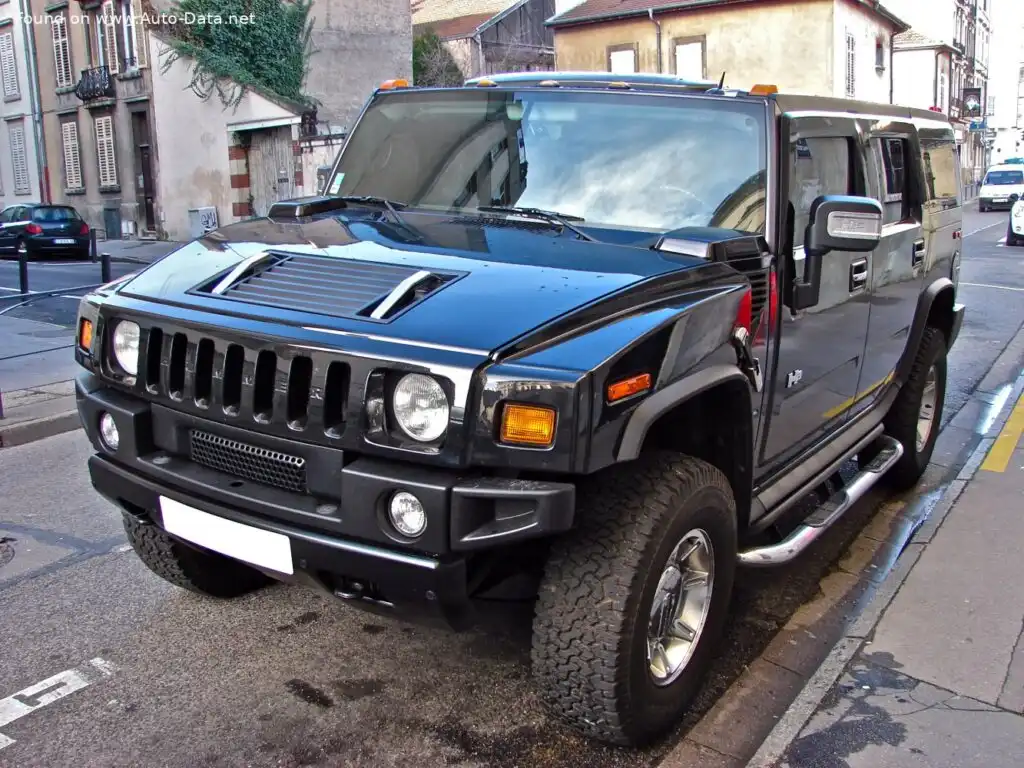
The Hummer H2, produced between 2002 and 2009, represented General Motors’ attempt to capitalize on the growing popularity of large, capable SUVs. It specifically targeted a market segment desiring a vehicle with both off-road prowess and a degree of everyday usability. The 6.0i V8 variant, powered by the LQ4 engine and paired with a four-speed automatic transmission, was a cornerstone of the H2 lineup during the 2002-2004 model years. This configuration aimed to provide a balance between substantial power and relative ease of driving, positioning itself as a more accessible entry point into the Hummer brand compared to later, more performance-focused trims. The H2 was built on GM’s GMT840 platform, sharing components with Chevrolet and GMC trucks and SUVs, but distinguished by its unique styling and off-road enhancements.
Powertrain & Engine Architecture
The heart of the 2002-2004 Hummer H2 6.0i was the LQ4, a 5.967-liter (364.13 cubic inch) V8 engine. This engine, a member of GM’s Vortec family, featured a cast iron block and aluminum cylinder heads. It utilized a traditional overhead valve (OHV) valvetrain with two valves per cylinder. Fuel delivery was managed by a multi-port fuel injection system, providing precise fuel metering for optimal combustion. The LQ4 produced 321 horsepower at 5200 rpm and 488 Nm (359.93 lb-ft) of torque at 4000 rpm. This output was considered substantial for the time, providing the H2 with ample power for both on-road driving and off-road excursions. The engine was longitudinally mounted in the chassis. The four-speed automatic transmission (likely a 4L60-E) was chosen for its durability and relative simplicity, prioritizing reliability over outright performance. While not the most modern transmission available, it was well-suited to the H2’s intended use case.
Driving Characteristics
The 6.0i V8 and four-speed automatic combination in the H2 delivered a driving experience characterized by strong low-end torque and adequate acceleration. The 0-60 mph time of around 10.5 seconds was respectable for a vehicle of its size and weight. However, the four-speed automatic lacked the refinement and efficiency of more modern transmissions with additional gears. Gear changes were noticeable, and the engine could feel strained during aggressive acceleration. Compared to the later H2 models equipped with more powerful engines or the available manual transmission, the 6.0i automatic felt less responsive. The automatic transmission prioritized ease of use, making it a popular choice for drivers who preferred a less engaging driving experience. The H2’s substantial weight (approximately 6,400 lbs) and high center of gravity also contributed to a less nimble feel on paved roads.
Equipment & Trim Levels
The base H2 trim level, powered by the 6.0i V8 and automatic transmission, came standard with features such as air conditioning, power windows and locks, a CD player, and cloth upholstery. Optional extras included leather upholstery, a premium sound system, a sunroof, and various off-road packages that added features like a locking rear differential and skid plates. The interior design was functional and robust, reflecting the H2’s off-road intentions. While not luxurious, the interior offered a comfortable and practical space for passengers. The dashboard layout was straightforward, with large, easy-to-read gauges.
Chassis & Braking
The H2’s chassis was built on a truck-based frame, providing a solid foundation for off-road driving. The front suspension utilized a torsion bar setup, while the rear suspension employed coil springs. This configuration offered a good balance between ride comfort and off-road capability. The H2 was equipped with ventilated disc brakes on all four wheels, providing adequate stopping power for its weight. An anti-lock braking system (ABS) was standard, enhancing safety during emergency braking situations. The H2’s large tires (315/70 R17) contributed to its off-road traction and distinctive appearance.
Market Reception & Comparison
The Hummer H2, particularly the 6.0i V8 automatic variant, received mixed reviews from automotive critics. While praised for its powerful engine and off-road capability, it was often criticized for its poor fuel economy (9.4 mpg city / 19.6 mpg highway) and cumbersome handling. Compared to other SUVs of the time, the H2 stood out for its aggressive styling and rugged image. However, its high price tag and fuel consumption limited its appeal to a niche market. The 6.0i automatic was generally considered a good choice for drivers who prioritized ease of use and reliability over outright performance. The manual transmission offered a more engaging driving experience, while the later, more powerful engine options provided increased acceleration and towing capacity.
Legacy
The Hummer H2, despite its relatively short production run, left a lasting impact on the SUV market. It helped popularize the large, capable SUV segment and established the Hummer brand as a symbol of ruggedness and adventure. The LQ4 engine, while not known for exceptional longevity, proved to be reasonably reliable with proper maintenance. Today, the 2002-2004 H2 6.0i V8 models are sought after by enthusiasts who appreciate their unique styling and off-road capability. However, potential buyers should be aware of the vehicle’s high running costs and potential maintenance issues associated with its age and complexity. Parts availability is generally good, but specialized components can be expensive. The H2 remains a distinctive and iconic vehicle, representing a unique chapter in automotive history.