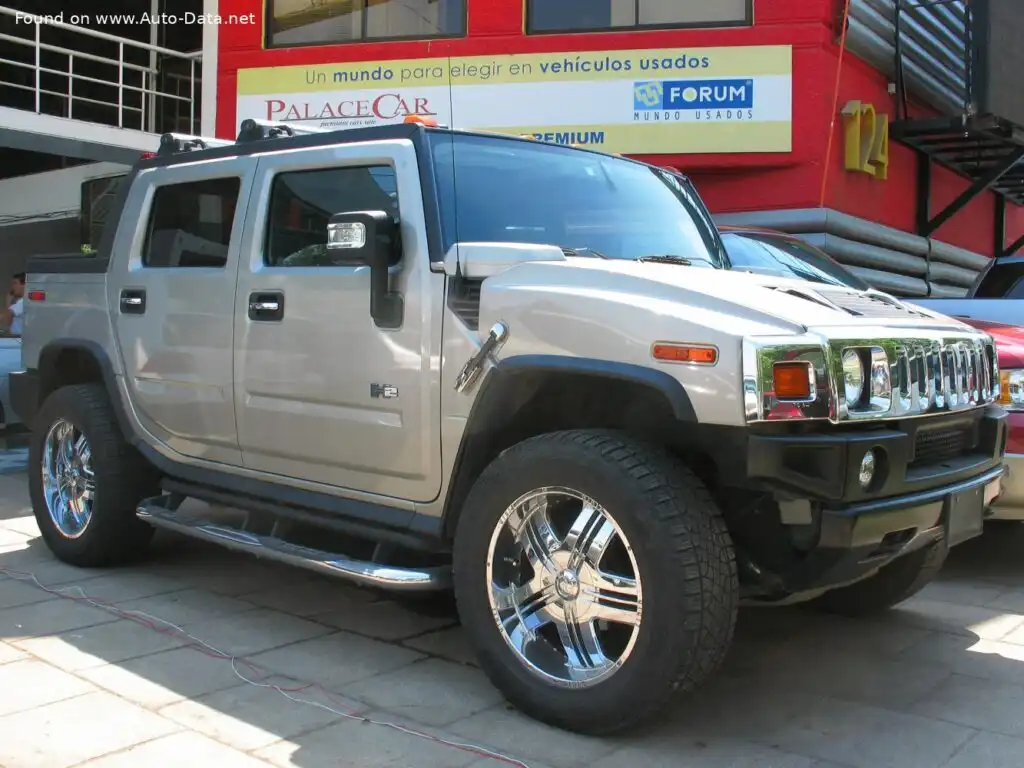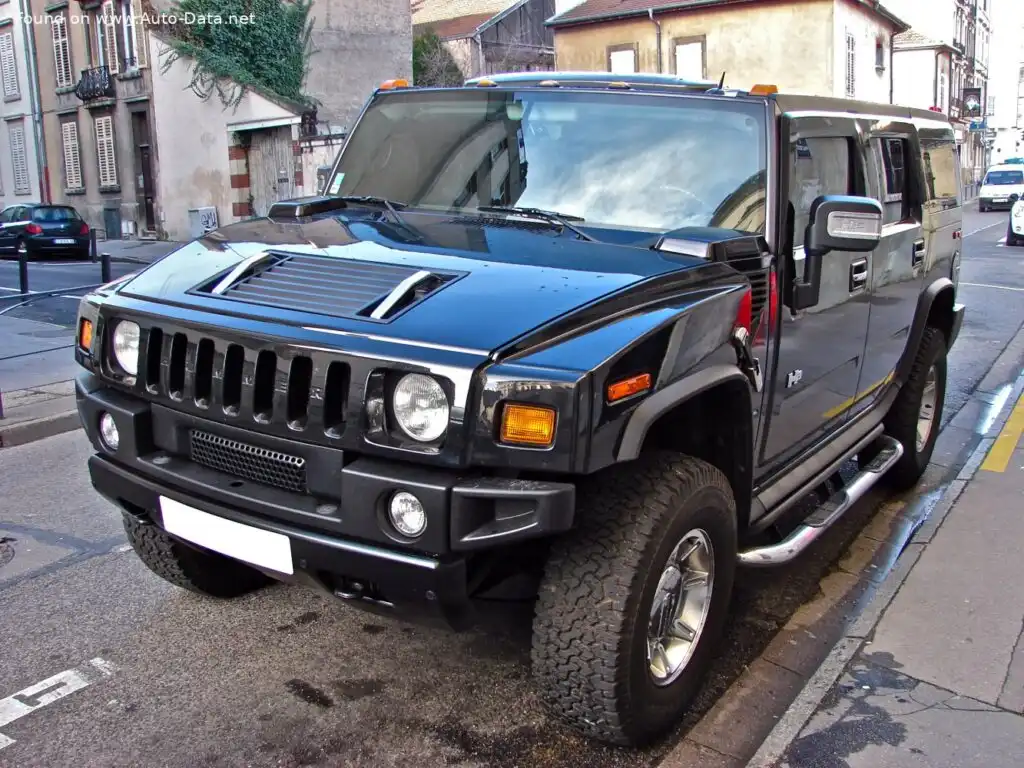
The Hummer H2, produced between 2003 and 2009, represented General Motors’ attempt to capitalize on the growing popularity of large, capable SUVs, particularly those with a military-inspired aesthetic. The 6.2i V8 4×4 Automatic variant, introduced in 2007, was a significant upgrade over the earlier models, offering increased power and refined performance. This version occupied the top-tier position within the H2 lineup, aimed at buyers seeking a blend of luxury, off-road capability, and substantial presence. It was built on the GMT840 platform, sharing components with other GM trucks and SUVs of the era, but distinguished by its unique styling and focus on off-road prowess.
Technical Specifications
| Brand | Hummer |
| Model | H2 |
| Generation | H2 (GMT 840) |
| Type (Engine) | 6.2i V8 (398 Hp) 4×4 Automatic |
| Start of production | 2007 |
| End of production | 2009 |
| Powertrain Architecture | Internal Combustion engine |
| Body type | Off-road vehicle, SUV |
| Seats | 5 |
| Doors | 5 |
| Fuel consumption (combined) | 18.1 l/100 km (13 US mpg, 15.6 UK mpg, 5.5 km/l) |
| Fuel Type | Petrol (Gasoline) |
| Acceleration 0 – 100 km/h | 7.8 sec |
| Acceleration 0 – 62 mph | 7.8 sec |
| Acceleration 0 – 60 mph | 7.4 sec |
| Maximum speed | 158 km/h (98.18 mph) |
| Weight-to-power ratio | 7.6 kg/Hp, 131.9 Hp/tonne |
| Weight-to-torque ratio | 5.3 kg/Nm, 190.3 Nm/tonne |
| Power | 398 Hp @ 5700 rpm |
| Power per litre | 64.6 Hp/l |
| Torque | 574 Nm @ 4400 rpm (423.36 lb.-ft. @ 4400 rpm) |
| Engine layout | Front, Longitudinal |
| Engine Model/Code | L92 |
| Engine displacement | 6162 cm3 (376.03 cu. in.) |
| Number of cylinders | 8 |
| Engine configuration | V-engine |
| Cylinder Bore | 103.25 mm (4.06 in.) |
| Piston Stroke | 92 mm (3.62 in.) |
| Compression ratio | 10.5:1 |
| Number of valves per cylinder | 2 |
| Fuel injection system | Multi-port manifold injection |
| Engine aspiration | Naturally aspirated engine |
| Valvetrain | OHV, VVT |
| Engine oil capacity | 5.7 l (6.02 US qt | 5.02 UK qt) |
| Coolant | 15.8 l (16.7 US qt | 13.9 UK qt) |
| Kerb Weight | 3017 kg (6651.35 lbs.) |
| Max. weight | 3900 kg (8598.03 lbs.) |
| Max load | 883 kg (1946.68 lbs.) |
| Trunk (boot) space – minimum | 1132 l (39.98 cu. ft.) |
| Trunk (boot) space – maximum | 2451 l (86.56 cu. ft.) |
| Fuel tank capacity | 121 l (31.96 US gal | 26.62 UK gal) |
| Length | 4820 mm (189.76 in.) |
| Width | 2063 mm (81.22 in.) |
| Height | 1993 mm (78.46 in.) |
| Wheelbase | 3118 mm (122.76 in.) |
| Front track | 1763 mm (69.41 in.) |
| Rear (Back) track | 1763 mm (69.41 in.) |
| Ride height (ground clearance) | 257 mm (10.12 in.) |
| Drag coefficient (Cd) | 0.6 |
| Minimum turning circle | 13.25 m (43.47 ft.) |
| Approach angle | 39.8° |
| Departure angle | 37.1° |
| Ramp-over angle | 23.5° |
| Wading depth | 610 mm (24.02 in.) |
| Drive wheel | All wheel drive (4×4) |
| Number of gears | 6 |
| Gearbox type | Automatic transmission |
| Front suspension | Torsion |
| Rear suspension | Rigid axle suspension |
| Front brakes | Ventilated discs |
| Rear brakes | Ventilated discs |
| Assisting systems | ABS (Anti-lock braking system) |
| Tires size | 315/70 R17 |
| Wheel rims size | 17 |
Powertrain & Engine Architecture
The heart of the 2007-2009 Hummer H2 was the GM L92 6.2-liter V8 engine. This engine, part of the GM Vortec family, was a significant upgrade from the earlier 6.0-liter engine. It featured aluminum cylinder heads, a cast iron block, and a robust bottom end designed for durability. The L92 utilized multi-port fuel injection and a single camshaft per bank, employing variable valve timing (VVT) to optimize performance and efficiency across the rev range. The engine produced 398 horsepower at 5700 rpm and 423 lb-ft of torque at 4400 rpm. This power was delivered through a six-speed automatic transmission (likely the 6L80E), chosen for its ability to handle the engine’s output and provide smooth shifting. The transmission featured overdrive for highway cruising and was electronically controlled for optimized shift points.
Driving Characteristics
The 6.2-liter V8 and six-speed automatic combination transformed the H2’s driving experience. Compared to earlier H2s with the 6.0-liter engine, the 6.2-liter offered noticeably quicker acceleration – 0-60 mph in around 7.4 seconds. The six-speed transmission allowed the engine to operate more efficiently at highway speeds, contributing to a slight improvement in fuel economy (though still relatively poor at 13 mpg combined). The automatic transmission, while smooth, wasn’t particularly sporty. Shift points were geared towards comfort and usability rather than aggressive performance. The H2’s substantial weight (over 6,600 lbs) was still apparent, but the increased torque of the 6.2-liter engine made towing and navigating challenging terrain significantly easier.
Equipment & Trim Levels
The 6.2-liter engine was typically offered on the highest trim levels of the H2. Standard features included leather upholstery, heated front seats, a premium sound system, automatic climate control, and a navigation system. Optional extras included a sunroof, upgraded wheels, and various off-road packages with features like locking differentials and skid plates. The interior design was robust and functional, reflecting the H2’s off-road intentions, but also offered a degree of luxury expected in a vehicle of its price point.
Chassis & Braking
The H2 utilized a body-on-frame construction, providing a sturdy platform for off-road use. The suspension consisted of a torsion bar front suspension and a solid rear axle with leaf springs. This setup prioritized durability and articulation over refined on-road handling. The H2 came equipped with ventilated disc brakes on all four wheels, assisted by an anti-lock braking system (ABS). Given the vehicle’s weight, braking performance was adequate but not exceptional. The H2’s large tires (typically 315/70 R17) provided good traction in various conditions.
Market Reception & Comparison
The 6.2-liter H2 was generally well-received by critics, who praised its increased power and improved driving experience compared to earlier models. However, its poor fuel economy and substantial size remained points of criticism. Compared to the 6.0-liter H2, the 6.2-liter offered a significant performance boost, but at a higher price point. It also offered a more refined experience than some of its competitors, such as the Ford Excursion, but lacked the off-road pedigree of vehicles like the Jeep Wrangler. The H2’s primary appeal lay in its unique styling and combination of luxury and capability.
Legacy
The Hummer H2, particularly the 6.2-liter variant, has developed a cult following among enthusiasts. While its fuel economy and environmental impact are significant drawbacks, its robust construction and powerful engine have proven relatively reliable. Used examples are still sought after, often by those looking for a distinctive and capable SUV. However, maintenance costs can be high due to the vehicle’s size and complexity. The H2 represents a unique chapter in automotive history, embodying a period of excess and a fascination with large, imposing vehicles. Its legacy continues to be debated, but its impact on the SUV market is undeniable.