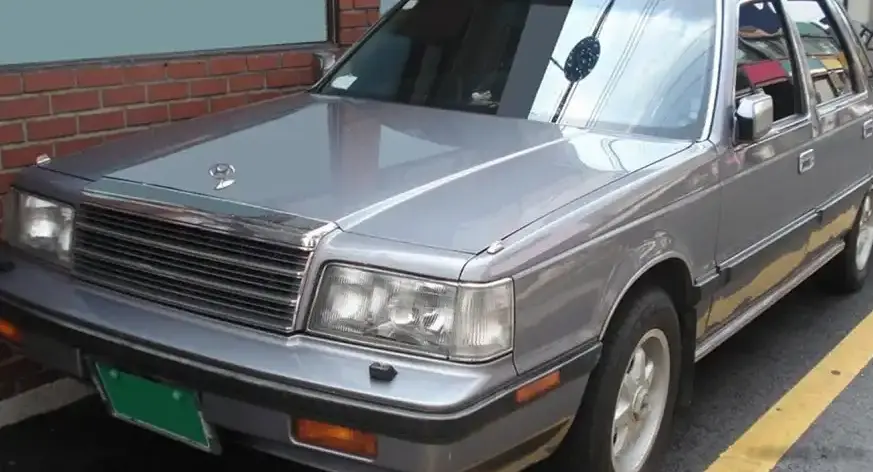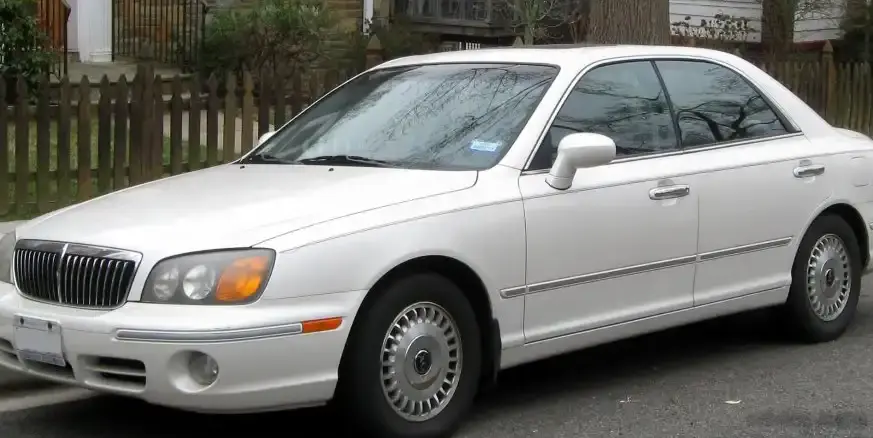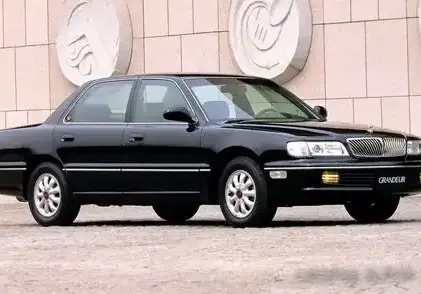
The Hyundai Grandeur II (LX) 2.0i Automatic, produced between 1992 and 1996, marked a pivotal moment for Hyundai as it entered the mid-size luxury sedan market. Often marketed as the Azera in certain regions, the Grandeur II aimed to deliver a spacious, well-equipped vehicle at a more accessible price point than established Japanese and European competitors. This 2.0-liter, 139 horsepower configuration with an automatic transmission served as a crucial entry point into the Grandeur II lineup, appealing to buyers who prioritized ease of use and a comfortable driving experience. Built on Hyundai’s LX platform – a front-engine, front-wheel-drive configuration – it was instrumental in building Hyundai’s reputation for value and dependability.
Technical Specifications
| Brand | Hyundai |
| Model | Grandeur/Azera |
| Generation | Grandeur II (LX) |
| Type (Engine) | 2.0i (139 Hp) Automatic |
| Start of production | 1992 |
| End of production | 1996 |
| Powertrain Architecture | Internal Combustion engine |
| Body type | Sedan |
| Seats | 5 |
| Doors | 4 |
| Fuel Type | Petrol (Gasoline) |
| Maximum speed | 178 km/h (110.6 mph) |
| Weight-to-power ratio | 11.1 kg/Hp, 90.3 Hp/tonne |
| Weight-to-torque ratio | 8.6 kg/Nm, 116.9 Nm/tonne |
| Power | 139 Hp @ 6000 rpm |
| Power per litre | 69.6 Hp/l |
| Torque | 180 Nm @ 4000 rpm (132.76 lb.-ft. @ 4000 rpm) |
| Engine layout | Front, Transverse |
| Engine Model/Code | Sigma / G4JP |
| Engine displacement | 1997 cm3 (121.86 cu. in.) |
| Number of cylinders | 4 |
| Engine configuration | Inline |
| Cylinder Bore | 85 mm (3.35 in.) |
| Piston Stroke | 88 mm (3.46 in.) |
| Compression ratio | 9:1 |
| Number of valves per cylinder | 4 |
| Fuel injection system | Multi-port manifold injection |
| Engine aspiration | Naturally aspirated engine |
| Valvetrain | DOHC |
| Engine oil capacity | 4.5 l (4.76 US qt | 3.96 UK qt) |
| Coolant | 8.6 l (9.09 US qt | 7.57 UK qt) |
| Kerb Weight | 1540 kg (3395.12 lbs) |
| Trunk (boot) space – minimum | 460 l (16.24 cu. ft.) |
| Fuel tank capacity | 72 l (19.02 US gal | 15.84 UK gal) |
| Length | 4980 mm (196.06 in.) |
| Width | 1810 mm (71.26 in.) |
| Height | 1435 mm (56.5 in.) |
| Wheelbase | 2745 mm (108.07 in.) |
| Front track | 1540 mm (60.63 in.) |
| Rear (Back) track | 1550 mm (61.02 in.) |
| Ride height (ground clearance) | 160 mm (6.3 in.) |
| Drag coefficient (Cd) | 0.37 |
| Minimum turning circle (turning diameter) | 11.4 m (37.4 ft.) |
| Drivetrain Architecture | The Internal combustion engine (ICE) drives the front wheels of the vehicle. |
| Drive wheel | Front wheel drive |
| Number of gears and type of gearbox | 5 gears, automatic transmission |
| Front brakes | Ventilated discs |
| Rear brakes | Disc |
| Steering type | Steering rack and pinion |
| Tires size | 205/65 R15; 205/60 R16 |
| Wheel rims size | 15; 16 |
Powertrain & Engine Architecture
The Hyundai Grandeur II 2.0i Automatic’s powertrain centers around the Hyundai Sigma engine, specifically the G4JP code. This 1.997-liter inline-four cylinder engine employs a multi-port fuel injection system, a common feature in early 1990s vehicles, balancing fuel efficiency with performance. The engine boasts a double overhead camshaft (DOHC) valvetrain, operating with four valves per cylinder, enhancing breathing and power output. A 9:1 compression ratio was typical for the period, striking a balance between performance and the fuel quality available in various markets. The engine is paired with a 5-speed automatic transmission. While not particularly sporty, this transmission was engineered for smooth and comfortable shifts, aligning with the Grandeur II’s overall character. The transmission’s gear ratios were optimized for relaxed cruising and acceptable acceleration, prioritizing fuel economy and ease of driving over rapid gear changes.
Driving Characteristics
The 139 horsepower and 180 Nm (132.76 lb-ft) of torque generated by the 2.0i engine, combined with the automatic transmission, resulted in a driving experience focused on comfort and convenience. Acceleration was adequate for daily driving, but noticeably slower than the higher-output Grandeur II variants. The automatic transmission, while smooth, lacked the responsiveness of a manual gearbox, and the engine could feel strained when pushed aggressively. The gear ratios were designed to prioritize fuel efficiency, often resulting in the engine operating at lower RPMs during highway cruising. Compared to the manual transmission models, the automatic version offered less driver engagement but a more relaxed driving experience. It also fell short of the performance offered by the larger-displacement engines available in the Grandeur II range.
Equipment & Trim Levels
The 2.0i Automatic trim of the Grandeur II generally included standard features like power windows, power locks, and air conditioning. Interior upholstery was typically cloth, with leather options available as upgrades. The dashboard layout was functional and straightforward, emphasizing ease of use. Optional extras included a sunroof, an upgraded audio system, and alloy wheels. The 2.0i Automatic was often positioned as the mid-range trim level, providing a good balance of features and affordability. It sat below the higher-specification models that featured larger engines, leather interiors, and more advanced options.
Chassis & Braking
The Grandeur II utilized a conventional front-wheel-drive chassis with MacPherson strut suspension in the front and a multi-link suspension in the rear. This setup delivered a comfortable ride, effectively absorbing bumps and road imperfections. Braking was handled by ventilated discs on the front wheels and solid discs on the rear. The braking system was sufficient for normal driving conditions, but lacked the stopping power of more performance-focused vehicles. Stabilizer bars were incorporated to minimize body roll during cornering, but the Grandeur II was primarily designed for comfortable cruising rather than spirited handling.
Market Reception & Comparison
The Hyundai Grandeur II 2.0i Automatic was generally well-received by critics as a value-oriented option. It offered a spacious interior, a comfortable ride, and a reasonable level of equipment at a competitive price. However, it was often criticized for its lack of outright performance compared to its rivals. Fuel economy was considered average for the time. Compared to other trims within the Grandeur II lineup, the 2.0i Automatic provided a more affordable entry point, but at the cost of performance and refinement. The larger-displacement engines offered more power and a more luxurious driving experience, while the manual transmission variants delivered better fuel economy and driver engagement.
Legacy
The Hyundai Grandeur II 2.0i Automatic, while not a performance icon, played a significant role in establishing Hyundai as a credible automotive manufacturer. The Sigma engine proved to be relatively reliable, and the automatic transmission, though not state-of-the-art, was generally durable. Today, these vehicles are relatively uncommon and often sought after by collectors and enthusiasts interested in classic Korean sedans. The 2.0i Automatic variant remains a relatively affordable option in the used car market, offering a comfortable and spacious ride for those seeking a nostalgic driving experience. Its long-term reliability is generally good, although maintenance can be challenging due to the vehicle’s age and the potential scarcity of parts.