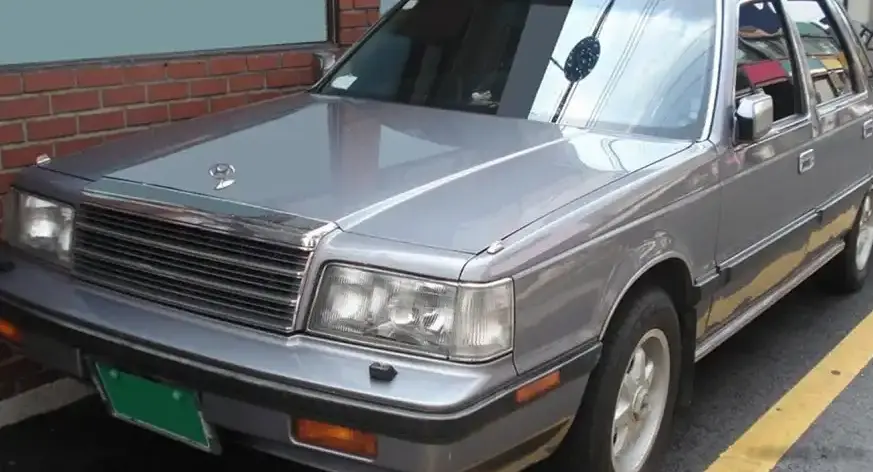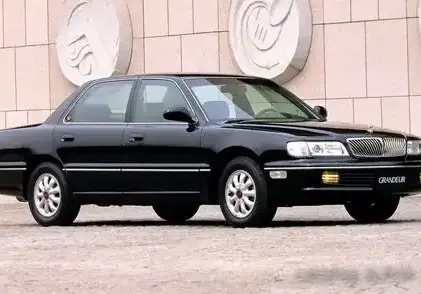
The Hyundai Grandeur II (LX) 3.5i V6 Automatic, produced between 1994 and 1996, marked a pivotal moment for Hyundai as they aimed to establish a foothold in the mid-size luxury sedan segment. Serving as the flagship model of the second-generation Grandeur (marketed as the Azera in some regions), this variant delivered a substantial performance and refinement upgrade compared to the earlier 2.0L and 2.5L versions. Primarily targeted towards the domestic South Korean market, where Hyundai sought to elevate its brand image, limited exports to select international markets also occurred. The Grandeur II, built upon the dedicated LX platform, was designed to challenge established Japanese and European competitors.
Technical Specifications
| Brand | Hyundai |
| Model | Grandeur/Azera |
| Generation | Grandeur II (LX) |
| Type (Engine) | 3.5i V6 (224 Hp) Automatic |
| Start of production | 1994 |
| End of production | 1996 |
| Powertrain Architecture | Internal Combustion engine |
| Body type | Sedan |
| Seats | 5 |
| Doors | 4 |
| Fuel Type | Petrol (Gasoline) |
| Maximum speed | 210 km/h (130.49 mph) |
| Weight-to-power ratio | 7.9 kg/Hp, 127.3 Hp/tonne |
| Weight-to-torque ratio | 5.8 kg/Nm, 173.9 Nm/tonne |
| Power | 224 Hp @ 6000 rpm |
| Power per litre | 64.1 Hp/l |
| Torque | 306 Nm @ 4000 rpm (225.69 lb.-ft. @ 4000 rpm) |
| Engine Model/Code | Sigma / G6AU |
| Engine displacement | 3497 cm3 (213.4 cu. in.) |
| Number of cylinders | 6 |
| Engine configuration | V-engine |
| Cylinder Bore | 93 mm (3.66 in.) |
| Piston Stroke | 85.8 mm (3.38 in.) |
| Compression ratio | 8.9:1 |
| Number of valves per cylinder | 4 |
| Fuel injection system | Multi-port manifold injection |
| Engine aspiration | Naturally aspirated engine |
| Valvetrain | DOHC |
| Engine oil capacity | 4.3 l (4.54 US qt | 3.78 UK qt) |
| Coolant capacity | 8.2 l (8.66 US qt | 7.21 UK qt) |
| Kerb Weight | 1760 kg (3880.14 lbs.) |
| Trunk (boot) space – minimum | 460 l (16.24 cu. ft.) |
| Fuel tank capacity | 72 l (19.02 US gal | 15.84 UK gal) |
| Length | 4980 mm (196.06 in.) |
| Width | 1810 mm (71.26 in.) |
| Height | 1440 mm (56.69 in.) |
| Wheelbase | 2745 mm (108.07 in.) |
| Front track | 1540 mm (60.63 in.) |
| Rear (Back) track | 1550 mm (61.02 in.) |
| Ride height (ground clearance) | 160 mm (6.3 in.) |
| Drag coefficient (Cd) | 0.37 |
| Minimum turning circle (turning diameter) | 11.4 m (37.4 ft.) |
| Drivetrain Architecture | The Internal combustion engine (ICE) drives the front wheels of the vehicle. |
| Drive wheel | Front wheel drive |
| Number of gears and type of gearbox | 4 gears, automatic transmission |
| Front brakes | Ventilated discs |
| Rear brakes | Disc |
| Steering type | Steering rack and pinion |
| Tires size | 215/65 R15 H |
| Wheel rims size | 15 |
Powertrain & Engine Architecture
The Hyundai Grandeur II 3.5i’s powertrain revolved around the Hyundai Sigma engine, designated internally as G6AU. This 3.5-liter, naturally aspirated V6 represented a significant leap forward from Hyundai’s previous engine offerings. The engine featured a 60-degree V-angle, dual overhead camshafts (DOHC), and four valves per cylinder, contributing to its improved breathing and power output. A multi-port fuel injection system precisely delivered fuel to each intake port, enhancing combustion efficiency. The engine generated 224 horsepower at 6000 rpm and 306 Nm (225.69 lb-ft) of torque at 4000 rpm. Paired with the engine was a four-speed automatic transmission, engineered for smooth and comfortable gear changes. While not cutting-edge by contemporary standards, the transmission was well-matched to the engine’s torque curve and the Grandeur’s intended role as a comfortable, refined cruiser.
Driving Characteristics
The 3.5i V6 Automatic delivered a noticeable improvement in acceleration and overall performance compared to the lower-displacement Grandeur models. While not designed as a performance sedan, it provided ample power for highway driving and overtaking maneuvers. The four-speed automatic transmission, while smooth, did result in slightly slower acceleration compared to a manual transmission option, had one been available. The gear ratios were optimized for comfort and fuel efficiency rather than outright performance. The front-wheel-drive configuration offered predictable handling characteristics, though it lacked the dynamic agility of rear-wheel-drive competitors. The suspension system was tuned to prioritize ride comfort, effectively absorbing road imperfections and providing a smooth driving experience.
Equipment & Trim Levels
The 3.5i V6 Automatic came standard with a comprehensive suite of features, befitting its position as the top-tier Grandeur model. Standard amenities included power windows, power door locks, power steering, air conditioning, and a premium audio system. Interior appointments typically featured cloth or leather upholstery, complemented by woodgrain trim accents. Optional extras included a sunroof, upgraded audio systems, and alloy wheels. The dashboard layout was functional and user-friendly, prioritizing ease of operation over elaborate design elements.
Chassis & Braking
The Grandeur II employed a conventional front-wheel-drive chassis with independent suspension at the front and a multi-link suspension at the rear. The front brakes consisted of ventilated discs, providing adequate stopping power, while the rear brakes utilized solid discs. The steering system was a rack-and-pinion setup, delivering precise and responsive steering feel. The vehicle rode on 15-inch wheels, typically fitted with 215/65 R15 tires, striking a balance between ride comfort and handling. Stabilizer bars were incorporated at both the front and rear axles to minimize body roll during cornering.
Market Reception & Comparison
The Grandeur II 3.5i V6 Automatic received generally positive reviews in South Korea, with critics praising its spacious interior, comfortable ride quality, and powerful engine. However, it faced strong competition from established Japanese and European sedans, which often offered more refined driving dynamics and superior build quality. Compared to the 2.0L and 2.5L Grandeur models, the 3.5i offered a significant performance advantage, but at a higher purchase price. Fuel economy was also comparatively lower with the larger engine. Reliability was generally considered good, although some owners reported occasional issues with the automatic transmission over extended periods.
Legacy
The Hyundai Grandeur II 3.5i V6 Automatic played a vital role in establishing Hyundai as a legitimate contender in the mid-size luxury sedan market. It demonstrated Hyundai’s capability to develop and manufacture a sophisticated, well-equipped vehicle capable of competing with established brands. While relatively uncommon in North America and Europe, the Grandeur II remains a popular classic car in South Korea, with well-maintained examples highly valued by collectors. The Sigma engine, though eventually superseded by newer Hyundai powertrains, proved to be a durable and reliable unit, and many examples remain in service today. The 3.5i variant, in particular, is fondly remembered for its smooth power delivery and comfortable driving experience.