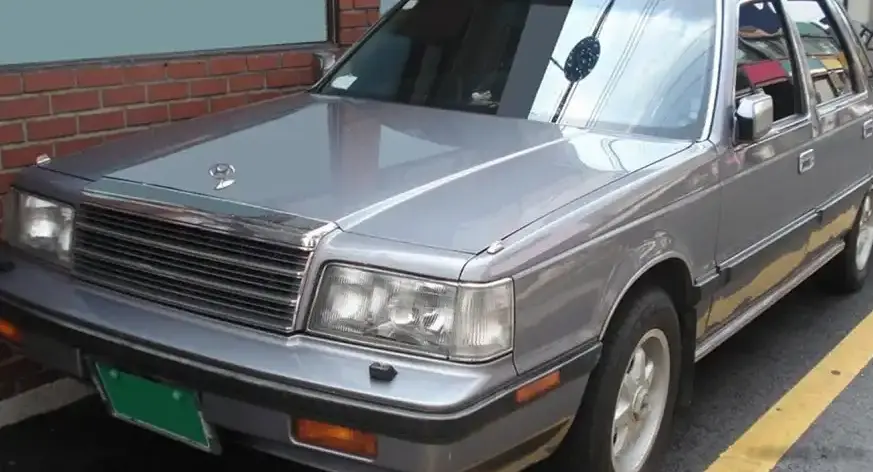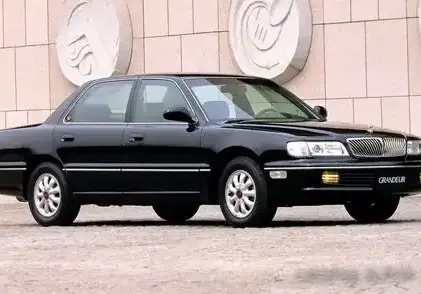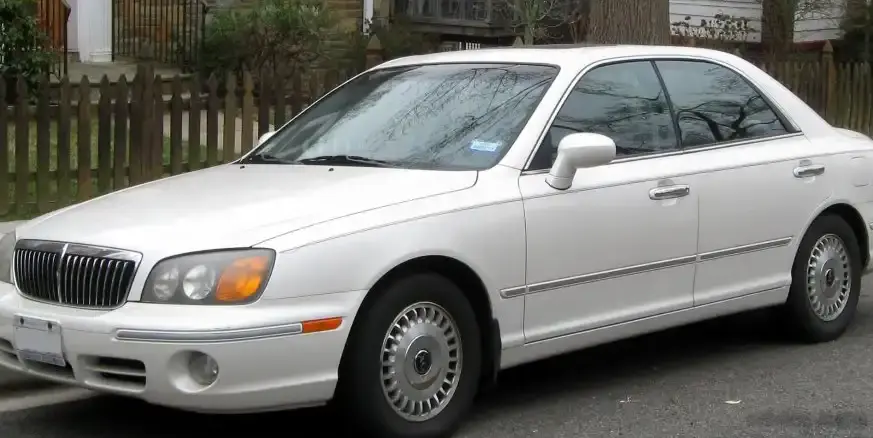
The Hyundai Grandeur III (XG) 3.0i V6 Automatic, produced between 1999 and 2002, represented a significant step forward for Hyundai in the mid-size luxury sedan segment. Positioned as the flagship model, the XG aimed to compete with established Japanese and American brands, offering a blend of comfort, features, and a relatively powerful V6 engine. This generation, known internally as the XG, was a departure from previous Grandeur models, adopting a more modern and refined design. It was primarily marketed towards buyers seeking a spacious, well-equipped sedan with a focus on value. The XG was not officially sold in the United States under the Grandeur name; instead, it was marketed as the Hyundai Azera.
Technical Specifications
| Brand | Hyundai |
| Model | Grandeur/Azera |
| Generation | Grandeur III (XG) |
| Type (Engine) | 3.0i V6 (196 Hp) Automatic |
| Start of production | 1999 |
| End of production | 2002 |
| Powertrain Architecture | Internal Combustion engine |
| Body type | Sedan |
| Seats | 5 |
| Doors | 4 |
| Fuel Type | Petrol (Gasoline) |
| Weight-to-power ratio | 8.1 kg/Hp, 124.1 Hp/tonne |
| Weight-to-torque ratio | 5.9 kg/Nm, 169 Nm/tonne |
| Power | 196 Hp @ 6000 rpm |
| Power per litre | 65.9 Hp/l |
| Torque | 267 Nm @ 4000 rpm (196.93 lb.-ft. @ 4000 rpm) |
| Engine Model/Code | Sigma / G6CT |
| Engine displacement | 2972 cm3 (181.36 cu. in.) |
| Number of cylinders | 6 |
| Engine configuration | V-engine |
| Cylinder Bore | 91.1 mm (3.59 in.) |
| Piston Stroke | 76 mm (2.99 in.) |
| Compression ratio | 10:1 |
| Number of valves per cylinder | 4 |
| Fuel injection system | Multi-port manifold injection |
| Engine aspiration | Naturally aspirated engine |
| Valvetrain | DOHC |
| Engine oil capacity | 4.3 l (4.54 US qt | 3.78 UK qt) |
| Coolant | 11.2 l (11.83 US qt | 9.85 UK qt) |
| Kerb Weight | 1580 kg (3483.3 lbs) |
| Trunk (boot) space – minimum | 450 l (15.89 cu. ft.) |
| Fuel tank capacity | 70 l (18.49 US gal | 15.4 UK gal) |
| Length | 4865 mm (191.54 in.) |
| Width | 1825 mm (71.85 in.) |
| Height | 1420 mm (55.91 in.) |
| Wheelbase | 2750 mm (108.27 in.) |
| Front track | 1540 mm (60.63 in.) |
| Rear (Back) track | 1520 mm (59.84 in.) |
| Ride height (ground clearance) | 160 mm (6.3 in.) |
| Drag coefficient (Cd) | 0.32 |
| Minimum turning circle (turning diameter) | 11 m (36.09 ft.) |
| Drivetrain Architecture | The Internal combustion engine (ICE) drives the front wheels of the vehicle. |
| Drive wheel | Front wheel drive |
| Number of gears and type of gearbox | 5 gears, automatic transmission |
| Front suspension | Double wishbone |
| Rear suspension | Independent multi-link suspension |
| Front brakes | Ventilated discs |
| Rear brakes | Disc |
| Assisting systems | ABS (Anti-lock braking system) |
| Steering type | Steering rack and pinion |
| Tires size | 205/65 R15 V |
| Wheel rims size | 15 |
Powertrain & Engine Architecture
The heart of the Grandeur III 3.0i was the Hyundai Sigma engine, specifically the G6CT variant. This 2.97-liter (181.36 cubic inches) V6 engine featured a 60-degree V-angle and utilized a cast iron block with an aluminum cylinder head. The engine employed multi-port fuel injection (MPI) and a double overhead camshaft (DOHC) valvetrain with four valves per cylinder. This configuration allowed for a respectable 196 horsepower at 6000 rpm and 267 Nm (196.93 lb-ft) of torque at 4000 rpm. The engine’s 10:1 compression ratio was a standard figure for naturally aspirated engines of the era. The automatic transmission was a 5-speed unit, designed to provide smooth shifts and adequate acceleration. While not a particularly advanced transmission by modern standards, it was well-suited to the engine’s power delivery and the car’s intended purpose as a comfortable cruiser.
Driving Characteristics
The 3.0i V6 Automatic Grandeur offered a comfortable and refined driving experience. The automatic transmission, while not offering manual control, provided smooth and predictable gear changes. Acceleration was adequate for most driving situations, with the engine providing sufficient power for highway merging and overtaking. However, it wasn’t a particularly sporty vehicle; the focus was on comfort and ease of use. Compared to the base 2.0L engine option, the 3.0i offered a noticeable improvement in performance, particularly in terms of mid-range torque. The gear ratios were tuned for fuel efficiency and relaxed cruising, rather than aggressive acceleration. The front-wheel-drive layout contributed to predictable handling, but it wasn’t as engaging as a rear-wheel-drive setup.
Equipment & Trim Levels
The Grandeur III 3.0i Automatic typically came well-equipped, reflecting its position as the top-of-the-line model. Standard features often included air conditioning, power windows and locks, a CD player, and alloy wheels. Higher trim levels added features such as leather upholstery, a sunroof, and upgraded audio systems. Interior materials were generally of good quality for the price point, and the cabin offered ample space for passengers. Optional extras included a navigation system (a relatively rare feature at the time) and automatic climate control.
Chassis & Braking
The Grandeur III utilized a front-wheel-drive platform with a double wishbone suspension at the front and an independent multi-link suspension at the rear. This suspension setup provided a comfortable ride, absorbing bumps and imperfections in the road effectively. Braking duties were handled by ventilated discs at the front and solid discs at the rear. Anti-lock braking system (ABS) was standard, enhancing safety and control during emergency braking situations. The steering was rack and pinion, providing reasonably precise and responsive steering feel.
Market Reception & Comparison
The Hyundai Grandeur III 3.0i V6 Automatic was generally well-received by critics, who praised its spacious interior, comfortable ride, and generous equipment list. However, some reviewers noted that the car lacked the refinement and brand prestige of its Japanese and American competitors. Compared to other trims in the Grandeur lineup, the 3.0i offered a significant performance advantage over the base 2.0L models, but it came at a higher price. Fuel economy was reasonable for a V6 engine of this size, but it wasn’t as fuel-efficient as the smaller-displacement options. Reliability was generally good, although some owners reported minor issues with the automatic transmission over time.
Legacy
The Hyundai Grandeur III (XG) 3.0i V6 Automatic played a crucial role in establishing Hyundai as a credible competitor in the mid-size sedan market. It demonstrated Hyundai’s ability to produce a well-equipped, comfortable, and relatively powerful vehicle that could challenge established brands. While not a particularly collectible car today, the XG remains a popular choice for buyers seeking an affordable and reliable used sedan. The G6CT engine, while not known for being exceptionally durable, is generally considered to be reasonably reliable with proper maintenance. Parts availability is generally good, making it a relatively easy car to maintain and repair. The XG represents a pivotal moment in Hyundai’s history, marking its transition from a budget brand to a more mainstream automotive manufacturer.