
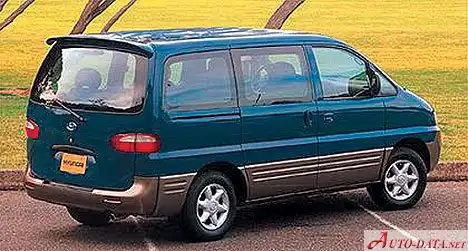
The Hyundai H-1, marketed as the Starex in some markets, is a multipurpose vehicle (MPV) produced by the South Korean manufacturer Hyundai. The first generation, known internally as the A1 platform, was introduced in 1997. The H-1 I Starex, representing a significant refresh of the original, was produced from 2002 to 2007. This iteration focused on improving refinement, safety, and engine technology while maintaining the H-1’s core strength: spaciousness and practicality. The 2.5 CRDI variant, producing 140 horsepower, occupied a key position in the lineup, offering a balance between fuel efficiency, performance, and affordability, particularly in markets where diesel engines were favored for commercial and family use.
Technical Specifications
| Brand | Hyundai |
| Model | H-1 |
| Generation | H-1 I Starex |
| Type (Engine) | 2.5 CRDI (140 Hp) |
| Start of production | 2002 |
| End of production | 2007 |
| Powertrain Architecture | Internal Combustion engine |
| Body type | Minivan |
| Seats | 9 |
| Doors | 4 |
| Fuel consumption (urban) | 11.5 l/100 km (20.5 US mpg) |
| Fuel consumption (extra urban) | 7.4 l/100 km (31.8 US mpg) |
| Fuel consumption (combined) | 8.7 l/100 km (27 US mpg) |
| Fuel Type | Diesel |
| Acceleration 0 – 100 km/h | 12.8 sec |
| Acceleration 0 – 62 mph | 12.8 sec |
| Acceleration 0 – 60 mph | 12.2 sec |
| Maximum speed | 161 km/h (100.04 mph) |
| Weight-to-power ratio | 13.6 kg/Hp |
| Weight-to-torque ratio | 6.1 kg/Nm |
| Power | 140 Hp @ 3800 rpm |
| Torque | 314 Nm @ 2000 rpm (231.59 lb.-ft. @ 2000 rpm) |
| Engine layout | Front, Longitudinal |
| Engine displacement | 2497 cm3 (152.38 cu. in.) |
| Number of cylinders | 4 |
| Engine configuration | Inline |
| Cylinder Bore | 91 mm (3.58 in.) |
| Piston Stroke | 96 mm (3.78 in.) |
| Compression ratio | 17.6:1 |
| Number of valves per cylinder | 4 |
| Fuel injection system | Diesel Commonrail |
| Engine aspiration | Turbocharger, Intercooler |
| Valvetrain | DOHC |
| Engine oil capacity | 7.4 l (7.82 US qt | 6.51 UK qt) |
| Kerb Weight | 1910 kg (4210.83 lbs.) |
| Max. weight | 2800 kg (6172.94 lbs.) |
| Max load | 890 kg (1962.11 lbs.) |
| Trunk (boot) space – minimum | 364 l (12.85 cu. ft.) |
| Trunk (boot) space – maximum | 3292 l (116.26 cu. ft.) |
| Fuel tank capacity | 65 l (17.17 US gal | 14.3 UK gal) |
| Length | 4695 mm (184.84 in.) |
| Width | 1820 mm (71.65 in.) |
| Height | 1880 mm (74.02 in.) |
| Wheelbase | 2810 mm (110.63 in.) |
| Front track | 1570 mm (61.81 in.) |
| Rear (Back) track | 1545 mm (60.83 in.) |
| Drivetrain Architecture | Rear wheel drive |
| Number of gears | 5 |
| Gearbox type | Manual transmission |
| Front suspension | Double wishbone |
| Rear suspension | Leaf spring |
| Front brakes | Ventilated discs |
| Rear brakes | Drum |
| Steering type | Steering rack and pinion |
| Power steering | Hydraulic Steering |
| Tires size | 195/70 R14 |
Powertrain & Engine Architecture
The heart of the H-1 I Starex 2.5 CRDI was the D4CB engine, a 2.5-liter inline-four cylinder diesel. This engine utilized common rail direct injection (CRDI) technology, a significant advancement over earlier diesel designs. CRDI allowed for multiple injection events per combustion cycle, resulting in smoother operation, reduced noise, and improved fuel efficiency. The D4CB featured a turbocharger with an intercooler, boosting power output to 140 horsepower and 314 Nm (231.59 lb-ft) of torque. The engine employed a double overhead camshaft (DOHC) valvetrain with four valves per cylinder, optimizing airflow for enhanced performance. The 2.5 CRDI was paired with a five-speed manual transmission in most configurations, delivering power to the rear wheels. The longitudinal engine layout was a common configuration for rear-wheel-drive vehicles, contributing to a balanced weight distribution.
Driving Characteristics
The 140 hp 2.5 CRDI engine, coupled with the five-speed manual transmission, provided adequate performance for the H-1 I Starex, especially considering its size and intended purpose. Acceleration from 0 to 60 mph took approximately 12.2 seconds, and top speed was around 100 mph. While not a sports-oriented vehicle, the engine delivered sufficient torque for comfortable highway cruising and hauling passengers or cargo. Compared to the higher-output versions available in some markets, the 140 hp variant prioritized fuel economy and ease of driving. The manual transmission offered precise control, but the gear ratios were tuned for practicality rather than outright speed. The rear-wheel-drive configuration provided a stable driving experience, particularly when loaded.
Equipment & Trim Levels
The 2.5 CRDI variant of the H-1 I Starex typically came with a reasonable level of standard equipment. This included power windows, central locking, and air conditioning. Interior upholstery was generally cloth, with options for upgraded materials in higher trim levels. The dashboard layout was functional and straightforward, prioritizing usability over luxury. Optional extras included power steering, an upgraded audio system, and alloy wheels. The H-1 I Starex was often sold as a commercial vehicle, so many examples were equipped with basic trim levels focused on durability and practicality. The nine-seat configuration was standard, making it ideal for large families or commercial passenger transport.
Chassis & Braking
The H-1 I Starex utilized a body-on-frame construction, providing a robust and durable chassis. The front suspension consisted of a double wishbone setup, while the rear suspension employed leaf springs. This combination offered a comfortable ride, particularly when carrying a load. The braking system featured ventilated discs on the front wheels and drum brakes on the rear. Hydraulic power steering was standard, making maneuvering the large vehicle relatively easy. The 195/70 R14 tires provided adequate grip for everyday driving conditions.
Market Reception & Comparison
The Hyundai H-1 I Starex 2.5 CRDI was generally well-received in markets where MPVs were popular, particularly in Asia and parts of Europe. Critics praised its spacious interior, practicality, and relatively affordable price point. The 2.5 CRDI engine was considered a good compromise between performance and fuel economy. Compared to other MPVs in its class, the H-1 I Starex offered a more utilitarian approach, prioritizing functionality over luxury. The manual transmission was favored by many drivers for its reliability and control. Fuel economy figures of around 27 US mpg combined were competitive for a vehicle of its size and type.
Legacy
The Hyundai H-1 I Starex 2.5 CRDI has proven to be a durable and reliable vehicle, with many examples still in service today. The D4CB engine is known for its longevity, provided it receives regular maintenance. While not without its quirks, the H-1 I Starex remains a popular choice in the used car market, particularly for those seeking a spacious and practical vehicle at an affordable price. The CRDI technology introduced in this generation laid the foundation for Hyundai’s continued development of efficient and powerful diesel engines. The H-1’s enduring popularity is a testament to its robust design and practical appeal.
