
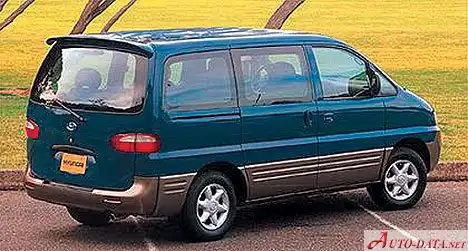
The Hyundai H-1, marketed as the Starex in some regions, is a multipurpose vehicle (MPV) produced by the South Korean manufacturer Hyundai. The first generation, known as the H-1 I Starex, was produced from 1997 to 2007, with significant updates occurring throughout its lifespan. The 2.5 TD 4WD SWB (101 Hp) variant, produced between 2002 and 2007, represented a popular configuration for those needing a robust, all-wheel-drive vehicle capable of both passenger and light commercial duties. This particular model occupied a mid-range position within the H-1 lineup, offering a balance between affordability, practicality, and capability. It was primarily sold in markets outside of North America, finding considerable success in Asia, Europe, and parts of South America.
Technical Specifications
| Brand | Hyundai |
| Model | H-1 |
| Generation | H-1 I Starex |
| Type | 2.5 TD 4WD SWB (101 Hp) |
| Start of production | 2002 |
| End of production | 2007 |
| Powertrain Architecture | Internal Combustion engine |
| Body type | Minivan |
| Seats | 7 |
| Doors | 4 |
| Fuel Type | Diesel |
| Maximum speed | 135 km/h (83.89 mph) |
| Weight-to-power ratio | 17.7 kg/Hp, 56.4 Hp/tonne |
| Power | 101 Hp @ 4000 rpm |
| Power per litre | 40.8 Hp/l |
| Engine layout | Front, Longitudinal |
| Engine displacement | 2476 cm3 (151.09 cu. in.) |
| Number of cylinders | 4 |
| Engine configuration | Inline |
| Cylinder Bore | 91.1 mm (3.59 in.) |
| Piston Stroke | 95 mm (3.74 in.) |
| Compression ratio | 21:1 |
| Number of valves per cylinder | 4 |
| Fuel injection system | Precombustion chamber injection |
| Engine aspiration | Turbocharger, Intercooler |
| Engine oil capacity | 6.1 l (6.45 US qt | 5.37 UK qt) |
| Kerb Weight | 1790 kg (3946.27 lbs.) |
| Max. weight | 2550 kg (5621.79 lbs.) |
| Max load | 760 kg (1675.51 lbs.) |
| Trunk (boot) space – minimum | 364 l (12.85 cu. ft.) |
| Trunk (boot) space – maximum | 3295 l (116.36 cu. ft.) |
| Fuel tank capacity | 65 l (17.17 US gal | 14.3 UK gal) |
| Length | 4695 mm (184.84 in.) |
| Width | 1820 mm (71.65 in.) |
| Height | 1880 mm (74.02 in.) |
| Wheelbase | 2810 mm (110.63 in.) |
| Front track | 1570 mm (61.81 in.) |
| Rear (Back) track | 1545 mm (60.83 in.) |
| Drive wheel | All wheel drive (4×4) |
| Number of gears and type of gearbox | 5 gears, manual transmission |
| Front suspension | Double wishbone |
| Rear suspension | Leaf spring |
| Front brakes | Ventilated discs |
| Rear brakes | Drum |
| Assisting systems | ABS (Anti-lock braking system) |
| Steering type | Steering rack and pinion |
| Power steering | Hydraulic Steering |
| Tires size | 195/80 R14 |
Powertrain & Engine Architecture
The heart of the H-1 2.5 TD 4WD SWB is a 2.5-liter inline-four cylinder diesel engine. This engine, often identified by internal codes depending on the specific market, utilized a precombustion chamber injection system. This system, common in diesel engines of the era, involved injecting fuel into a precombustion chamber connected to the main cylinder, promoting more complete combustion. A turbocharger with an intercooler was employed to increase power output and improve efficiency. The intercooler cooled the compressed air from the turbocharger, increasing its density and further enhancing combustion. The engine produced 101 horsepower at 4000 rpm. The engine was mounted longitudinally in the front of the vehicle. The 5-speed manual transmission was the only transmission option for this variant.
Driving Characteristics
The 101 hp output, coupled with the all-wheel-drive system, provided adequate performance for everyday driving and light commercial applications. While not particularly quick, the engine delivered a usable amount of torque, making it suitable for carrying passengers or cargo. The manual transmission allowed for driver control, but the gear ratios were tuned for economy rather than outright acceleration. Compared to higher-output versions of the H-1, this variant felt noticeably slower, especially when fully loaded. However, the 4WD system provided enhanced traction in slippery conditions, making it a practical choice for regions with inclement weather or rough terrain.
Equipment & Trim Levels
The 2.5 TD 4WD SWB trim typically included basic amenities such as power steering, air conditioning, and a basic audio system. Interior upholstery was generally vinyl or a durable cloth material. The dashboard layout was functional and straightforward, prioritizing practicality over luxury. Optional extras could include power windows, central locking, and upgraded audio systems. The SWB (Short Wheelbase) configuration meant a more manageable size for urban driving, though it sacrificed some of the maximum cargo capacity available in the longer wheelbase models.
Chassis & Braking
The H-1 I Starex featured a robust chassis designed to handle the demands of commercial use. The front suspension utilized a double wishbone setup, providing a reasonable level of ride comfort and handling. The rear suspension employed leaf springs, a cost-effective and durable solution for supporting heavier loads. The braking system consisted of ventilated discs on the front wheels and drum brakes on the rear. Anti-lock Braking System (ABS) was included as a standard safety feature. The tires were typically 195/80 R14, chosen for their durability and all-weather capability.
Market Reception & Comparison
The H-1 2.5 TD 4WD SWB was generally well-received in its target markets as a practical and affordable MPV. Critics praised its spacious interior, robust construction, and all-wheel-drive capability. However, the engine was sometimes criticized for being underpowered, especially when compared to more modern diesel engines. Fuel economy was reasonable for a vehicle of its size and type. Compared to other trims in the H-1 lineup, such as those with more powerful engines or higher levels of equipment, this variant represented an entry-level option for buyers prioritizing functionality and affordability.
Legacy
The Hyundai H-1 I Starex 2.5 TD 4WD SWB has proven to be a relatively reliable vehicle, with many examples still in service today. The diesel engine, while not the most refined, is known for its durability. Common maintenance issues include wear and tear on suspension components and potential problems with the fuel injection system. In the used car market, this variant remains a popular choice for those seeking a practical and affordable MPV with all-wheel-drive capability. Its simple mechanical design and readily available parts contribute to its continued appeal.
