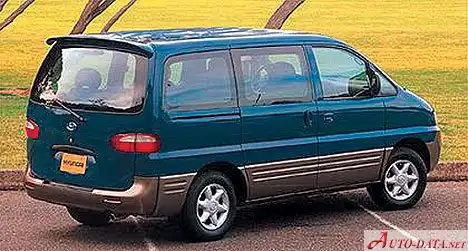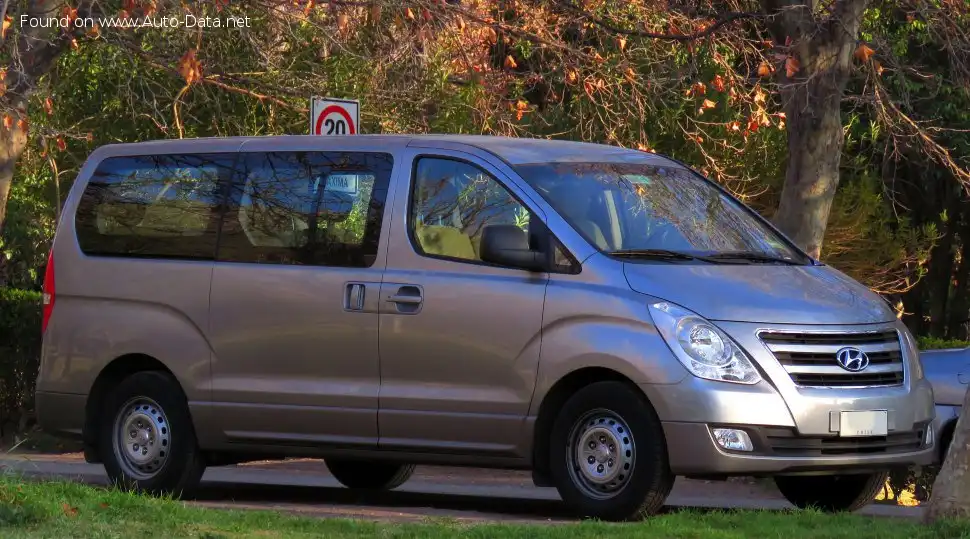
The Hyundai H-1 II Wagon, specifically the facelifted version produced from 2015 to 2018, represented a significant offering in the minivan segment, particularly in markets outside of North America. This iteration of the H-1, also known as the Grand Starex in some regions, continued the model’s tradition as a spacious, body-on-frame vehicle designed for both passenger and commercial applications. The 2.4 MPI (171 Hp) Automatic variant occupied a middle ground within the H-1 lineup, offering a balance between affordability, practicality, and a more refined driving experience compared to lower-spec models. It was primarily aimed at families and businesses requiring substantial passenger or cargo capacity.
Technical Specifications
| Brand | Hyundai |
| Model | H-1 |
| Generation | H-1 II Wagon (facelift 2015) |
| Type (Engine) | 2.4 MPI (171 Hp) Automatic |
| Start of production | 2015 |
| End of production | 2018 |
| Powertrain Architecture | Internal Combustion engine |
| Body type | Minivan |
| Seats | 9-12 |
| Doors | 5 |
| Fuel Type | Petrol (Gasoline) |
| Power | 171 Hp @ 6000 rpm |
| Power per litre | 72.5 Hp/l |
| Torque | 224 Nm @ 4200 rpm / 165.21 lb.-ft. @ 4200 rpm |
| Engine layout | Front, Longitudinal |
| Engine displacement | 2359 cm3 / 143.96 cu. in. |
| Number of cylinders | 4 |
| Engine configuration | Inline |
| Cylinder Bore | 88 mm / 3.46 in. |
| Piston Stroke | 97 mm / 3.82 in. |
| Compression ratio | 10.5:1 |
| Number of valves per cylinder | 4 |
| Fuel injection system | Multi-port manifold injection |
| Engine aspiration | Naturally aspirated engine |
| Engine oil capacity | 5.1 l / 5.39 US qt | 4.49 UK qt |
| Length | 5150 mm / 202.76 in. |
| Width | 1920 mm / 75.59 in. |
| Height | 1925 mm / 75.79 in. |
| Wheelbase | 3200 mm / 125.98 in. |
| Front track | 1685 mm / 66.34 in. |
| Rear (Back) track | 1660 mm / 65.35 in. |
| Front overhang | 880 mm / 34.65 in. |
| Rear overhang | 1070 mm / 42.13 in. |
| Drivetrain Architecture | The Internal combustion engine (ICE) drives the rear wheels of the vehicle. |
| Drive wheel | Rear wheel drive |
| Number of gears and type of gearbox | 4 gears, automatic transmission |
| Front suspension | Independent type McPherson |
| Rear suspension | Independent multi-link suspension |
| Front brakes | Disc |
| Rear brakes | Disc |
| Assisting systems | ABS (Anti-lock braking system) |
| Steering type | Steering rack and pinion |
| Power steering | Hydraulic Steering |
| Tires size | 215/70 R16 |
| Wheel rims size | 16 |
Powertrain & Engine Architecture
The heart of the 2.4 MPI variant is Hyundai’s 2.4-liter inline-four cylinder gasoline engine, designated as the G4KE. This engine utilizes a naturally aspirated configuration with multi-point fuel injection. The engine’s 10.5:1 compression ratio and dual overhead camshafts (DOHC) with four valves per cylinder contribute to its respectable power output. The G4KE engine is known for its relatively simple design, which aids in maintenance and repair. The four-speed automatic transmission, while not the most modern, was chosen for its durability and suitability for the vehicle’s intended use. It provides smooth, if not particularly quick, gear changes. The longitudinal engine placement and rear-wheel-drive configuration are characteristic of the H-1’s body-on-frame construction, prioritizing load-carrying capacity and robustness.
Driving Characteristics
The 171 horsepower and 224 Nm (165 lb-ft) of torque delivered by the 2.4 MPI engine provide adequate, but not exhilarating, performance for the H-1. Acceleration is modest, particularly when fully loaded with passengers or cargo. The four-speed automatic transmission, while reliable, lacks the efficiency and responsiveness of more modern transmissions with a greater number of gears. The gear ratios are tuned for practicality and fuel economy rather than sporty driving. Compared to the diesel variants available in many markets, the 2.4 MPI offers a quieter and smoother driving experience, but at the expense of fuel efficiency and low-end torque. The rear-wheel-drive layout provides a stable feel, especially when carrying heavy loads, but it doesn’t offer the all-weather capability of an all-wheel-drive system.
Equipment & Trim Levels
The 2.4 MPI Automatic trim typically included features such as air conditioning, power windows, power door locks, and a basic audio system. Higher trim levels offered upgrades like alloy wheels, a more sophisticated audio system with Bluetooth connectivity, and additional safety features. Interior upholstery was generally cloth, with optional leather available on some models. The dashboard layout was functional and straightforward, prioritizing ease of use over aesthetic flair. Optional extras often included a rear entertainment system, parking sensors, and a sunroof. The H-1 was designed to be a versatile vehicle, and trim levels reflected this, offering a range of options to suit different needs and budgets.
Chassis & Braking
The H-1 II Wagon utilizes a body-on-frame construction, providing a robust and durable platform. The front suspension employs an independent McPherson strut setup, while the rear features an independent multi-link suspension. This configuration aims to balance ride comfort with handling stability. Braking duties are handled by disc brakes on all four wheels, supplemented by an Anti-lock Braking System (ABS). The steering system is a rack-and-pinion setup with hydraulic power assistance. The 16-inch wheels, typically fitted with 215/70 R16 tires, provide a reasonable compromise between ride comfort and handling. Stabilizer bars are included on both the front and rear axles to reduce body roll during cornering.
Market Reception & Comparison
The Hyundai H-1 II Wagon 2.4 MPI Automatic was generally well-received as a practical and affordable minivan option. Critics praised its spacious interior, robust construction, and comfortable ride. However, the engine was often criticized for being underpowered, especially when the vehicle was fully loaded. Fuel economy was also a concern, particularly compared to diesel-powered alternatives. In terms of reliability, the H-1 generally proved to be a durable vehicle, but some owners reported issues with the automatic transmission over the long term. Compared to other minivans in its class, the H-1 offered a unique combination of body-on-frame construction and rear-wheel drive, making it well-suited for demanding applications.
Legacy
The Hyundai H-1 II Wagon, including the 2.4 MPI Automatic variant, has established a reputation as a reliable and durable workhorse. In the used car market, these models remain relatively affordable and are often sought after by businesses and families requiring a spacious and practical vehicle. The G4KE engine, while not known for its performance, is generally considered to be a reliable unit with relatively low maintenance costs. The four-speed automatic transmission, while dated, has proven to be reasonably durable. The H-1’s body-on-frame construction contributes to its longevity, making it a viable option for those seeking a long-lasting and dependable minivan.