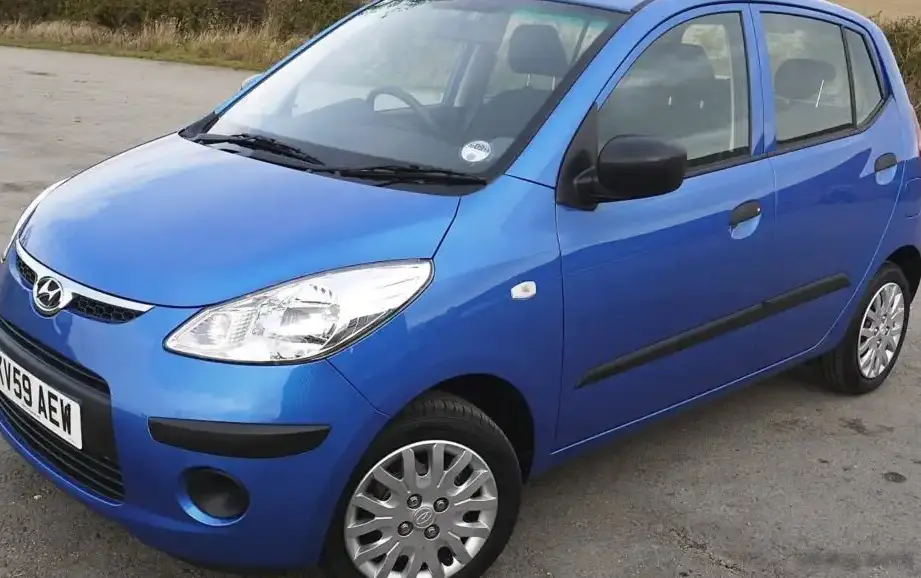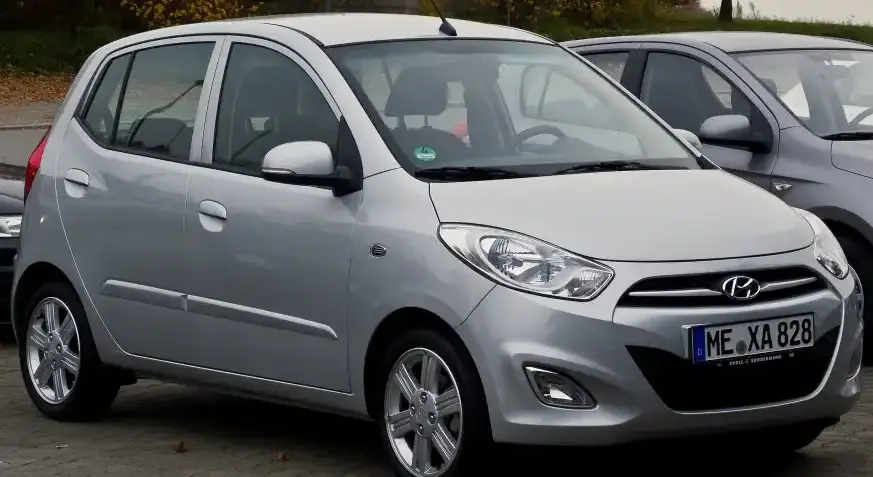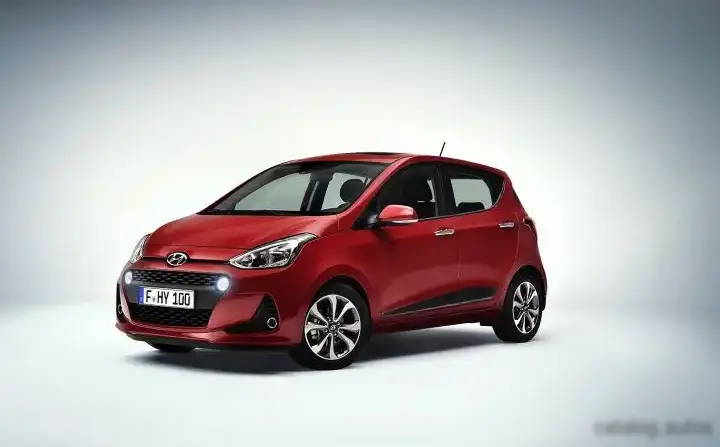
The Hyundai i10 II (facelift 2016) 1.0 LPG, producing 69 horsepower (67 hp when running on LPG), was a key variant within Hyundai’s popular city car range. Introduced as part of the i10’s mid-life refresh in 2016, this model offered a budget-friendly and fuel-efficient option for European buyers, particularly in markets where LPG infrastructure was well-developed. Production continued until August 2018. This variant occupied the entry-level position in the i10 II lineup, appealing to cost-conscious consumers and those seeking lower running costs. It was positioned below the 1.2-liter petrol variants in terms of performance and equipment, but offered a unique bi-fuel capability.
Technical Specifications
| Brand | Hyundai |
| Model | i10 |
| Generation | i10 II (facelift 2016) |
| Type (Engine) | 1.0 LPG (69/67 Hp) |
| Start of production | 2016 |
| End of production | August, 2018 |
| Powertrain Architecture | Internal Combustion engine |
| Body type | Hatchback |
| Seats | 5 |
| Doors | 5 |
| Fuel consumption (economy) – urban | 6.5 l/100 km (36.2 US mpg, 43.5 UK mpg, 15.4 km/l) |
| Fuel consumption (economy) – urban (LPG) | 8.3 l/100 km |
| Fuel consumption (economy) – extra urban | 4.2 l/100 km (56 US mpg, 67.3 UK mpg, 23.8 km/l) |
| Fuel consumption (economy) – extra urban (LPG) | 5.4 l/100 km |
| Fuel consumption (economy) – combined | 5.1 l/100 km (46.1 US mpg, 55.4 UK mpg, 19.6 km/l) |
| Fuel consumption (economy) – combined (LPG) | 6.5 l/100 km |
| CO2 emissions | 116 g/km |
| CO2 emissions (LPG) | 104 g/km |
| Fuel Type | Petrol / LPG |
| Acceleration 0 – 100 km/h | 15.2 sec |
| Acceleration 0 – 62 mph | 15.2 sec |
| Acceleration 0 – 60 mph | 14.4 sec |
| Maximum speed | 153 km/h (95.07 mph) |
| Emission standard | Euro 6 |
| Weight-to-power ratio | 15.4 kg/Hp, 64.8 Hp/tonne |
| Weight-to-torque ratio | 11.4 kg/Nm, 87.4 Nm/tonne |
| Power | 69 Hp @ 6200 rpm |
| Power per litre | 69.1 Hp/l |
| Power (LPG) | 67 Hp @ 6200 rpm |
| Power per litre (LPG) | 67.1 Hp/l |
| Torque | 93 Nm @ 3200 rpm (68.59 lb.-ft. @ 3200 rpm) |
| Torque (LPG) | 90 Nm @ 3500 rpm |
| Engine layout | Front, Transverse |
| Engine Model/Code | B3LA |
| Engine displacement | 998 cm3 (60.9 cu. in.) |
| Number of cylinders | 3 |
| Engine configuration | Inline |
| Cylinder Bore | 71 mm (2.8 in.) |
| Piston Stroke | 84 mm (3.31 in.) |
| Compression ratio | 10.5:1 |
| Number of valves per cylinder | 4 |
| Fuel injection system | Multi-port manifold injection |
| Engine aspiration | Naturally aspirated engine |
| Engine oil capacity | 3 l (3.17 US qt | 2.64 UK qt) |
| Kerb Weight | 1064 kg (2345.72 lbs.) |
| Max. weight | 1470 kg (3240.8 lbs.) |
| Max load | 406 kg (895.08 lbs.) |
| Trunk (boot) space – minimum | 218 l (7.7 cu. ft.) |
| Trunk (boot) space – maximum | 1046 l (36.94 cu. ft.) |
| Fuel tank capacity | 40 l (10.57 US gal | 8.8 UK gal) |
| Fuel tank capacity (LPG) | 27.2 l |
| Max. roof load | 60 kg (132.28 lbs.) |
| Length | 3665 mm (144.29 in.) |
| Width | 1660 mm (65.35 in.) |
| Height | 1500 mm (59.06 in.) |
| Wheelbase | 2385 mm (93.9 in.) |
| Front track | 1467 mm (57.76 in.) |
| Rear (Back) track | 1480 mm (58.27 in.) |
| Front overhang | 740 mm (29.13 in.) |
| Rear overhang | 540 mm (21.26 in.) |
| Ride height (ground clearance) | 149 mm (5.87 in.) |
| Drivetrain Architecture | The Internal combustion engine (ICE) drives the front wheels of the vehicle. |
| Drive wheel | Front wheel drive |
| Number of gears and type of gearbox | 5 gears, manual transmission |
| Front suspension | Independent type McPherson |
| Rear suspension | independent torsion suspension |
| Front brakes | Ventilated discs |
| Rear brakes | Disc |
| Assisting systems | ABS (Anti-lock braking system) |
| Steering type | Steering rack and pinion |
| Power steering | Electric Steering |
| Tires size | 175/65 R14; 185/55 R15 |
| Wheel rims size | 5.5J x 14; 6.0J x 15 |
INTRODUCTION
The Hyundai i10 II, launched in 2013, represented a significant step forward for Hyundai’s small car offering in Europe. The 2016 facelift brought revised styling, improved equipment levels, and powertrain refinements. The 1.0 LPG variant, with its 998cc three-cylinder engine, was specifically targeted at buyers seeking low running costs and reduced emissions. It leveraged the growing availability of LPG fueling stations across Europe, offering a viable alternative to traditional petrol or diesel options. This model was built on the Hyundai-Kia HA platform, also known as the 1HX0/A3 platform, shared with the Kia Picanto.
Powertrain & Engine Architecture
The heart of the i10 1.0 LPG is the B3LA engine, a naturally aspirated, inline-three cylinder unit displacing 998cc. This engine utilizes a multi-point fuel injection system and features four valves per cylinder. The LPG conversion is a factory-fitted system, ensuring optimal integration and reliability. The engine produces 69 horsepower at 6200 rpm on petrol and slightly reduced 67 horsepower when running on LPG. Torque output is 93 Nm (68.59 lb-ft) at 3200 rpm on petrol, dropping to 90 Nm on LPG. The engine’s relatively low compression ratio of 10.5:1 is typical for a bi-fuel setup, accommodating both petrol and LPG combustion. The engine is paired with a five-speed manual transmission, which was the only transmission option available for this specific variant. The transmission’s gear ratios are geared towards fuel efficiency and urban driving, with a relatively tall final drive.
Driving Characteristics
The i10 1.0 LPG prioritizes fuel economy and ease of driving over outright performance. Acceleration from 0-60 mph takes around 14.4 seconds, and the top speed is 153 km/h (95.07 mph). The engine feels adequate for city driving, providing sufficient power for navigating urban traffic and merging onto highways. However, it can feel strained when fully loaded or tackling steep inclines. The five-speed manual transmission is light and easy to use, but the long gear ratios mean frequent shifting is required to maintain momentum. Compared to the 1.2-liter petrol versions, the 1.0 LPG offers less power and a slightly less refined driving experience. However, the LPG system provides a noticeable cost saving at the pump, particularly in countries with favorable LPG pricing.
Equipment & Trim Levels
The 1.0 LPG variant typically came with a basic level of equipment, reflecting its position as the entry-level model. Standard features generally included central locking, power steering, electric front windows, and an ABS braking system. Air conditioning was often an optional extra. Interior upholstery was typically cloth, and the dashboard featured a simple, functional design. Higher trim levels, available with the 1.2-liter engine, offered features such as alloy wheels, a touchscreen infotainment system, and rear electric windows. The LPG model was often offered with specific trim packages focused on value and practicality.
Chassis & Braking
The i10 II utilizes a McPherson strut front suspension and a torsion beam rear suspension. This setup provides a comfortable ride quality, well-suited for urban roads. The front brakes are ventilated discs, while the rear brakes are discs. The steering is electrically assisted, providing light and precise control. The i10’s relatively lightweight construction (1064 kg / 2345.72 lbs) helps to compensate for the engine’s modest power output. Stabilizer bars are fitted to both the front and rear axles to reduce body roll during cornering.
Market Reception & Comparison
The Hyundai i10 1.0 LPG was generally well-received by critics as a practical and affordable city car. Its low running costs and reduced emissions were particularly praised. However, some reviewers noted its lack of power and relatively basic interior. Compared to the 1.2-liter petrol versions, the LPG model offered lower performance but significantly better fuel economy, especially when factoring in the lower cost of LPG fuel. Against competitors like the Fiat Panda and Volkswagen up!, the i10 LPG offered a compelling combination of price, practicality, and fuel efficiency.
Legacy
The Hyundai i10 1.0 LPG has proven to be a reliable and durable vehicle. The B3LA engine is known for its robustness, and the factory-fitted LPG system is generally trouble-free. In the used car market, these models remain popular with budget-conscious buyers seeking a low-cost and fuel-efficient runabout. While maintenance costs are generally low, it’s important to ensure that the LPG system is regularly serviced to maintain optimal performance and safety. The i10 1.0 LPG represents a practical and economical choice for those seeking a small, affordable car with a reduced environmental impact.