Technical Specifications
| Brand | Hyundai |
| Model | i20 |
| Generation | i20 I (PB facelift 2012) |
| Type (Engine) | 1.2 16V (86 Hp) |
| Start of production | 2012 |
| End of production | 2014 |
| Powertrain Architecture | Internal Combustion engine |
| Body type | Hatchback |
| Seats | 5 |
| Doors | 5 |
| Fuel consumption (urban) | 6.1 l/100 km (38.6 US mpg, 46.3 UK mpg, 16.4 km/l) |
| Fuel consumption (extra urban) | 4.2 l/100 km (56 US mpg, 67.3 UK mpg, 23.8 km/l) |
| Fuel consumption (combined) | 4.9 l/100 km (48 US mpg, 57.6 UK mpg, 20.4 km/l) |
| Fuel Type | Petrol (Gasoline) |
| Acceleration 0 – 100 km/h | 12.7 sec |
| Acceleration 0 – 62 mph | 12.7 sec |
| Acceleration 0 – 60 mph | 12.1 sec |
| Maximum speed | 168 km/h (104.39 mph) |
| Emission standard | Euro 5 |
| Weight-to-power ratio | 11.3 kg/Hp, 88.7 Hp/tonne |
| Weight-to-torque ratio | 8 kg/Nm, 124.7 Nm/tonne |
| Power | 86 Hp @ 6000 rpm |
| Power per litre | 68.9 Hp/l |
| Torque | 121 Nm @ 4000 rpm (89.25 lb.-ft. @ 4000 rpm) |
| Engine layout | Front, Transverse |
| Engine Model/Code | G4LA |
| Engine displacement | 1248 cm3 (76.16 cu. in.) |
| Number of cylinders | 4 |
| Engine configuration | Inline |
| Cylinder Bore | 71 mm (2.8 in.) |
| Piston Stroke | 78.8 mm (3.1 in.) |
| Compression ratio | 10.5:1 |
| Number of valves per cylinder | 4 |
| Fuel injection system | Multi-port manifold injection |
| Engine aspiration | Naturally aspirated engine |
| Valvetrain | DOHC |
| Engine oil capacity | 3.6 l (3.8 US qt | 3.17 UK qt) |
| Coolant capacity | 4.1 l (4.33 US qt | 3.61 UK qt) |
| Kerb Weight | 970 kg (2138.48 lbs.) |
| Max. weight | 1515 kg (3340 lbs.) |
| Max load | 545 kg (1201.52 lbs.) |
| Trunk (boot) space – minimum | 295 l (10.42 cu. ft.) |
| Trunk (boot) space – maximum | 1060 l (37.43 cu. ft.) |
| Fuel tank capacity | 45 l (11.89 US gal | 9.9 UK gal) |
| Length | 3940 mm (155.12 in.) |
| Width | 1710 mm (67.32 in.) |
| Height | 1490 mm (58.66 in.) |
| Wheelbase | 2525 mm (99.41 in.) |
| Front track | 1503 mm (59.17 in.) |
| Rear track | 1501 mm (59.09 in.) |
| Minimum turning circle | 10.4 m (34.12 ft.) |
| Drivetrain Architecture | Front wheel drive |
| Drive wheel | Front wheel drive |
| Number of gears | 5 gears, manual transmission |
| Front suspension | Independent type McPherson |
| Rear suspension | Independent coil spring |
| Front brakes | Ventilated discs |
| Rear brakes | Disc |
| Assisting systems | ABS (Anti-lock braking system) |
| Steering type | Steering rack and pinion |
| Tires size | 175/70 R14 |
| Wheel rims size | 5.5J x 14 |
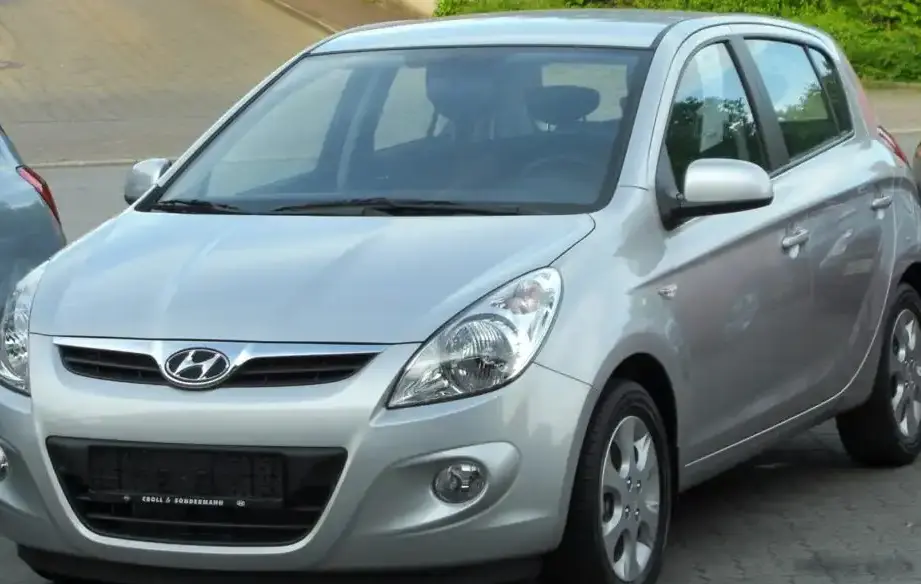
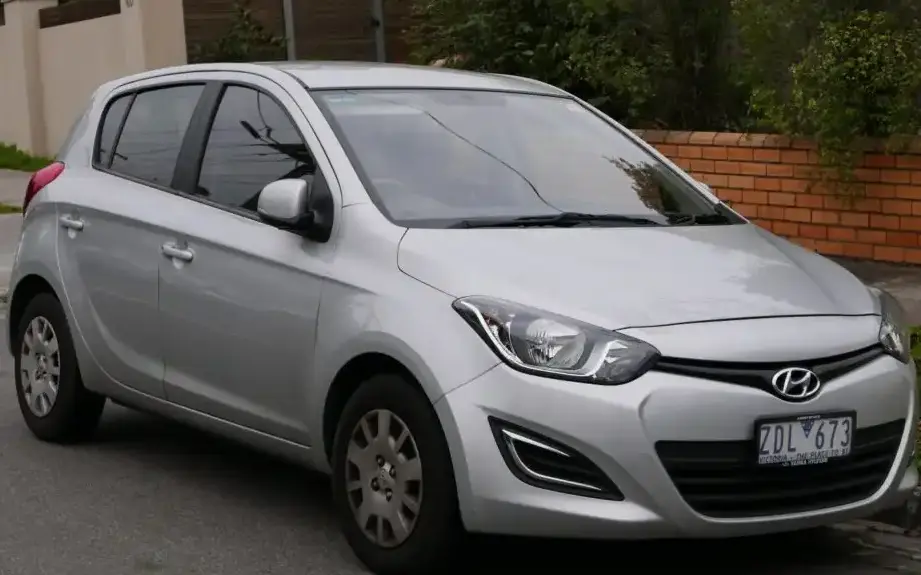
The Hyundai i20 (PB) facelift, launched in 2012, was a crucial model for Hyundai in the European subcompact segment. Building upon the original i20 introduced in 2008, the facelift brought a more refined aesthetic and improved build quality. The 1.2-liter 16V engine, producing 86 horsepower, was a mainstay of the i20 lineup, offering a balance of affordability and efficiency. This engine was particularly popular in markets where smaller engines were favored due to tax regulations and fuel costs. The PB facelift i20 competed directly with vehicles like the Ford Fiesta, Volkswagen Polo, and Renault Clio.
Powertrain & Engine Architecture
The heart of this i20 variant is the Hyundai G4LA 1.2-liter inline-four cylinder engine. This engine utilizes a multi-point fuel injection system, delivering fuel directly into the intake ports. The engine features a double overhead camshaft (DOHC) valvetrain, operating four valves per cylinder, which helps optimize breathing and improve efficiency. The G4LA engine is known for its relatively simple design, contributing to its reliability. The 86 horsepower output is achieved at 6000 rpm, while peak torque of 121 Nm (89.25 lb-ft) arrives at 4000 rpm. The engine is transversely mounted in the front of the vehicle. Paired with this engine is a five-speed manual transmission, chosen for its simplicity and cost-effectiveness. While an automatic transmission was offered on some i20 models, it wasn’t typically paired with the base 1.2-liter engine due to performance considerations.
Driving Characteristics
The 1.2-liter i20, with its 86 horsepower and five-speed manual transmission, delivers modest but adequate performance for urban driving. Acceleration from 0 to 60 mph takes approximately 12.1 seconds, and the top speed is around 104 mph. The engine feels somewhat strained at higher speeds or when fully loaded. The gear ratios are tuned for fuel efficiency rather than outright performance. The first gear is relatively short, aiding in quick acceleration from a standstill, while higher gears are spaced to keep engine speeds low during highway cruising. Compared to higher-trim i20 models with larger engines, this variant feels noticeably slower, particularly when overtaking. However, the light steering and compact size make it easy to maneuver in city traffic.
Equipment & Trim Levels
The 1.2-liter i20 typically came with a fairly basic level of equipment, reflecting its position as the entry-level model. Standard features generally included power steering, central locking, electric front windows, and an audio system with USB connectivity. Air conditioning was often an optional extra. Interior upholstery was typically cloth, and the dashboard featured a simple, functional design. Higher trim levels offered upgrades such as alloy wheels, fog lights, a trip computer, and more sophisticated audio systems. Safety features included ABS brakes and front airbags, with additional airbags available on higher trims.
Chassis & Braking
The i20 PB facelift utilizes an independent McPherson strut suspension at the front, providing a comfortable ride and decent handling. The rear suspension employs an independent coil spring setup. The front brakes are ventilated discs, offering good stopping power, while the rear brakes are solid discs. The steering is a rack and pinion system, providing precise and responsive control. The 1.2-liter models typically featured smaller wheels and tires (175/70 R14) compared to higher-trim versions, which contributed to a slightly softer ride but less grip. A stabilizer bar was included at the front to reduce body roll during cornering.
Market Reception & Comparison
The Hyundai i20 1.2-liter was generally well-received by critics as an affordable and practical city car. Its fuel economy – around 48 US mpg combined – was a major selling point. However, its performance was often criticized as being somewhat underwhelming, particularly when compared to rivals like the Ford Fiesta. The i20’s interior quality was considered to be a step up from previous Hyundai models, but still lagged behind some of its competitors. In terms of reliability, the i20 proved to be a dependable vehicle, with relatively few reported issues. Compared to the 1.4-liter i20, the 1.2-liter offered significantly better fuel economy but at the cost of performance. The 1.4-liter was favored by drivers who frequently drove on highways or carried passengers and luggage.
Legacy
The Hyundai i20 PB facelift 1.2-liter remains a popular choice in the used car market, particularly for first-time buyers or those seeking an economical runabout. The G4LA engine is known for its durability and relatively low maintenance costs. Common issues are generally limited to wear-and-tear items such as brake pads, tires, and suspension components. The i20’s simple design and readily available parts contribute to its affordability and ease of repair. While it may not offer the performance or refinement of more modern subcompacts, the i20 1.2-liter continues to provide a reliable and economical transportation solution.