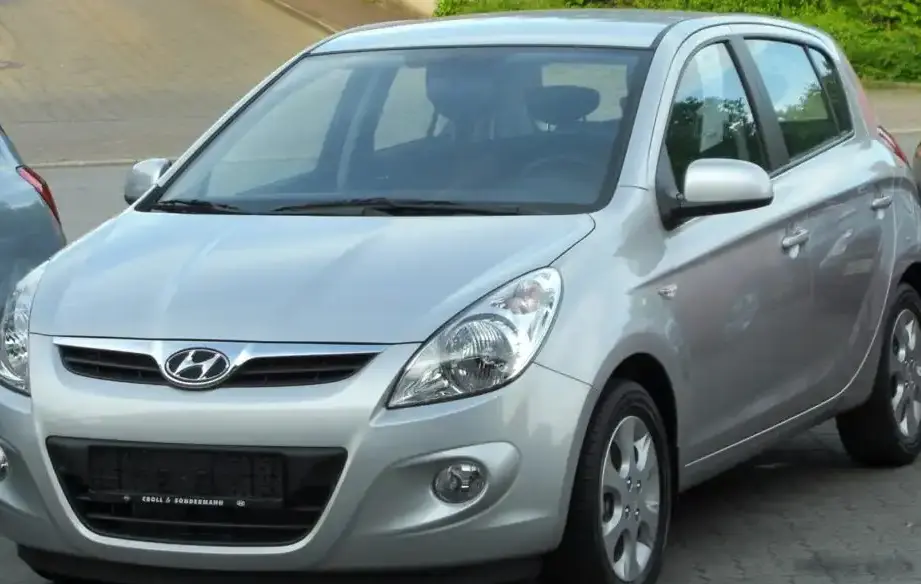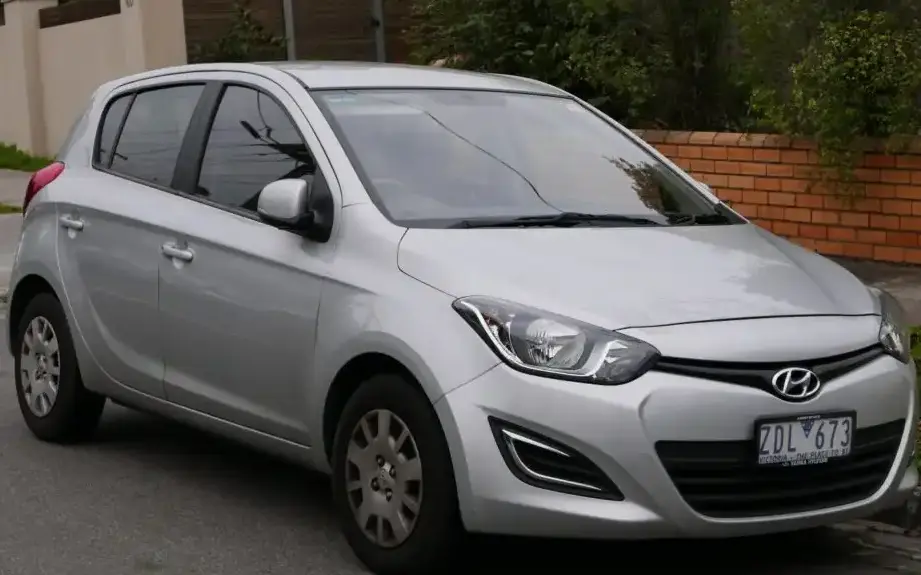
The Hyundai i20 I (PB facelift) 1.4 16V, produced from 2012 to 2014, represented a key offering in Hyundai’s subcompact hatchback lineup. This facelifted version of the first-generation i20 (introduced in 2008) aimed to refine the original model with updated styling and improved features. The 1.4-liter engine, producing 101 horsepower, was positioned as a mid-range option, bridging the gap between the base 1.2-liter engine and the more powerful 1.6-liter variants. It was primarily marketed towards buyers seeking a balance of fuel efficiency, practicality, and reasonable performance in the European and Asian markets, though it did see limited sales in other regions. This variant was a significant step for Hyundai in establishing itself as a competitor in the increasingly competitive small car segment.
Technical Specifications
| Brand | Hyundai |
| Model | i20 |
| Generation | i20 I (PB facelift 2012) |
| Type (Engine) | 1.4 16V (101 Hp) |
| Start of production | 2012 |
| End of production | 2014 |
| Powertrain Architecture | Internal Combustion engine |
| Body type | Hatchback |
| Seats | 5 |
| Doors | 5 |
| Fuel consumption (urban) | 7 l/100 km (33.6 US mpg, 40.4 UK mpg, 14.3 km/l) |
| Fuel consumption (extra urban) | 4.2 l/100 km (56 US mpg, 67.3 UK mpg, 23.8 km/l) |
| Fuel consumption (combined) | 5.2 l/100 km (45.2 US mpg, 54.3 UK mpg, 19.2 km/l) |
| Fuel Type | Petrol (Gasoline) |
| Acceleration 0 – 100 km/h | 11.6 sec |
| Acceleration 0 – 62 mph | 11.6 sec |
| Acceleration 0 – 60 mph | 11 sec |
| Maximum speed | 181 km/h (112.47 mph) |
| Emission standard | Euro 5 |
| Weight-to-power ratio | 10.2 kg/Hp, 98.2 Hp/tonne |
| Weight-to-torque ratio | 7.5 kg/Nm, 133.3 Nm/tonne |
| Power | 101 Hp @ 5500 rpm |
| Power per litre | 72.3 Hp/l |
| Torque | 137 Nm @ 4200 rpm (101.05 lb.-ft. @ 4200 rpm) |
| Engine layout | Front, Transverse |
| Engine Model/Code | G4FA |
| Engine displacement | 1396 cm3 (85.19 cu. in.) |
| Number of cylinders | 4 |
| Engine configuration | Inline |
| Cylinder Bore | 77 mm (3.03 in.) |
| Piston Stroke | 74.9 mm (2.95 in.) |
| Compression ratio | 10.5:1 |
| Number of valves per cylinder | 4 |
| Fuel injection system | Multi-port manifold injection |
| Engine aspiration | Naturally aspirated engine |
| Valvetrain | DOHC |
| Engine oil capacity | 3.3 l (3.49 US qt | 2.9 UK qt) |
| Coolant capacity | 5.8 l (6.13 US qt | 5.1 UK qt) |
| Kerb Weight | 1028 kg (2266.35 lbs.) |
| Max. weight | 1565 kg (3450.23 lbs.) |
| Max load | 537 kg (1183.88 lbs.) |
| Trunk (boot) space – minimum | 295 l (10.42 cu. ft.) |
| Trunk (boot) space – maximum | 1060 l (37.43 cu. ft.) |
| Fuel tank capacity | 45 l (11.89 US gal | 9.9 UK gal) |
| Length | 3940 mm (155.12 in.) |
| Width | 1710 mm (67.32 in.) |
| Height | 1490 mm (58.66 in.) |
| Wheelbase | 2525 mm (99.41 in.) |
| Front track | 1503 mm (59.17 in.) |
| Rear track | 1501 mm (59.09 in.) |
| Minimum turning circle | 10.4 m (34.12 ft.) |
| Drivetrain Architecture | Front wheel drive |
| Drive wheel | Front wheel drive |
| Number of gears | 6 gears, manual transmission |
| Front suspension | Independent type McPherson |
| Rear suspension | Independent coil spring |
| Front brakes | Ventilated discs |
| Rear brakes | Disc |
| Assisting systems | ABS (Anti-lock braking system) |
| Steering type | Steering rack and pinion |
| Power steering | Electric Steering |
| Tires size | 175/70 R14 |
| Wheel rims size | 5.5J x 14 |
INTRODUCTION
The 2012-2014 Hyundai i20 I (PB facelift) 1.4 16V was a significant iteration of Hyundai’s popular subcompact. Built on the PB platform, this version benefited from styling updates, interior enhancements, and refinements to the existing powertrain options. The 1.4-liter engine was a key component of this update, offering a balance between fuel economy and performance that appealed to a broad range of buyers. Positioned as a mid-trim level, it slotted between the more economical 1.2-liter and the sportier 1.6-liter models. The facelift aimed to address criticisms of the original i20, improving perceived quality and overall refinement.
Powertrain & Engine Architecture
The heart of this i20 variant is the Hyundai G4FA 1.4-liter inline-four cylinder engine. This engine utilizes a dual overhead camshaft (DOHC) valvetrain with four valves per cylinder, contributing to its relatively efficient operation. The G4FA employs multi-point fuel injection, a common technology at the time, delivering fuel directly into the intake ports. The engine’s 1396cc displacement and 10.5:1 compression ratio allowed for a respectable 101 horsepower at 5500 rpm and 137 Nm (101 lb-ft) of torque at 4200 rpm. The engine is transversely mounted, driving the front wheels. Paired with this engine was a six-speed manual transmission, offering precise gear changes and contributing to the car’s overall efficiency. While an automatic transmission was available on other i20 trims, the 1.4L was primarily offered with the manual gearbox in many markets.
Driving Characteristics
The i20 1.4 16V with the manual transmission provided a reasonably engaging driving experience for its class. Acceleration from 0-60 mph took around 11 seconds, and top speed was approximately 112 mph. While not particularly sporty, the engine offered sufficient power for everyday driving, including highway merging and overtaking. The six-speed gearbox allowed for efficient cruising at highway speeds, keeping engine revs relatively low. Compared to the 1.2-liter engine, the 1.4 offered noticeably more power and responsiveness. However, it didn’t possess the outright punch of the 1.6-liter models. The gear ratios were tuned for a balance of acceleration and fuel economy, prioritizing usability over outright performance. The steering was light and precise, making it easy to maneuver in urban environments.
Equipment & Trim Levels
The 1.4 16V trim typically included features such as air conditioning, power windows, central locking, and a basic audio system with USB connectivity. Higher trim levels added features like alloy wheels, fog lights, a multi-function steering wheel, and upgraded interior trim. Safety features included ABS brakes, front airbags, and seatbelt pretensioners. Interior upholstery was typically cloth, with a relatively simple and functional dashboard layout. Optional extras included a sunroof, parking sensors, and a more advanced audio system. The overall interior design focused on practicality and durability rather than luxury.
Chassis & Braking
The i20 1.4 16V utilized an independent McPherson strut suspension at the front and an independent coil spring suspension at the rear, providing a comfortable and controlled ride. The front brakes were ventilated discs, offering good stopping power, while the rear brakes were solid discs. The electric power steering provided light and responsive steering feel. The chassis was designed to balance ride comfort with handling stability. The relatively lightweight construction of the i20 contributed to its agility and fuel efficiency. Stabilizer bars were included to reduce body roll during cornering.
Market Reception & Comparison
The Hyundai i20 1.4 16V was generally well-received by automotive critics. It was praised for its fuel efficiency, practicality, and value for money. Compared to rivals like the Ford Fiesta, Volkswagen Polo, and Toyota Yaris, the i20 offered a competitive package with a generous warranty. The 1.4-liter engine was considered a good compromise between performance and economy. However, some critics noted that the interior materials weren’t as premium as those found in some competitors. Fuel economy figures of around 45-55 mpg (combined) were typical, making it an attractive option for cost-conscious buyers. Reliability was generally good, with few reported issues with the engine or transmission.
Legacy
The Hyundai i20 I (PB facelift) 1.4 16V has proven to be a reliable and durable vehicle in the used car market. The G4FA engine is known for its longevity, and the six-speed manual transmission is relatively trouble-free. Parts availability is generally good, and maintenance costs are reasonable. Today, these i20s represent an affordable and practical option for buyers seeking a small, economical hatchback. While not a performance icon, the 1.4 16V variant remains a solid choice for everyday transportation, offering a blend of efficiency, reliability, and practicality that continues to appeal to a wide range of drivers.