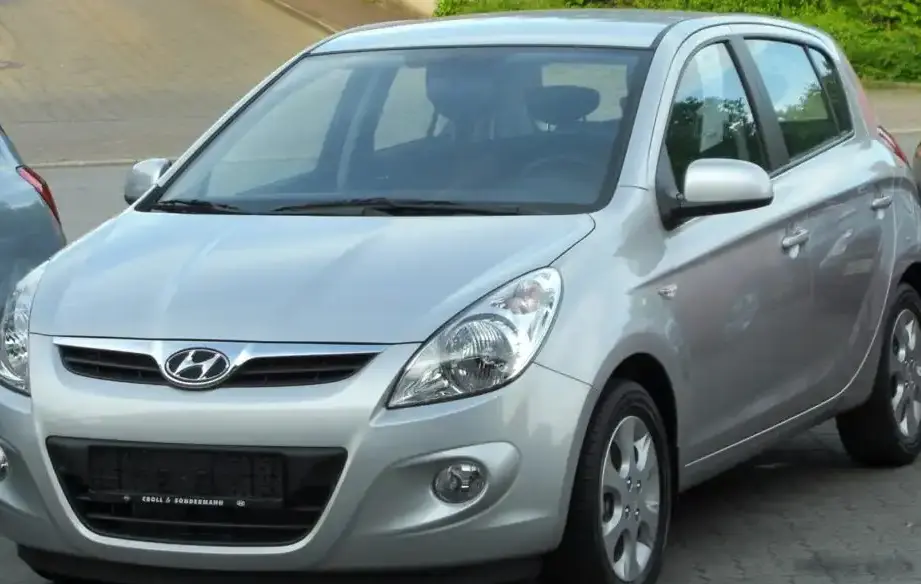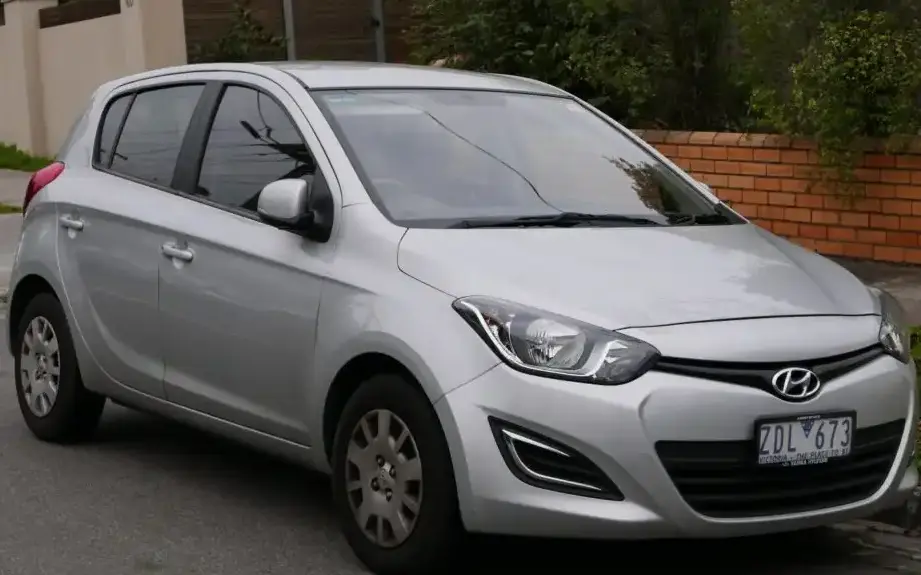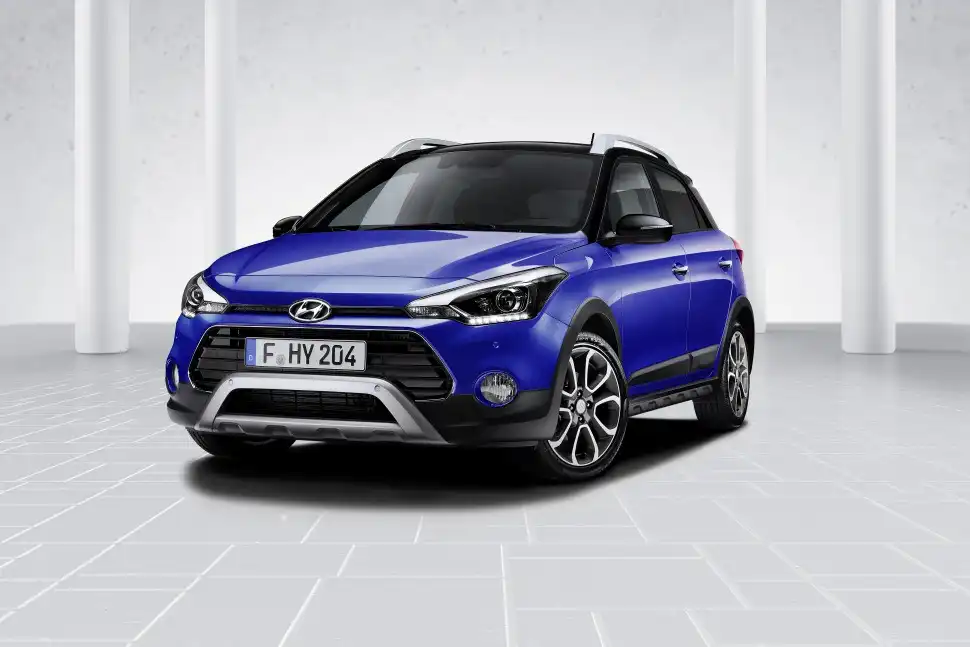
The Hyundai i20 II Active (facelift 2018) 1.0 T-GDi, producing 100 horsepower, was a key variant within the second generation i20 range (2014-2020). Introduced as part of a mid-cycle refresh in 2018, this model aimed to bridge the gap between the base engine options and the more powerful alternatives, offering a balance of fuel efficiency and performance in a subcompact hatchback/crossover package. Positioned as a mid-range offering, it catered to buyers seeking a modern, well-equipped vehicle without the higher price tag of the top-spec trims. This version was primarily marketed in Europe and other international markets, where demand for fuel-efficient and compact vehicles is high.
Technical Specifications
| Brand | Hyundai |
| Model | i20 |
| Generation | i20 II Active (facelift 2018) |
| Type (Engine) | 1.0 T-GDi (100 Hp) |
| Start of production | 2018 |
| End of production | 2020 |
| Powertrain Architecture | Internal Combustion engine |
| Body type | Hatchback, Crossover |
| Seats | 5 |
| Doors | 5 |
| Fuel consumption (urban) | 6.1 l/100 km (38.6 US mpg, 46.3 UK mpg, 16.4 km/l) |
| Fuel consumption (extra urban) | 4.8 l/100 km (49 US mpg, 58.9 UK mpg, 20.8 km/l) |
| Fuel consumption (combined) | 5.2 l/100 km (45.2 US mpg, 54.3 UK mpg, 19.2 km/l) |
| CO2 emissions | 120 g/km |
| Fuel Type | Petrol (Gasoline) |
| Acceleration 0 – 100 km/h | 10.8 sec |
| Acceleration 0 – 62 mph | 10.8 sec |
| Acceleration 0 – 60 mph | 10.3 sec |
| Maximum speed | 188 km/h (116.82 mph) |
| Emission standard | Euro 6d-Temp |
| Weight-to-power ratio | 10.9 kg/Hp, 92.2 Hp/tonne |
| Weight-to-torque ratio | 6.3 kg/Nm, 158.5 Nm/tonne |
| Power | 100 Hp @ 4500 rpm |
| Power per litre | 100.2 Hp/l |
| Torque | 172 Nm @ 1500-4000 rpm (126.86 lb.-ft. @ 1500-4000 rpm) |
| Engine layout | Front, Transverse |
| Engine Model/Code | Kappa II / G3LC |
| Engine displacement | 998 cm3 (60.9 cu. in.) |
| Number of cylinders | 3 |
| Engine configuration | Inline |
| Cylinder Bore | 71 mm (2.8 in.) |
| Piston Stroke | 84 mm (3.31 in.) |
| Compression ratio | 10:1 |
| Number of valves per cylinder | 4 |
| Fuel injection system | Direct injection |
| Engine aspiration | Turbocharger, Intercooler |
| Engine oil capacity | 3.6 l (3.8 US qt | 3.17 UK qt) |
| Coolant capacity | 6.4 l (6.76 US qt | 5.63 UK qt) |
| Kerb Weight | 1085 kg (2392.02 lbs.) |
| Max. weight | 1610-1181 kg (3549.44 – 2603.66 lbs.) |
| Max load | 96-525 kg (211.64 – 1157.43 lbs.) |
| Trunk (boot) space – minimum | 301-326 l (10.63 – 11.51 cu. ft.) |
| Trunk (boot) space – maximum | 1042 l (36.8 cu. ft.) |
| Fuel tank capacity | 50 l (13.21 US gal | 11 UK gal) |
| Max. roof load | 70 kg (154.32 lbs.) |
| Permitted trailer load with brakes (12%) | 1000 kg (2204.62 lbs.) |
| Permitted trailer load without brakes | 450 kg (992.08 lbs.) |
| Permitted towbar download | 75 kg (165.35 lbs.) |
| Length | 4065 mm (160.04 in.) |
| Width | 1760 mm (69.29 in.) |
| Height | 1529 mm (60.2 in.) |
| Wheelbase | 2570 mm (101.18 in.) |
| Front track | 1511-1517 mm (59.49 – 59.72 in.) |
| Rear (Back) track | 1512-1519 mm (59.53 – 59.8 in.) |
| Ride height (ground clearance) | 160 mm (6.3 in.) |
| Drivetrain Architecture | The Internal combustion engine (ICE) drives the front wheels of the vehicle. |
| Drive wheel | Front wheel drive |
| Number of gears and type of gearbox | 5 gears, manual transmission |
| Front suspension | Independent type McPherson |
| Rear suspension | Torsion |
| Front brakes | Ventilated discs |
| Rear brakes | Disc |
| Assisting systems | ABS (Anti-lock braking system) |
| Steering type | Steering rack and pinion |
| Power steering | Electric Steering |
| Tires size | 185/65 R15; 195/55 R16; 205/45 R17 |
| Wheel rims size | 6J x 15; 6J x 16; 6.5J x 17 |
INTRODUCTION
The Hyundai i20 II Active (facelift 2018) 1.0 T-GDi represented a significant step forward for Hyundai’s subcompact offerings. Building upon the success of the initial i20 II generation, the facelift brought updated styling, improved technology, and a refined engine lineup. The 1.0 T-GDi variant, introduced with this refresh, was designed to appeal to buyers seeking a balance between fuel economy and performance. It slotted into the range between the naturally aspirated 1.2-liter engine and the more potent 1.4-liter T-GDi, offering a compelling alternative for those prioritizing efficiency without sacrificing drivability. The “Active” designation denoted a slightly more rugged appearance with plastic cladding and a raised ride height, aiming to broaden the i20’s appeal to a wider audience.
Powertrain & Engine Architecture
At the heart of the i20 1.0 T-GDi lies the Kappa II engine family, specifically the G3LC three-cylinder turbocharged gasoline engine. This 998cc unit utilizes direct fuel injection and a single scroll turbocharger with an intercooler to deliver a respectable 100 horsepower at 4500 rpm and 172 Nm (126.86 lb.-ft.) of torque between 1500 and 4000 rpm. The engine’s compact size and lightweight construction contribute to the i20’s overall efficiency. The direct injection system ensures precise fuel delivery, optimizing combustion and reducing emissions. The turbocharger provides a boost in power, mitigating the inherent limitations of a small-displacement engine. The engine typically paired with a five-speed manual transmission, but a six-speed automatic transmission was also available, though less common. The automatic transmission was designed to provide smooth shifts and enhance the overall driving experience, particularly in urban environments.
Driving Characteristics
The 1.0 T-GDi-equipped i20 offered a surprisingly lively driving experience for a subcompact car. While not exceptionally quick, the turbocharger provided a noticeable boost in acceleration, making overtaking maneuvers and merging onto highways relatively effortless. The 0-60 mph time of around 10.3 seconds is respectable for the class. The five-speed manual transmission offered precise shifts and allowed drivers to maximize the engine’s power output. The automatic transmission, while convenient, did slightly diminish performance due to its less aggressive gear ratios. The i20’s suspension provided a comfortable ride, absorbing bumps and imperfections in the road effectively. However, the handling was not particularly sporty, with a noticeable degree of body roll in corners. Overall, the driving experience was geared towards comfort and practicality rather than outright performance.
Equipment & Trim Levels
The i20 Active 1.0 T-GDi typically came well-equipped, even in base trim. Standard features often included air conditioning, power windows, central locking, a touchscreen infotainment system with Bluetooth connectivity, and a suite of safety features such as ABS, ESC (Electronic Stability Control), and multiple airbags. Higher trim levels added features like alloy wheels, a rearview camera, parking sensors, a larger touchscreen display, and automatic climate control. Interior upholstery was typically cloth, with options for upgraded materials on higher trims. The “Active” trim level also included unique exterior styling elements, such as plastic body cladding and roof rails, giving it a more rugged appearance.
Chassis & Braking
The i20 II Active utilized a front-wheel-drive layout with an independent McPherson strut suspension at the front and a torsion beam suspension at the rear. This setup provided a good balance between ride comfort and handling. Braking duties were handled by ventilated discs at the front and solid discs at the rear. ABS (Anti-lock Braking System) was standard, enhancing braking performance and stability. The i20’s relatively lightweight construction contributed to its braking efficiency. Steering was provided by an electric power steering system, offering light and precise control.
Market Reception & Comparison
The Hyundai i20 1.0 T-GDi received generally positive reviews from automotive critics. It was praised for its fuel efficiency, comfortable ride, and well-equipped interior. However, some critics noted that the engine could feel strained at higher speeds and that the handling was not as engaging as some of its rivals. Compared to the naturally aspirated 1.2-liter engine, the 1.0 T-GDi offered a significant improvement in performance and drivability. Compared to the 1.4 T-GDi, it provided similar fuel economy but with less power. The i20 competed with other popular subcompact hatchbacks such as the Volkswagen Polo, Ford Fiesta, and Renault Clio.
Legacy
The Hyundai i20 II Active 1.0 T-GDi has proven to be a reliable and durable vehicle in the used car market. The Kappa engine, while a three-cylinder, has demonstrated good longevity when properly maintained. Common issues are relatively minor, often related to turbocharger wear or sensor failures. The i20’s affordability, fuel efficiency, and practicality continue to make it an attractive option for budget-conscious buyers. Its success helped establish Hyundai as a major player in the European subcompact car segment, paving the way for future models.