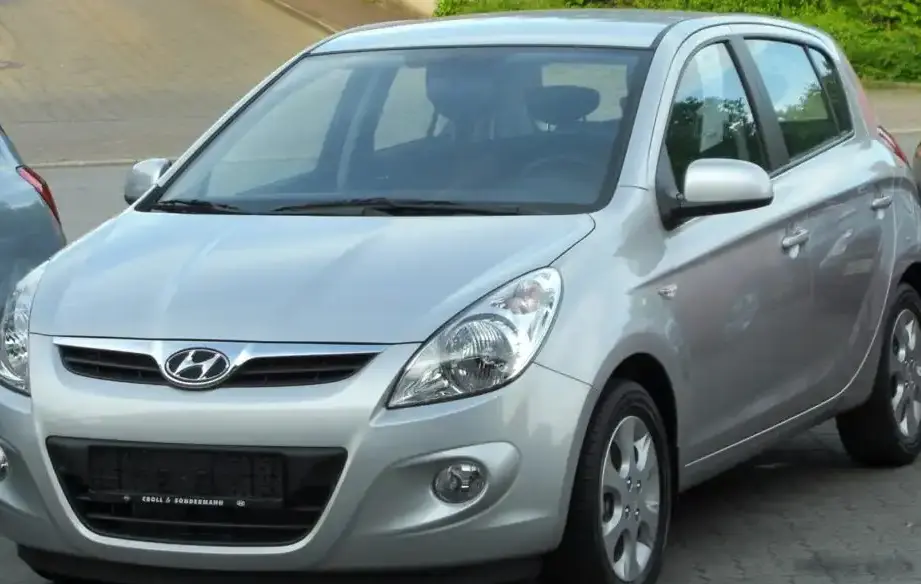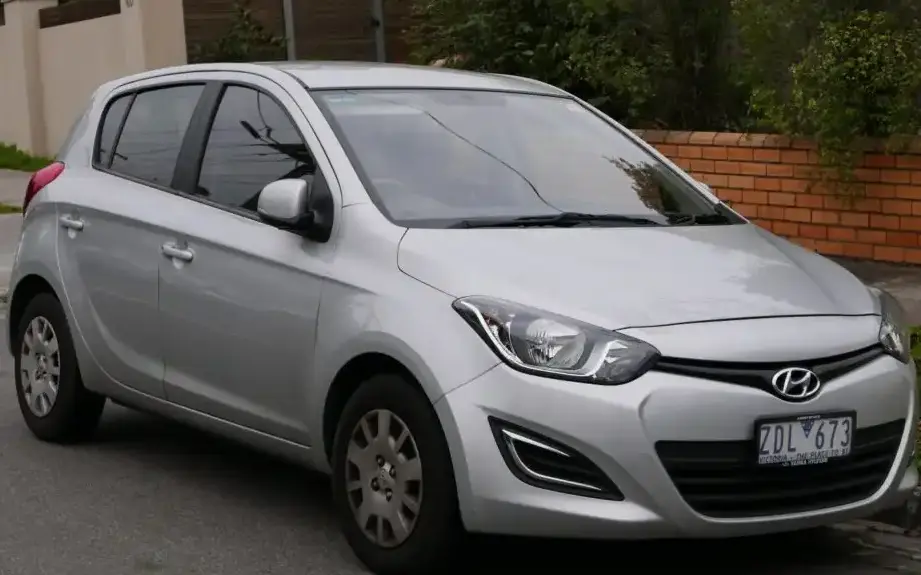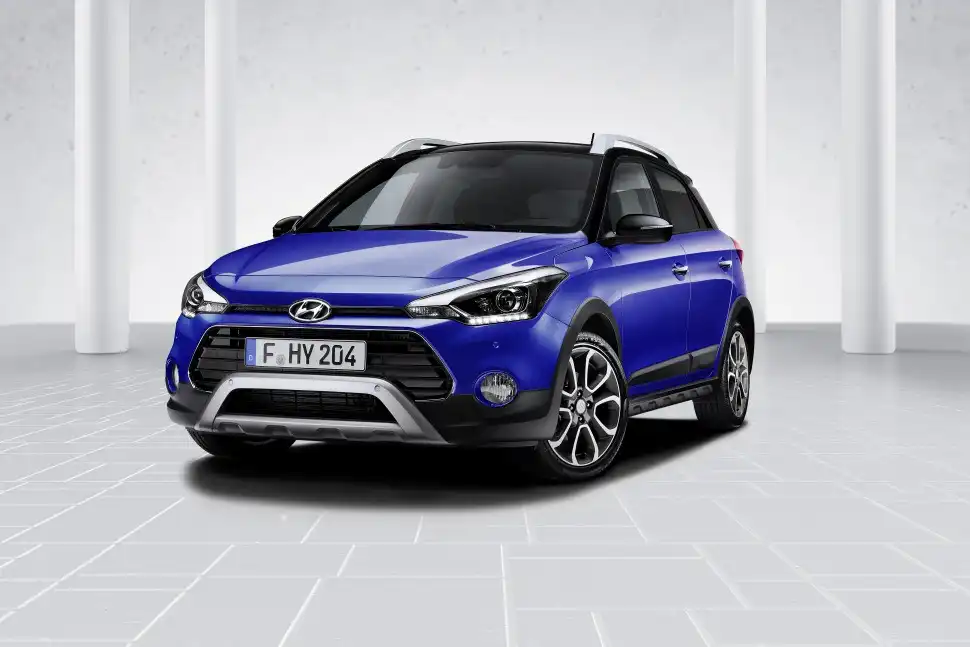
The Hyundai i20 II Active (facelift 2018) 1.0 T-GDi 100 Hp DCT represents a specific configuration within the second generation of Hyundai’s popular subcompact hatchback, the i20. Introduced as part of a mid-life refresh in 2018, this variant combined a turbocharged three-cylinder engine with a dual-clutch transmission (DCT) and a slightly raised, crossover-inspired suspension and styling – marketed as the “Active” trim. Production of this specific engine and transmission pairing ran from 2018 to 2020, primarily aimed at the European market where fuel efficiency and nimble handling were highly valued. It occupied a mid-range position in the i20 lineup, offering a balance between affordability and modern powertrain technology.
Technical Specifications
| Brand | Hyundai |
| Model | i20 |
| Generation | i20 II Active (facelift 2018) |
| Type (Engine) | 1.0 T-GDi (100 Hp) DCT |
| Start of production | 2018 |
| End of production | 2020 |
| Powertrain Architecture | Internal Combustion engine |
| Body type | Hatchback, Crossover |
| Seats | 5 |
| Doors | 5 |
| Fuel consumption (urban) | 5.9 l/100 km (39.9 US mpg, 47.9 UK mpg, 16.9 km/l) |
| Fuel consumption (extra urban) | 4.7 l/100 km (50 US mpg, 60.1 UK mpg, 21.3 km/l) |
| Fuel consumption (combined) | 5.2 l/100 km (45.2 US mpg, 54.3 UK mpg, 19.2 km/l) |
| CO2 emissions | 118 g/km |
| Fuel Type | Petrol (Gasoline) |
| Acceleration 0 – 100 km/h | 11.7 sec |
| Acceleration 0 – 62 mph | 11.7 sec |
| Acceleration 0 – 60 mph | 11.1 sec |
| Maximum speed | 175 km/h (108.74 mph) |
| Emission standard | Euro 6d-Temp |
| Weight-to-power ratio | 11.3 kg/Hp, 88.5 Hp/tonne |
| Weight-to-torque ratio | 6.6 kg/Nm, 152.2 Nm/tonne |
| Power | 100 Hp @ 4500 rpm |
| Power per litre | 100.2 Hp/l |
| Torque | 172 Nm @ 1500-4000 rpm (126.86 lb.-ft. @ 1500-4000 rpm) |
| Engine layout | Front, Transverse |
| Engine Model/Code | Kappa II / G3LC |
| Engine displacement | 998 cm3 (60.9 cu. in.) |
| Number of cylinders | 3 |
| Engine configuration | Inline |
| Cylinder Bore | 71 mm (2.8 in.) |
| Piston Stroke | 84 mm (3.31 in.) |
| Compression ratio | 10:1 |
| Number of valves per cylinder | 4 |
| Fuel injection system | Direct injection |
| Engine aspiration | Turbocharger, Intercooler |
| Engine oil capacity | 3.6 l (3.8 US qt | 3.17 UK qt) |
| Coolant | 6.4 l (6.76 US qt | 5.63 UK qt) |
| Kerb Weight | 1130-1240 kg (2491.22 – 2733.73 lbs.) |
| Max. weight | 1650 kg (3637.63 lbs.) |
| Max load | 410-520 kg (903.9 – 1146.4 lbs.) |
| Trunk (boot) space – minimum | 301-326 l (10.63 – 11.51 cu. ft.) |
| Trunk (boot) space – maximum | 1042 l (36.8 cu. ft.) |
| Fuel tank capacity | 50 l (13.21 US gal | 11 UK gal) |
| Max. roof load | 70 kg (154.32 lbs.) |
| Permitted trailer load with brakes (12%) | 800 kg (1763.7 lbs.) |
| Permitted trailer load without brakes | 450 kg (992.08 lbs.) |
| Permitted towbar download | 75 kg (165.35 lbs.) |
| Length | 4065 mm (160.04 in.) |
| Width | 1760 mm (69.29 in.) |
| Height | 1529 mm (60.2 in.) |
| Wheelbase | 2570 mm (101.18 in.) |
| Front track | 1511-1517 mm (59.49 – 59.72 in.) |
| Rear (Back) track | 1512-1519 mm (59.53 – 59.8 in.) |
| Ride height (ground clearance) | 160 mm (6.3 in.) |
| Drivetrain Architecture | The Internal combustion engine (ICE) drives the front wheels of the vehicle. |
| Drive wheel | Front wheel drive |
| Number of gears and type of gearbox | 7 gears, automatic transmission |
| Front suspension | Independent type McPherson |
| Rear suspension | Torsion |
| Front brakes | Ventilated discs |
| Rear brakes | Disc |
| Assisting systems | ABS (Anti-lock braking system) |
| Steering type | Steering rack and pinion |
| Power steering | Electric Steering |
| Tires size | 195/55 R16; 205/45 R17 |
| Wheel rims size | 6J x 16; 6.5J x 17 |
INTRODUCTION
The Hyundai i20 II Active 1.0 T-GDi DCT, produced from 2018-2020, was a key offering in Hyundai’s strategy to appeal to European buyers seeking a stylish, efficient, and technologically advanced subcompact. The “Active” designation signified a crossover-inspired aesthetic with slightly increased ride height and rugged styling cues. This variant was built on the PB platform (internally known as the 1HX0/A3 platform), shared with the Kia Rio. It aimed to bridge the gap between traditional hatchbacks and the growing popularity of small SUVs, offering a more versatile and visually appealing option within the i20 range.
Powertrain & Engine Architecture
At the heart of this i20 Active variant lies the Hyundai-Kia Kappa II 1.0 T-GDi engine, specifically the G3LC code. This is a three-cylinder, 1.0-liter (998cc) gasoline engine featuring direct fuel injection and a single turbocharger with an intercooler. The engine utilizes a timing chain for durability and boasts four valves per cylinder. The direct injection system, coupled with the turbocharger, allows for a good balance of power and fuel efficiency. The engine produces 100 horsepower at 4500 rpm and 172 Nm (126.86 lb-ft) of torque between 1500 and 4000 rpm. This torque curve provides decent responsiveness in everyday driving situations. Paired with the engine is a seven-speed dual-clutch transmission (DCT). This DCT offers quicker and smoother gear changes compared to a traditional automatic transmission, contributing to improved acceleration and fuel economy. The DCT’s programming prioritizes efficiency, with taller gear ratios for highway cruising.
Driving Characteristics
The 1.0 T-GDi DCT powertrain delivers a surprisingly refined driving experience for a three-cylinder engine. While not exceptionally powerful, the turbocharger provides adequate boost for merging onto highways and overtaking maneuvers. The 0-60 mph time of around 11.1 seconds is respectable for the class. The DCT transmission shifts quickly and smoothly, although some drivers may notice slight hesitation at low speeds. The “Active” trim’s slightly raised suspension provides a more comfortable ride over uneven road surfaces compared to the standard i20, but it also introduces a bit more body roll in corners. The steering is light and precise, making it easy to maneuver in urban environments. Compared to the naturally aspirated 1.2-liter engine option, the 1.0 T-GDi offers significantly more power and torque, resulting in a more engaging driving experience. However, it doesn’t match the performance of the higher-spec i20 models equipped with larger engines.
Equipment & Trim Levels
The i20 Active 1.0 T-GDi DCT typically came well-equipped, reflecting its mid-range positioning. Standard features often included air conditioning, a touchscreen infotainment system with Apple CarPlay and Android Auto compatibility, Bluetooth connectivity, and power windows. Safety features such as ABS, ESC (Electronic Stability Control), and multiple airbags were also standard. The “Active” trim added unique exterior styling elements, such as plastic cladding around the wheel arches and side sills, as well as roof rails. Interior upholstery was typically cloth, with options for upgraded materials. Optional extras included a rear-view camera, parking sensors, and a panoramic sunroof.
Chassis & Braking
The i20 Active utilizes a front-wheel-drive layout with an independent McPherson strut suspension at the front and a torsion beam suspension at the rear. The front brakes are ventilated discs, providing good stopping power, while the rear brakes are solid discs. The steering system is an electric power-assisted rack and pinion system, offering light and precise steering feel. The slightly increased ride height of the “Active” trim necessitated minor adjustments to the suspension tuning to maintain stability and handling. Tire sizes typically ranged from 195/55 R16 to 205/45 R17, depending on the specific trim level and optional equipment.
Market Reception & Comparison
The i20 Active 1.0 T-GDi DCT was generally well-received by automotive critics. It was praised for its fuel efficiency, comfortable ride, and modern features. However, some reviewers noted that the three-cylinder engine could be a bit noisy under hard acceleration. Compared to other trims in the i20 lineup, the 1.0 T-GDi DCT offered a compelling balance of performance and economy. It was more fuel-efficient than the larger-engined models, but provided more power than the base 1.2-liter engine. Competitors in the subcompact segment, such as the Ford Fiesta, Volkswagen Polo, and Renault Clio, offered similar powertrain options and features, but the i20 Active stood out with its unique crossover-inspired styling and generous warranty.
Legacy
The Kappa II 1.0 T-GDi engine and the seven-speed DCT transmission have proven to be relatively reliable powertrains. While some owners have reported minor issues with the turbocharger or DCT, these are not widespread. The i20 Active 1.0 T-GDi DCT remains a popular choice in the used car market, offering a good value proposition for buyers seeking a fuel-efficient and well-equipped subcompact. Its combination of practicality, style, and technology ensures its continued appeal for years to come. Regular maintenance, including oil changes and DCT fluid replacements, is crucial for maintaining the long-term reliability of this powertrain.