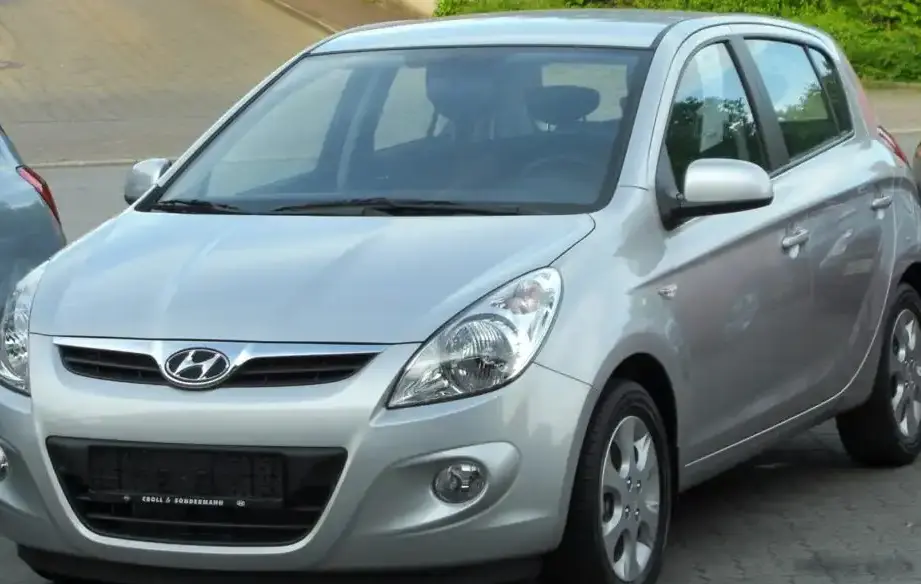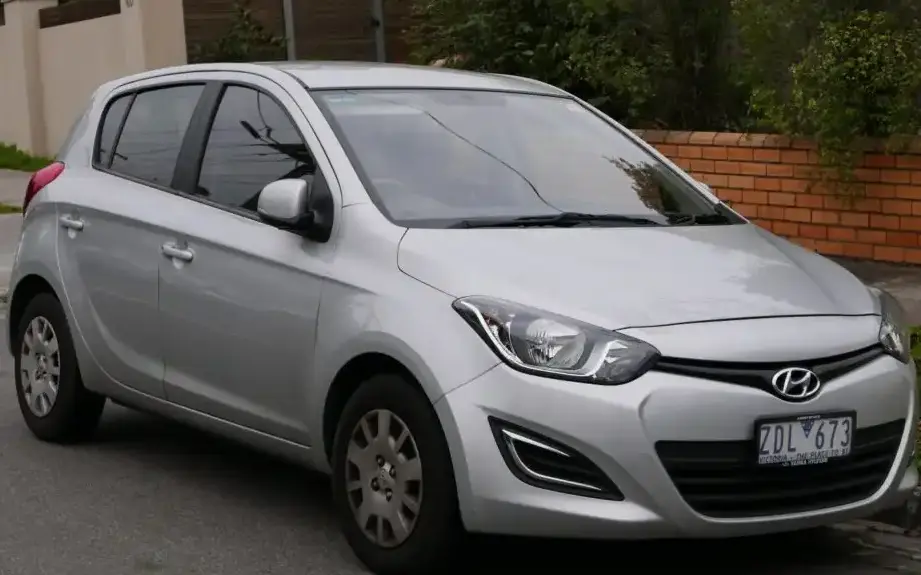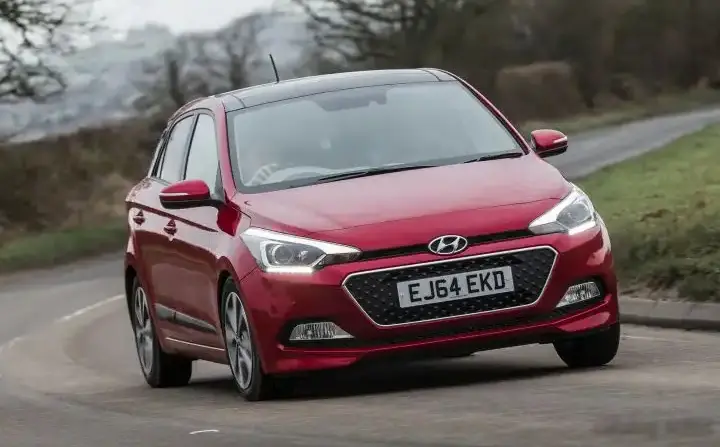
The Hyundai i20 II (GB) 1.0 T-GDI, produced from 2016 to 2018, represented a significant step forward for Hyundai’s subcompact hatchback in the European market. Part of the second generation i20 (GB platform), this variant was positioned as an entry-level offering with a focus on fuel efficiency and affordability, while still providing a modern driving experience. It aimed to attract buyers seeking a practical and economical city car with the added benefit of turbocharged power. This model played a key role in Hyundai’s efforts to gain market share in the competitive B-segment.
Technical Specifications
| Brand | Hyundai |
| Model | i20 |
| Generation | i20 II (GB) |
| Type (Engine) | 1.0 T-GDI (100 Hp) |
| Start of production | 2016 |
| End of production | 2018 |
| Powertrain Architecture | Internal Combustion engine |
| Body type | Hatchback |
| Seats | 5 |
| Doors | 5 |
| Fuel consumption (urban) | 5.3 l/100 km (44.4 US mpg, 53.3 UK mpg, 18.9 km/l) |
| Fuel consumption (extra urban) | 3.6 l/100 km (65.3 US mpg, 78.5 UK mpg, 27.8 km/l) |
| Fuel consumption (combined) | 4.3 l/100 km (54.7 US mpg, 65.7 UK mpg, 23.3 km/l) |
| CO2 emissions | 99 g/km |
| Fuel Type | Petrol (Gasoline) |
| Acceleration 0 – 100 km/h | 10.7 sec |
| Acceleration 0 – 62 mph | 10.7 sec |
| Acceleration 0 – 60 mph | 10.2 sec |
| Maximum speed | 188 km/h (116.82 mph) |
| Emission standard | Euro 6 |
| Weight-to-power ratio | 10.7 kg/Hp, 93.9 Hp/tonne |
| Weight-to-torque ratio | 6.2 kg/Nm, 161.5 Nm/tonne |
| Power | 100 Hp @ 4500 rpm |
| Power per litre | 100.2 Hp/l |
| Torque | 172 Nm @ 1500-4000 rpm (126.86 lb.-ft. @ 1500-4000 rpm) |
| Engine layout | Front, Transverse |
| Engine Model/Code | Kappa II / G3LC |
| Engine displacement | 998 cm3 (60.9 cu. in.) |
| Number of cylinders | 3 |
| Engine configuration | Inline |
| Cylinder Bore | 71 mm (2.8 in.) |
| Piston Stroke | 84 mm (3.31 in.) |
| Compression ratio | 10:1 |
| Number of valves per cylinder | 4 |
| Fuel injection system | Direct injection |
| Engine aspiration | Turbocharger, Intercooler |
| Engine oil capacity | 3.6 l (3.8 US qt | 3.17 UK qt) |
| Coolant | 6.4 l (6.76 US qt | 5.63 UK qt) |
| Kerb Weight | 1065 kg (2347.92 lbs.) |
| Max. weight | 1600 kg (3527.4 lbs.) |
| Max load | 535 kg (1179.47 lbs.) |
| Trunk (boot) space – minimum | 326 l (11.51 cu. ft.) |
| Trunk (boot) space – maximum | 1042 l (36.8 cu. ft.) |
| Fuel tank capacity | 50 l (13.21 US gal | 11 UK gal) |
| Permitted trailer load with brakes (12%) | 1000 kg (2204.62 lbs.) |
| Permitted trailer load without brakes | 450 kg (992.08 lbs.) |
| Length | 4035 mm (158.86 in.) |
| Width | 1734 mm (68.27 in.) |
| Height | 1474 mm (58.03 in.) |
| Wheelbase | 2570 mm (101.18 in.) |
| Front track | 1520 mm (59.84 in.) |
| Rear (Back) track | 1519 mm (59.8 in.) |
| Ride height (ground clearance) | 140 mm (5.51 in.) |
| Minimum turning circle (turning diameter) | 10.2 m (33.46 ft.) |
| Drivetrain Architecture | The Internal combustion engine (ICE) drives the front wheels of the vehicle. |
| Drive wheel | Front wheel drive |
| Number of gears and type of gearbox | 5 gears, manual transmission |
| Front brakes | Ventilated discs |
| Rear brakes | Disc |
| Assisting systems | ABS (Anti-lock braking system) |
| Steering type | Steering rack and pinion |
| Power steering | Electric Steering |
| Tires size | 185/65 R15 |
| Wheel rims size | 15 |
Powertrain & Engine Architecture
The heart of the i20 1.0 T-GDI is the Hyundai Kappa II engine, specifically the G3LC code. This is a 998cc, three-cylinder turbocharged gasoline engine. The use of a turbocharger and direct injection allowed Hyundai to extract a respectable 100 horsepower from such a small displacement. The engine features a single-scroll turbocharger and an intercooler to manage intake air temperature. The direct injection system, coupled with a relatively high 10:1 compression ratio, contributes to both power output and fuel efficiency. The engine utilizes a timing chain, which generally requires less maintenance than a timing belt. The five-speed manual transmission was the standard offering, chosen for its simplicity and cost-effectiveness. The transmission’s gear ratios were tuned for urban driving and fuel economy, rather than outright performance.
Driving Characteristics
The 1.0 T-GDI i20 offered a surprisingly lively driving experience for its class. While not a performance car, the turbocharger provided a noticeable boost in power, particularly in the mid-range. Acceleration from 0-60 mph took around 10.2 seconds, which was competitive for the segment. The five-speed manual transmission felt light and precise, although some drivers found the shift gate a little vague. Compared to the naturally aspirated 1.2-liter engine option, the 1.0 T-GDI offered significantly more torque, making it easier to navigate hills and overtake slower traffic. However, it didn’t possess the refinement of larger-engined rivals. The relatively short gearing contributed to a more responsive feel around town, but could result in higher engine speeds on the highway.
Equipment & Trim Levels
The 1.0 T-GDI typically came in a mid-range trim level, offering a good balance of features and affordability. Standard equipment generally included air conditioning, power windows, central locking, a basic audio system with USB connectivity, and ABS brakes. Higher trim levels added features such as alloy wheels, a touchscreen infotainment system, rear parking sensors, and a leather-wrapped steering wheel. Interior upholstery was typically cloth, with a functional and durable design. Optional extras included a panoramic sunroof and a navigation system.
Chassis & Braking
The i20 II (GB) utilized a front-wheel-drive platform with a MacPherson strut front suspension and a torsion beam rear suspension. This setup provided a comfortable ride quality, although it wasn’t particularly sporty. The front brakes were ventilated discs, while the rear brakes were solid discs. ABS (Anti-lock Braking System) was standard. The steering was electrically assisted, providing light and easy steering feel. The suspension was tuned for comfort and stability, prioritizing ride quality over handling precision.
Market Reception & Comparison
The Hyundai i20 1.0 T-GDI was generally well-received by automotive critics. It was praised for its fuel efficiency, surprisingly punchy engine, and competitive price. However, some reviewers noted the engine could be a little noisy and that the interior materials weren’t as premium as some rivals. Compared to other engines in the i20 lineup, the 1.0 T-GDI offered a better balance of performance and economy than the 1.2-liter naturally aspirated engine, but lacked the refinement and power of the 1.4-liter option. In terms of reliability, the Kappa engine family has proven to be generally robust, although some owners have reported issues with the turbocharger and fuel injectors.
Legacy
The Hyundai i20 1.0 T-GDI has proven to be a reliable and economical used car. The Kappa engine, while not without its potential issues, has generally held up well over time. The availability of spare parts is good, and maintenance costs are relatively low. Today, these i20s represent a good value proposition for buyers seeking a practical and affordable city car. The introduction of the 1.0 T-GDI engine marked a turning point for Hyundai, demonstrating their ability to produce small-displacement turbocharged engines that offered both performance and efficiency. It helped solidify the i20’s position as a competitive player in the European subcompact hatchback market.