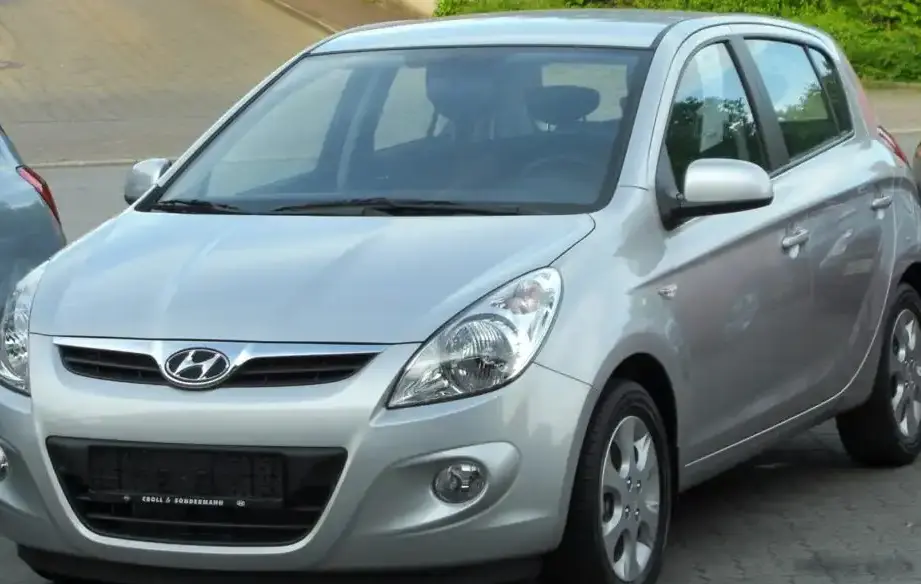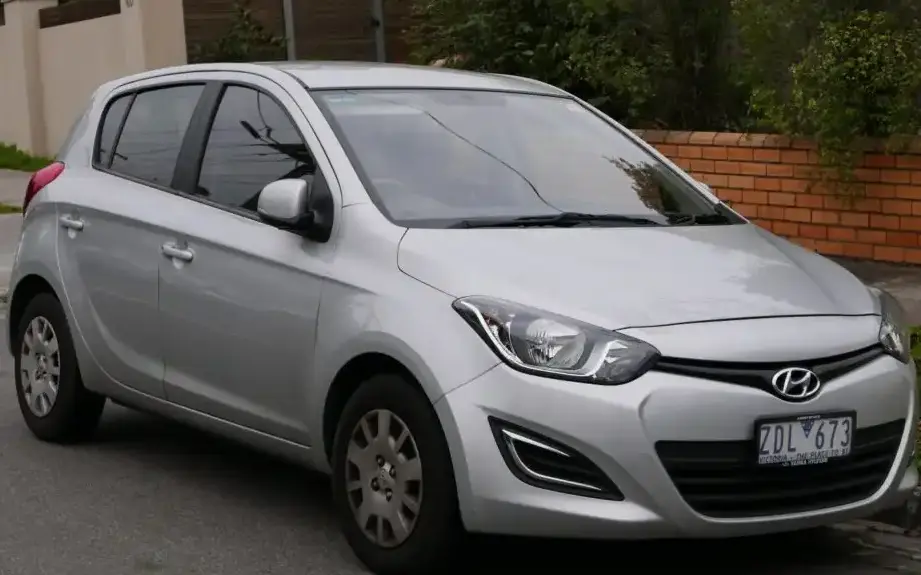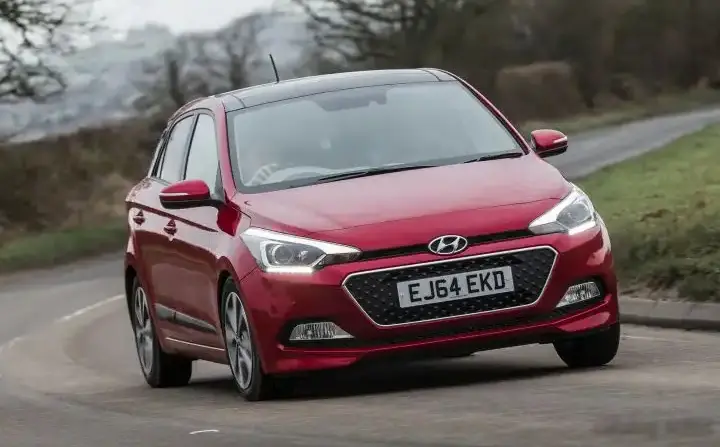
The Hyundai i20 II (GB) 1.0 T-GDI, produced from 2016 to 2018, represents a significant step forward for Hyundai’s subcompact hatchback. Positioned as a mid-range offering within the second generation i20 (GB) lineup, this variant combined a downsized, turbocharged engine with a six-speed manual transmission, aiming to deliver a balance of fuel efficiency and respectable performance. It was primarily marketed in Europe, where demand for smaller, economical cars was high, and offered a more engaging driving experience than the base naturally aspirated models. This version played a key role in Hyundai’s efforts to improve its brand image and compete more effectively with established European manufacturers.
Technical Specifications
| Brand | Hyundai |
| Model | i20 |
| Generation | i20 II (GB) |
| Type (Engine) | 1.0 T-GDI (120 Hp) |
| Start of production | 2016 |
| End of production | 2018 |
| Powertrain Architecture | Internal Combustion engine |
| Body type | Hatchback |
| Seats | 5 |
| Doors | 5 |
| Fuel consumption (urban) | 5.8 l/100 km (40.6 US mpg, 48.7 UK mpg, 17.2 km/l) |
| Fuel consumption (extra urban) | 3.9 l/100 km (60.3 US mpg, 72.4 UK mpg, 25.6 km/l) |
| Fuel consumption (combined) | 4.6 l/100 km (51.1 US mpg, 61.4 UK mpg, 21.7 km/l) |
| CO2 emissions | 107 g/km |
| Fuel Type | Petrol (Gasoline) |
| Acceleration 0 – 100 km/h | 10.2 sec |
| Acceleration 0 – 62 mph | 10.2 sec |
| Acceleration 0 – 60 mph | 9.7 sec |
| Maximum speed | 190 km/h (118.06 mph) |
| Emission standard | Euro 6 |
| Weight-to-power ratio | 8.9 kg/Hp, 112.1 Hp/tonne |
| Weight-to-torque ratio | 6.2 kg/Nm, 160.7 Nm/tonne |
| Power | 120 Hp @ 6000 rpm |
| Power per litre | 120.2 Hp/l |
| Torque | 172 Nm @ 1500-4000 rpm (126.86 lb.-ft. @ 1500-4000 rpm) |
| Engine layout | Front, Transverse |
| Engine Model/Code | Kappa II / G3LC |
| Engine displacement | 998 cm3 (60.9 cu. in.) |
| Number of cylinders | 3 |
| Engine configuration | Inline |
| Cylinder Bore | 71 mm (2.8 in.) |
| Piston Stroke | 84 mm (3.31 in.) |
| Compression ratio | 10:1 |
| Number of valves per cylinder | 4 |
| Fuel injection system | Direct injection |
| Engine aspiration | Turbocharger, Intercooler |
| Engine oil capacity | 3.6 l (3.8 US qt | 3.17 UK qt) |
| Coolant | 6.4 l (6.76 US qt | 5.63 UK qt) |
| Kerb Weight | 1070 kg (2358.95 lbs.) |
| Max. weight | 1640 kg (3615.58 lbs.) |
| Max load | 570 kg (1256.63 lbs.) |
| Trunk (boot) space – minimum | 326 l (11.51 cu. ft.) |
| Trunk (boot) space – maximum | 1042 l (36.8 cu. ft.) |
| Fuel tank capacity | 50 l (13.21 US gal | 11 UK gal) |
| Permitted trailer load with brakes (12%) | 1110 kg (2447.13 lbs.) |
| Permitted trailer load without brakes | 450 kg (992.08 lbs.) |
| Length | 4035 mm (158.86 in.) |
| Width | 1734 mm (68.27 in.) |
| Height | 1474 mm (58.03 in.) |
| Wheelbase | 2570 mm (101.18 in.) |
| Front track | 1520 mm (59.84 in.) |
| Rear (Back) track | 1519 mm (59.8 in.) |
| Ride height (ground clearance) | 140 mm (5.51 in.) |
| Minimum turning circle (turning diameter) | 10.2 m (33.46 ft.) |
| Drivetrain Architecture | The Internal combustion engine (ICE) drives the front wheels of the vehicle. |
| Drive wheel | Front wheel drive |
| Number of gears and type of gearbox | 6 gears, manual transmission |
| Front brakes | Ventilated discs |
| Rear brakes | Disc |
| Assisting systems | ABS (Anti-lock braking system) |
| Steering type | Steering rack and pinion |
| Power steering | Electric Steering |
| Tires size | 185/65 R15 |
| Wheel rims size | 15 |
Powertrain & Engine Architecture
The heart of the i20 1.0 T-GDI is Hyundai’s Kappa II engine, specifically the G3LC code. This is a 998cc, three-cylinder turbocharged gasoline engine. The use of a turbocharger and direct injection allowed Hyundai to extract a significant amount of power from a small displacement engine. Direct injection ensures precise fuel delivery, improving combustion efficiency and reducing emissions. The engine features a single scroll turbocharger and an intercooler to manage intake air temperature. The engine’s valvetrain utilizes four valves per cylinder, contributing to its breathing efficiency. The six-speed manual transmission was chosen to complement the engine’s characteristics, providing drivers with greater control over the power delivery. The transmission’s gear ratios were tuned to maximize fuel economy while still providing adequate acceleration.
Driving Characteristics
The 1.0 T-GDI i20 offered a noticeable improvement in performance compared to the base 1.2-liter naturally aspirated engine. While not a sports car, the 120 horsepower and 172 Nm of torque provided sufficient power for everyday driving and even some spirited maneuvers. The turbocharger does introduce a slight amount of turbo lag, but the torque band is relatively broad, making it easy to maintain momentum. The six-speed manual transmission allowed drivers to keep the engine in its optimal power range. Compared to higher-spec i20 models with more powerful engines, the 1.0 T-GDI prioritized fuel efficiency over outright speed. The handling was typical of a subcompact hatchback – safe and predictable, but not particularly engaging.
Equipment & Trim Levels
The 1.0 T-GDI trim typically included features such as air conditioning, power windows, central locking, and a basic audio system with USB connectivity. Higher trim levels added features like alloy wheels, a touchscreen infotainment system with Apple CarPlay and Android Auto, rear parking sensors, and a leather-wrapped steering wheel. Interior upholstery was generally cloth, with options for upgraded materials on higher trims. Safety features included ABS, ESC (Electronic Stability Control), and multiple airbags. Optional extras included a panoramic sunroof and automatic climate control.
Chassis & Braking
The i20 II (GB) utilized a front-wheel-drive platform with a MacPherson strut front suspension and a torsion beam rear suspension. This setup provided a good balance of ride comfort and handling. The front brakes were ventilated discs, while the rear brakes were solid discs. ABS (Anti-lock Braking System) was standard, providing enhanced braking performance in emergency situations. The steering was electrically assisted, offering light and precise control. Stabilizer bars were fitted to both the front and rear axles to reduce body roll during cornering.
Market Reception & Comparison
The Hyundai i20 1.0 T-GDI was generally well-received by automotive critics. It was praised for its fuel efficiency, responsive engine, and well-equipped interior. However, some critics noted the engine could be a little noisy and that the ride quality was not as refined as some of its competitors. Compared to the naturally aspirated 1.2-liter i20, the 1.0 T-GDI offered significantly better performance and fuel economy. Compared to diesel-powered i20 models, the 1.0 T-GDI offered a more refined driving experience, but with slightly higher running costs. It competed directly with models like the Ford Fiesta, Volkswagen Polo, and Opel Corsa.
Legacy
The Kappa II 1.0 T-GDI engine proved to be a reliable and durable powertrain. While some early examples experienced minor issues with the turbocharger, these were generally addressed through software updates and improved manufacturing processes. Today, used examples of the i20 1.0 T-GDI are relatively common and offer good value for money. The engine’s fuel efficiency and relatively low maintenance costs make it an attractive option for budget-conscious buyers. The i20 1.0 T-GDI helped to establish Hyundai as a serious contender in the European subcompact hatchback market, paving the way for future success.