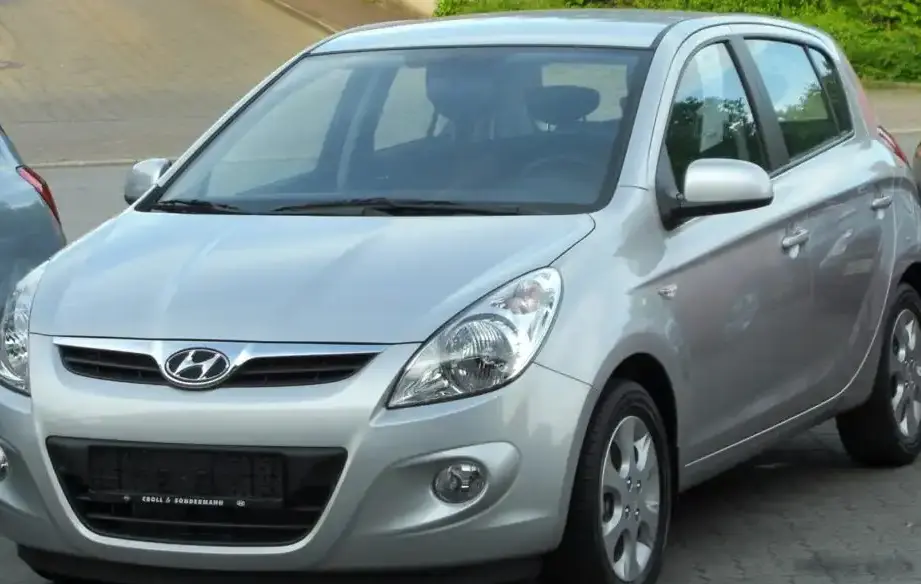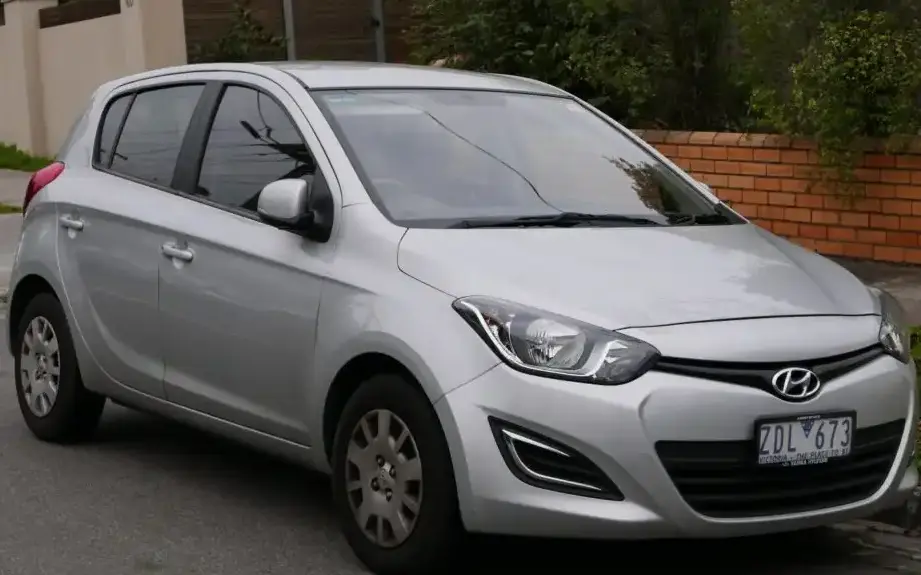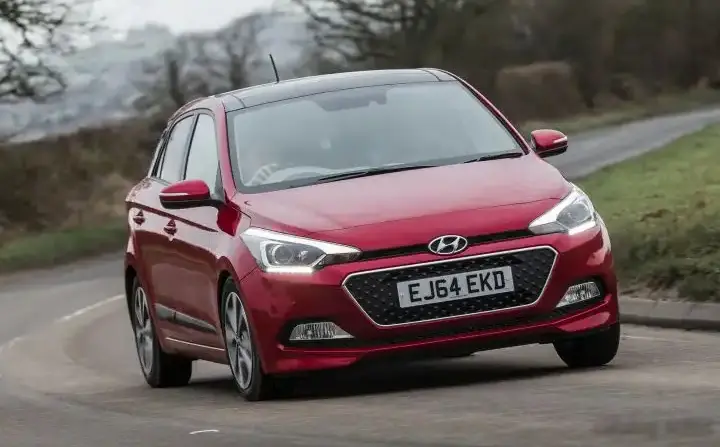
The Hyundai i20 II (GB) 1.2, producing 84 horsepower, was a key variant in the second generation of Hyundai’s popular subcompact hatchback. Introduced in 2014 and continuing through 2018, this model served as an entry point into the i20 range, particularly in European markets. It was positioned as a fuel-efficient and affordable option, appealing to buyers prioritizing practicality and low running costs. The i20 II (GB) was built on the Hyundai-Kia B platform, shared with models like the Kia Rio, and represented a significant step up in quality and refinement compared to its predecessor.
Technical Specifications
| Brand | Hyundai |
| Model | i20 |
| Generation | i20 II (GB) |
| Type (Engine) | 1.2 (84 Hp) |
| Start of production | 2014 |
| End of production | 2018 |
| Powertrain Architecture | Internal Combustion engine |
| Body type | Hatchback |
| Seats | 5 |
| Doors | 5 |
| Fuel consumption (urban) | 5.8 – 7.0 l/100 km (40.6 – 33.6 US mpg, 48.7 – 40.4 UK mpg, 17.2 – 14.3 km/l) |
| Fuel consumption (extra urban) | 4.0 – 4.2 l/100 km (58.8 – 56 US mpg, 70.6 – 67.3 UK mpg, 25 – 23.8 km/l) |
| Fuel consumption (combined) | 4.7 – 5.2 l/100 km (50 – 45.2 US mpg, 60.1 – 54.3 UK mpg, 21.3 – 19.2 km/l) |
| CO2 emissions | 109 – 121 g/km |
| Fuel Type | Petrol (Gasoline) |
| Acceleration 0 – 100 km/h | 13.1 sec |
| Acceleration 0 – 62 mph | 13.1 sec |
| Acceleration 0 – 60 mph | 12.4 sec |
| Maximum speed | 170 km/h (105.63 mph) |
| Emission standard | Euro 6 |
| Weight-to-power ratio | 12.4 kg/Hp, 80.8 Hp/tonne |
| Weight-to-torque ratio | 8.5 kg/Nm, 117.3 Nm/tonne |
| Power | 84 Hp @ 6000 rpm |
| Power per litre | 67.3 Hp/l |
| Torque | 122 Nm @ 4000 rpm (89.98 lb.-ft. @ 4000 rpm) |
| Engine layout | Front, Transverse |
| Engine Model/Code | G4LA |
| Engine displacement | 1248 cm3 (76.16 cu. in.) |
| Number of cylinders | 4 |
| Engine configuration | Inline |
| Cylinder Bore | 71 mm (2.8 in.) |
| Piston Stroke | 78.8 mm (3.1 in.) |
| Compression ratio | 10.5:1 |
| Number of valves per cylinder | 4 |
| Fuel injection system | Multi-port manifold injection |
| Engine aspiration | Naturally aspirated engine |
| Valvetrain | DOHC |
| Engine oil capacity | 3.5 l (3.7 US qt | 3.08 UK qt) |
| Coolant | 4.3 l (4.54 US qt | 3.78 UK qt) |
| Kerb Weight | 1040 kg (2292.81 lbs.) |
| Max. weight | 1580 kg (3483.3 lbs.) |
| Max load | 540 kg (1190.5 lbs.) |
| Trunk (boot) space – minimum | 326 l (11.51 cu. ft.) |
| Trunk (boot) space – maximum | 1042 l (36.8 cu. ft.) |
| Fuel tank capacity | 50 l (13.21 US gal | 11 UK gal) |
| Max. roof load | 70 kg (154.32 lbs.) |
| Length | 4035 mm (158.86 in.) |
| Width | 1734 mm (68.27 in.) |
| Height | 1474 mm (58.03 in.) |
| Wheelbase | 2570 mm (101.18 in.) |
| Front track | 1514-1520 mm (59.61 – 59.84 in.) |
| Rear (Back) track | 1513-1519 mm (59.57 – 59.8 in.) |
| Front overhang | 815 mm (32.09 in.) |
| Rear overhang | 650 mm (25.59 in.) |
| Ride height (ground clearance) | 140 mm (5.51 in.) |
| Minimum turning circle | 10.2 m (33.46 ft.) |
| Drivetrain Architecture | The Internal combustion engine (ICE) drives the front wheels of the vehicle. |
| Drive wheel | Front wheel drive |
| Number of gears and type of gearbox | 5 gears, manual transmission |
| Front suspension | Independent type McPherson |
| Rear suspension | Semi-independent, coil spring |
| Front brakes | Ventilated discs |
| Rear brakes | Disc |
| Assisting systems | ABS (Anti-lock braking system) |
| Steering type | Steering rack and pinion |
| Power steering | Electric Steering |
| Tires size | 185/65 R15; 195/55 R16 |
| Wheel rims size | 6.0J x 15; 6.0J x 16 |
Powertrain & Engine Architecture
The heart of the i20 1.2 was the Hyundai G4LA engine, a 1.248-liter inline-four cylinder gasoline engine. This engine utilized a multi-point fuel injection system and a double overhead camshaft (DOHC) valvetrain, contributing to reasonable efficiency and smooth operation. The G4LA engine was known for its simplicity and relatively low maintenance requirements. The engine produced 84 horsepower at 6000 rpm and 122 Nm (89.98 lb-ft) of torque at 4000 rpm. This power was delivered to the front wheels through a five-speed manual transmission, which was the standard offering. While an automatic transmission was available in some markets with the 1.2L engine, it was less common and often paired with slightly different engine calibrations. The engine featured a compression ratio of 10.5:1, a common figure for naturally aspirated gasoline engines of this era.
Driving Characteristics
The i20 1.2 with the manual transmission offered adequate, though not exhilarating, performance. Acceleration from 0 to 60 mph took around 12.4 seconds, and top speed was approximately 105.63 mph. The engine felt best suited to urban driving and highway cruising, where its modest power output was sufficient for most situations. The five-speed gearbox was well-matched to the engine’s characteristics, providing reasonable spacing between gears. Compared to higher-output versions of the i20, such as those equipped with a 1.4-liter engine, the 1.2 felt noticeably slower, particularly when fully loaded or tackling steep inclines. However, the 1.2’s lighter weight and lower friction components contributed to better fuel economy.
Equipment & Trim Levels
The i20 1.2 typically came with a base level of equipment, focusing on essential features. Standard amenities included air conditioning, power steering, central locking, and an audio system with USB connectivity. Safety features such as ABS (Anti-lock Braking System) and front airbags were also standard. Higher trim levels, such as SE or Premium, added features like alloy wheels, electric windows, a trip computer, and upgraded interior trim. Optional extras included a sunroof, parking sensors, and a more advanced audio system. Interior upholstery was typically cloth, with a focus on durability and practicality.
Chassis & Braking
The i20 II (GB) featured a McPherson strut front suspension and a semi-independent coil spring rear suspension. This setup provided a comfortable ride quality, well-suited to everyday driving conditions. The front brakes were ventilated discs, offering good stopping power, while the rear brakes were discs. The steering was electrically assisted, providing light and precise control. The i20’s chassis was designed to prioritize stability and handling, with a focus on minimizing body roll. The relatively lightweight construction of the 1.2-liter model contributed to its nimble handling characteristics.
Market Reception & Comparison
The Hyundai i20 1.2 was generally well-received by automotive critics as an affordable and practical supermini. It was praised for its fuel efficiency, comfortable ride, and generous standard equipment. However, some critics noted that the engine lacked outright power, particularly when compared to rivals like the Ford Fiesta or Volkswagen Polo. In terms of reliability, the i20 1.2 proved to be a dependable vehicle, with relatively few reported issues. Fuel economy was a strong point, consistently achieving figures in the range of 45-55 mpg in real-world driving. Compared to the 1.4-liter i20, the 1.2 offered lower running costs but sacrificed some performance.
Legacy
The Hyundai i20 II (GB) 1.2 remains a popular choice in the used car market, particularly for buyers seeking an affordable and reliable supermini. The G4LA engine is known for its durability and relatively low maintenance costs. While not the most exciting car to drive, the i20 1.2 offers a practical and economical solution for everyday transportation. Its reputation for reliability and affordability has ensured its continued presence on roads today, making it a solid choice for budget-conscious buyers.