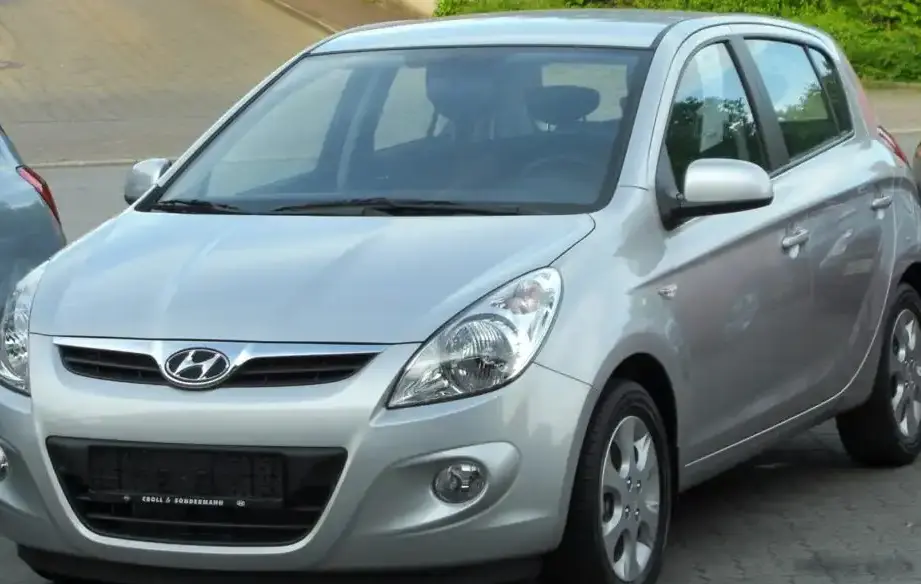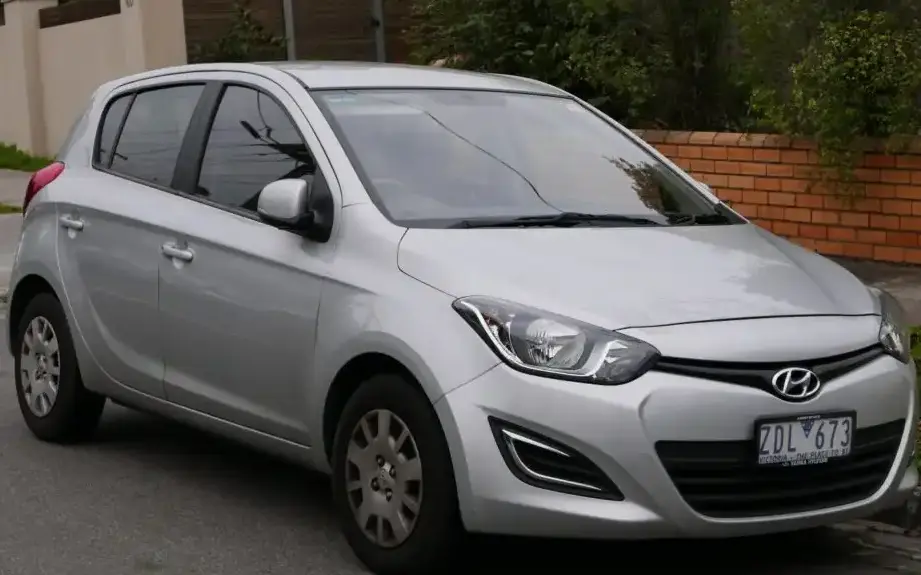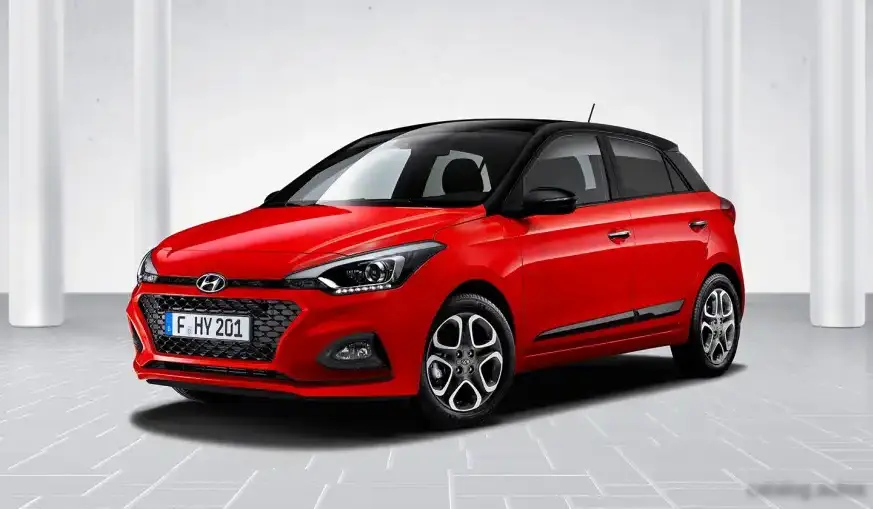
The Hyundai i20 II (GB facelift, produced from 2018 to 2020) 1.0 T-GDI, generating 101 horsepower, represented a key offering within Hyundai’s subcompact hatchback lineup. This variant was positioned as a fuel-efficient and relatively affordable option, appealing to buyers seeking a modern, well-equipped vehicle for urban driving. It formed part of the second generation i20 (codenamed GB), which benefited from a mid-cycle refresh in 2018, bringing updated styling and technology. The 1.0 T-GDI engine was introduced as a downsized, turbocharged alternative to the naturally aspirated engines previously offered, aiming to balance performance with improved fuel economy and reduced emissions.
Technical Specifications
| Brand | Hyundai |
| Model | i20 |
| Generation | i20 II (GB facelift 2018) |
| Type (Engine) | 1.0 T-GDI (101 Hp) |
| Start of production | 2018 |
| End of production | 2020 |
| Powertrain Architecture | Internal Combustion engine |
| Body type | Hatchback |
| Seats | 5 |
| Doors | 5 |
| Fuel consumption (urban) | 5.9 l/100 km (39.9 US mpg, 47.9 UK mpg, 16.9 km/l) |
| Fuel consumption (extra urban) | 4.6 l/100 km (51.1 US mpg, 61.4 UK mpg, 21.7 km/l) |
| Fuel consumption (combined) | 5.1 l/100 km (46.1 US mpg, 55.4 UK mpg, 19.6 km/l) |
| CO2 emissions | 117 g/km |
| Fuel Type | Petrol (Gasoline) |
| Acceleration 0 – 100 km/h | 10.8 sec |
| Acceleration 0 – 62 mph | 10.8 sec |
| Acceleration 0 – 60 mph | 10.3 sec |
| Maximum speed | 188 km/h (116.82 mph) |
| Emission standard | Euro 6d |
| Weight-to-power ratio | 11.3 kg/Hp, 88.6 Hp/tonne |
| Weight-to-torque ratio | 6.6 kg/Nm, 150.9 Nm/tonne |
| Power | 101 Hp @ 4500 rpm |
| Power per litre | 101.2 Hp/l |
| Torque | 172 Nm @ 1500-4000 rpm (126.86 lb.-ft. @ 1500-4000 rpm) |
| Engine layout | Front, Transverse |
| Engine Model/Code | Kappa II / G3LC |
| Engine displacement | 998 cm3 (60.9 cu. in.) |
| Number of cylinders | 3 |
| Engine configuration | Inline |
| Cylinder Bore | 71 mm (2.8 in.) |
| Piston Stroke | 84 mm (3.31 in.) |
| Compression ratio | 10:1 |
| Number of valves per cylinder | 4 |
| Fuel injection system | Direct injection |
| Engine aspiration | Turbocharger, Intercooler |
| Valvetrain | D-CVVT |
| Engine oil capacity | 3.6 l (3.8 US qt | 3.17 UK qt) |
| Coolant | 6.4 l (6.76 US qt | 5.63 UK qt) |
| Kerb Weight | 1140-1239 kg (2513.27 – 2731.53 lbs.) |
| Max. weight | 1600 kg (3527.4 lbs.) |
| Max load | 361-460 kg (795.87 – 1014.13 lbs.) |
| Trunk (boot) space – minimum | 326 l (11.51 cu. ft.) |
| Trunk (boot) space – maximum | 1024 l (36.16 cu. ft.) |
| Fuel tank capacity | 50 l (13.21 US gal | 11 UK gal) |
| Max. roof load | 70 kg (154.32 lbs.) |
| Permitted trailer load with brakes (12%) | 1000 kg (2204.62 lbs.) |
| Permitted trailer load without brakes | 450 kg (992.08 lbs.) |
| Permitted towbar download | 75 kg (165.35 lbs.) |
| Length | 4035 mm (158.86 in.) |
| Width | 1734 mm (68.27 in.) |
| Width including mirrors | 1985 mm (78.15 in.) |
| Height | 1474 mm (58.03 in.) |
| Wheelbase | 2570 mm (101.18 in.) |
| Front track | 1514-1520 mm (59.61 – 59.84 in.) |
| Rear (Back) track | 1513-1519 mm (59.57 – 59.8 in.) |
| Front overhang | 815 mm (32.09 in.) |
| Rear overhang | 650 mm (25.59 in.) |
| Ride height (ground clearance) | 140 mm (5.51 in.) |
| Minimum turning circle (turning diameter) | 10.2 m (33.46 ft.) |
| Drivetrain Architecture | The Internal combustion engine (ICE) drives the front wheels of the vehicle. |
| Drive wheel | Front wheel drive |
| Number of gears and type of gearbox | 5 gears, manual transmission |
| Front suspension | Independent, type McPherson with coil spring and anti-roll bar |
| Rear suspension | Independent coil spring |
| Front brakes | Ventilated discs |
| Rear brakes | Disc |
| Assisting systems | ABS (Anti-lock braking system) |
| Steering type | Steering rack and pinion |
| Power steering | Electric Steering |
| Tires size | 185/65 R15; 195/55 R16 |
| Wheel rims size | 6.0J x 15; 6.0J x 16 |
Powertrain & Engine Architecture
The heart of this i20 variant is the Kappa II 1.0 T-GDI engine (G3LC engine code). This is a three-cylinder, inline gasoline engine featuring direct fuel injection and a single turbocharger with an intercooler. The direct injection system allows for precise fuel delivery, contributing to both efficiency and performance. The engine utilizes Hyundai’s Dual-CVVT (Continuously Variable Valve Timing) technology, optimizing valve timing for improved responsiveness and fuel economy across the rev range. The 1.0 T-GDI produces 101 horsepower at 4500 rpm and 172 Nm (126.86 lb-ft) of torque between 1500 and 4000 rpm. This engine was designed to meet increasingly stringent emissions regulations while providing a noticeable performance upgrade over larger, naturally aspirated engines. The engine is transversely mounted at the front of the vehicle. The transmission is a 5-speed manual gearbox, chosen for its simplicity and affordability.
Driving Characteristics
The 1.0 T-GDI with the 5-speed manual transmission offers a surprisingly lively driving experience for a subcompact hatchback. While not exceptionally quick, the turbocharger provides a useful boost in power, making overtaking and merging onto highways manageable. The 0-60 mph time of around 10.3 seconds reflects this. The gear ratios are well-chosen for everyday driving, with a relatively short first gear for quick acceleration from a standstill and a taller fifth gear for efficient cruising. Compared to the base naturally aspirated engines, the 1.0 T-GDI feels significantly more responsive. However, it doesn’t offer the same level of outright performance as larger-engined i20 variants. The three-cylinder engine can be a little rougher in operation than a four-cylinder, but this is generally well-contained.
Equipment & Trim Levels
The 1.0 T-GDI typically came equipped as a mid-range trim level, offering a good balance of features and affordability. Standard equipment generally included air conditioning, power windows, central locking, a touchscreen infotainment system with Bluetooth connectivity, and alloy wheels. Safety features such as ABS, ESC (Electronic Stability Control), and multiple airbags were also standard. Optional extras could include a rear parking sensor, a rearview camera, and a navigation system. Interior upholstery was typically cloth, with a relatively simple but functional dashboard layout. The facelifted model (2018 onwards) featured some minor interior updates, including improved materials and a more modern infotainment system.
Chassis & Braking
The i20 II utilizes a McPherson strut front suspension and a torsion beam rear suspension. This setup provides a good compromise between ride comfort and handling. The front suspension incorporates a stabilizer bar to reduce body roll during cornering. Braking duties are handled by ventilated discs at the front and solid discs at the rear. ABS (Anti-lock Braking System) is standard, providing enhanced braking performance in emergency situations. The steering is electrically assisted, offering a light and precise feel. The chassis is relatively lightweight, contributing to the car’s agility and fuel efficiency.
Market Reception & Comparison
The 1.0 T-GDI variant of the i20 II was generally well-received by automotive critics. It was praised for its fuel efficiency, responsive engine, and well-equipped interior. Compared to other trims in the i20 lineup, the 1.0 T-GDI offered a compelling alternative to the base engines, providing a noticeable performance boost without a significant price increase. It competed with other subcompact hatchbacks such as the Ford Fiesta, Volkswagen Polo, and Kia Rio. Fuel economy figures of around 46.1 US mpg combined were competitive in its class. Reliability was generally good, although some owners reported minor issues with the turbocharger and direct injection system.
Legacy
The 1.0 T-GDI engine proved to be a successful addition to Hyundai’s powertrain lineup. It has since been used in other Hyundai and Kia models. The i20 II 1.0 T-GDI remains a popular choice in the used car market, offering a good balance of affordability, fuel efficiency, and practicality. While the engine is generally reliable, regular maintenance, including oil changes and spark plug replacements, is essential to ensure long-term durability. The Kappa engine family has become a mainstay for Hyundai, and this particular iteration helped establish the brand’s reputation for offering efficient and well-engineered small cars.