Technical Specifications
| Brand | Hyundai |
| Model | i20 |
| Generation | i20 II (GB facelift 2018) |
| Type (Engine) | 1.0 T-GDI (120 Hp) |
| Start of production | 2018 |
| End of production | 2020 |
| Powertrain Architecture | Internal Combustion engine |
| Body type | Hatchback |
| Seats | 5 |
| Doors | 5 |
| Fuel consumption (urban) | 6.2 l/100 km (37.9 US mpg, 45.6 UK mpg, 16.1 km/l) |
| Fuel consumption (extra urban) | 4.6 l/100 km (51.1 US mpg, 61.4 UK mpg, 21.7 km/l) |
| Fuel consumption (combined) | 5.2 l/100 km (45.2 US mpg, 54.3 UK mpg, 19.2 km/l) |
| CO2 emissions | 119 g/km |
| Fuel Type | Petrol (Gasoline) |
| Acceleration 0 – 100 km/h | 10.2 sec |
| Acceleration 0 – 62 mph | 10.2 sec |
| Acceleration 0 – 60 mph | 9.7 sec |
| Maximum speed | 190 km/h (118.06 mph) |
| Emission standard | Euro 6d |
| Weight-to-power ratio | 9.5 kg/Hp, 104.8 Hp/tonne |
| Weight-to-torque ratio | 6.7 kg/Nm, 150.2 Nm/tonne |
| Power | 120 Hp @ 6000 rpm |
| Power per litre | 120.2 Hp/l |
| Torque | 172 Nm @ 1500-4000 rpm (126.86 lb.-ft. @ 1500-4000 rpm) |
| Engine layout | Front, Transverse |
| Engine Model/Code | Kappa II / G3LC |
| Engine displacement | 998 cm3 (60.9 cu. in.) |
| Number of cylinders | 3 |
| Engine configuration | Inline |
| Cylinder Bore | 71 mm (2.8 in.) |
| Piston Stroke | 84 mm (3.31 in.) |
| Compression ratio | 10:1 |
| Number of valves per cylinder | 4 |
| Fuel injection system | Direct injection |
| Engine aspiration | Turbocharger, Intercooler |
| Valvetrain | D-CVVT |
| Engine oil capacity | 3.6 l (3.8 US qt | 3.17 UK qt) |
| Coolant | 6.4 l (6.76 US qt | 5.63 UK qt) |
| Kerb Weight | 1145-1293 kg (2524.29 – 2850.58 lbs.) |
| Max. weight | 1640 kg (3615.58 lbs.) |
| Max load | 347-495 kg (765 – 1091.29 lbs.) |
| Trunk (boot) space – minimum | 326 l (11.51 cu. ft.) |
| Trunk (boot) space – maximum | 1024 l (36.16 cu. ft.) |
| Fuel tank capacity | 50 l (13.21 US gal | 11 UK gal) |
| Max. roof load | 70 kg (154.32 lbs.) |
| Permitted trailer load with brakes (12%) | 1110 kg (2447.13 lbs.) |
| Permitted trailer load without brakes | 450 kg (992.08 lbs.) |
| Permitted towbar download | 75 kg (165.35 lbs.) |
| Length | 4035 mm (158.86 in.) |
| Width | 1734 mm (68.27 in.) |
| Width including mirrors | 1985 mm (78.15 in.) |
| Height | 1474 mm (58.03 in.) |
| Wheelbase | 2570 mm (101.18 in.) |
| Front track | 1514-1520 mm (59.61 – 59.84 in.) |
| Rear (Back) track | 1513-1519 mm (59.57 – 59.8 in.) |
| Front overhang | 815 mm (32.09 in.) |
| Rear overhang | 650 mm (25.59 in.) |
| Ride height (ground clearance) | 140 mm (5.51 in.) |
| Minimum turning circle (turning diameter) | 10.2 m (33.46 ft.) |
| Drivetrain Architecture | The Internal combustion engine (ICE) drives the front wheels of the vehicle. |
| Drive wheel | Front wheel drive |
| Number of gears and type of gearbox | 6 gears, manual transmission |
| Front suspension | Independent, type McPherson with coil spring and anti-roll bar |
| Rear suspension | Independent coil spring |
| Front brakes | Ventilated discs |
| Rear brakes | Disc |
| Assisting systems | ABS (Anti-lock braking system) |
| Steering type | Steering rack and pinion |
| Power steering | Electric Steering |
| Tires size | 185/65 R15; 195/55 R16 |
| Wheel rims size | 6.0J x 15; 6.0J x 16 |
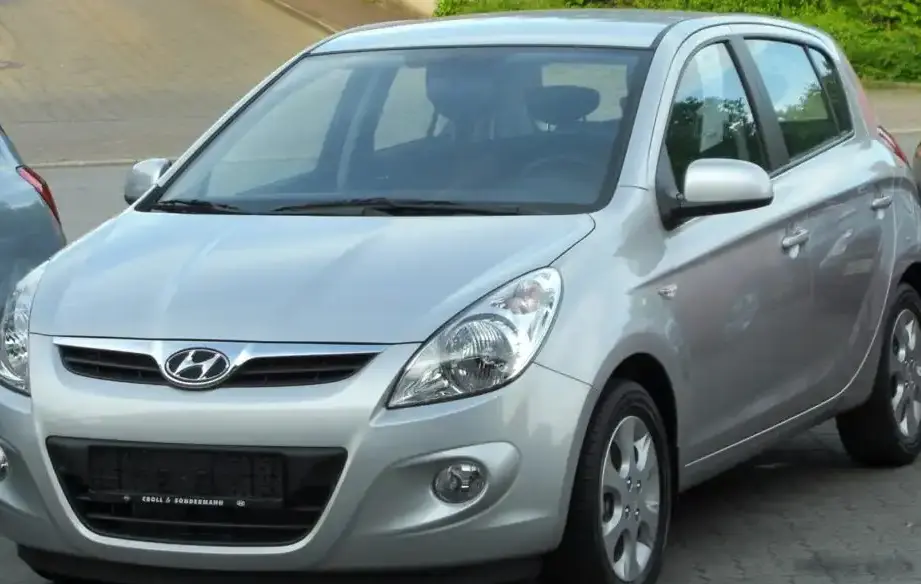
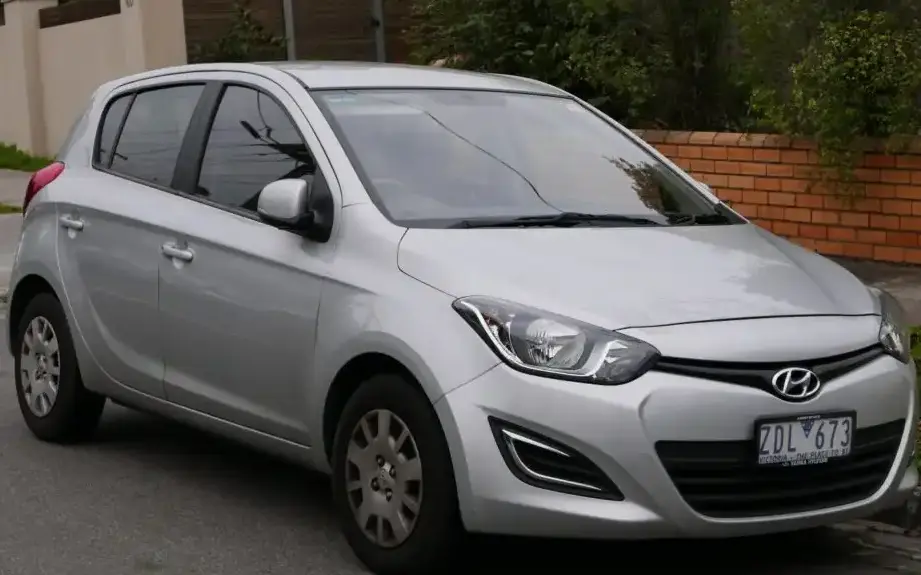
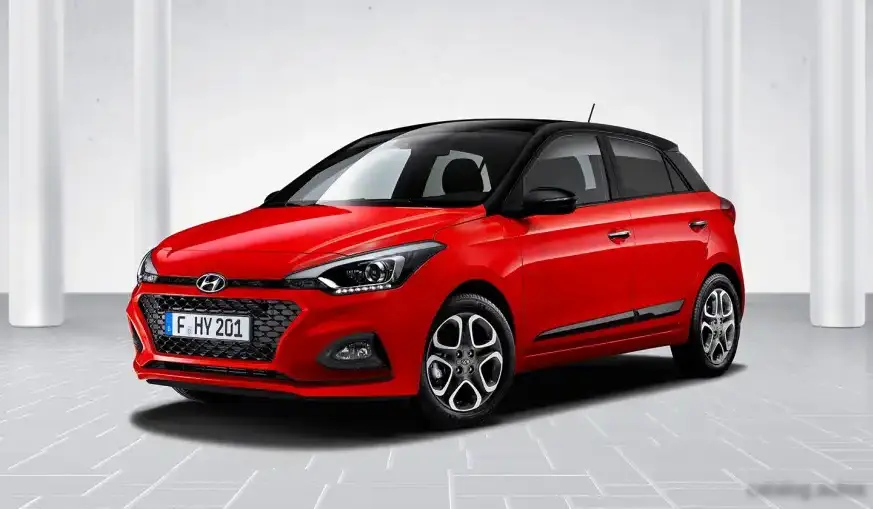
The Hyundai i20 II (GB facelift, produced from 2018 to 2020) 1.0 T-GDI 120 hp variant marked a significant evolution in Hyundai’s strategy to deliver a competitive subcompact hatchback, not just in Europe, but in global markets. Built on the PB platform, this iteration of the i20 aimed to strike a balance between fuel economy, contemporary styling, and a reasonable level of performance. The 1.0 T-GDI engine, a three-cylinder turbocharged unit, was positioned as a mid-range offering, bridging the gap between the more basic naturally aspirated engines and potentially more powerful options available depending on the specific market. This particular trim level was geared towards buyers who desired a blend of efficiency and responsiveness for daily commutes and urban driving.
Powertrain & Engine Architecture
At the core of this i20 variant lies the Hyundai Kappa II 1.0 T-GDI engine, internally designated G3LC. This is a three-cylinder, inline gasoline engine equipped with direct fuel injection and a single-scroll turbocharger coupled with an intercooler. The engine incorporates Hyundai’s Dual-CVVT (Continuously Variable Valve Timing) technology on both the intake and exhaust valves, optimizing engine breathing for enhanced efficiency and power delivery. Despite its compact 998cc displacement, the engine produces a respectable 120 horsepower at 6000 rpm and 172 Nm (126.86 lb-ft) of torque, readily available from a low 1500 rpm and sustained up to 4000 rpm. This broad torque curve is a defining characteristic of the engine, providing good responsiveness in typical driving scenarios. The engine is mounted transversely at the front of the vehicle. The transmission paired with this engine is a 6-speed manual gearbox, selected for its efficiency and driver engagement.
Driving Characteristics
The 1.0 T-GDI 120 hp i20 delivers a noticeable performance improvement compared to the base engine options. While not designed as a performance vehicle, the turbocharger provides a useful power boost, making overtaking and merging onto highways relatively straightforward. The 6-speed manual transmission complements the engine’s characteristics, allowing drivers to maintain the engine within its optimal power band. Acceleration from 0 to 60 mph takes approximately 9.7 seconds, with a top speed around 190 km/h (118 mph). The i20’s relatively lightweight construction helps to offset the modest horsepower output. The steering is light and precise, making it easy to maneuver in city environments. However, some drivers might perceive the ride as somewhat firm, particularly on uneven road surfaces.
Equipment & Trim Levels
The 1.0 T-GDI 120 hp trim generally included a comprehensive set of standard features. Common inclusions were air conditioning, power windows, power door locks, a touchscreen infotainment system with Bluetooth connectivity, and alloy wheels. Higher trim levels offered additional features such as a rearview camera, parking sensors, automatic climate control, and a more advanced infotainment system with navigation capabilities. Interior upholstery was typically cloth, with options for upgraded materials available. Safety features included ABS, Electronic Stability Control (ESC), and multiple airbags.
Chassis & Braking
The i20 II utilizes a McPherson strut front suspension and a coupled torsion beam rear suspension. This configuration provides a good compromise between ride comfort and handling. The front brakes are ventilated discs, while the rear brakes are discs. The steering system is an electric power-assisted rack and pinion setup. The suspension tuning prioritizes a comfortable ride for everyday driving, while still offering reasonable handling characteristics. Stabilizer bars are fitted to both the front and rear axles to minimize body roll during cornering.
Market Reception & Comparison
The Hyundai i20 II 1.0 T-GDI 120 hp received largely positive reviews from automotive critics. It was commended for its fuel efficiency, responsive engine, and well-equipped interior. When compared to competitors like the Volkswagen Polo, Ford Fiesta, and Opel Corsa, the i20 presented a competitive package with a strong value proposition. The 1.0 T-GDI engine offered a good balance between performance and economy, making it a popular choice for buyers seeking a practical and efficient subcompact hatchback. Some reviewers noted that the ride could be a bit firm and that the interior materials weren’t quite as refined as those found in some of its rivals.
Legacy
The 1.0 T-GDI engine has proven to be a reliable and durable powertrain when properly maintained. While some early models experienced minor issues with the turbocharger, these were generally resolved through software updates and improvements in manufacturing processes. Today, used examples of the i20 II 1.0 T-GDI 120 hp are readily available and represent a compelling value for buyers looking for an affordable and efficient subcompact hatchback. Consistent maintenance, including regular oil changes and timely replacement of wear items, is crucial for ensuring the long-term reliability of this powertrain.