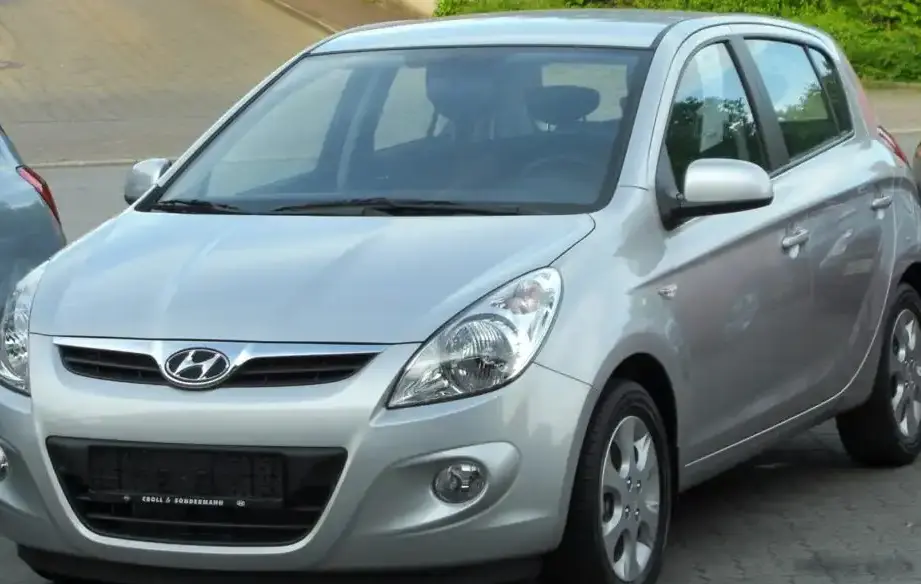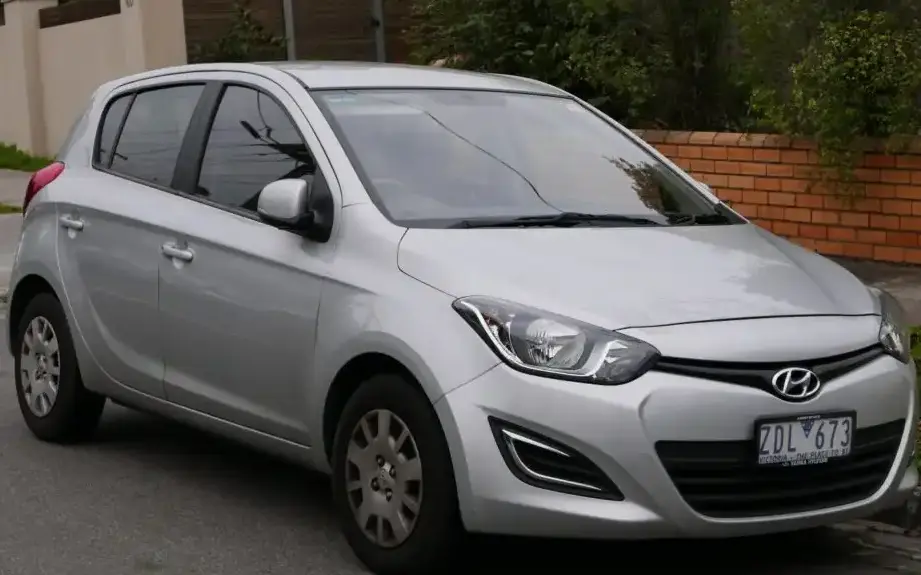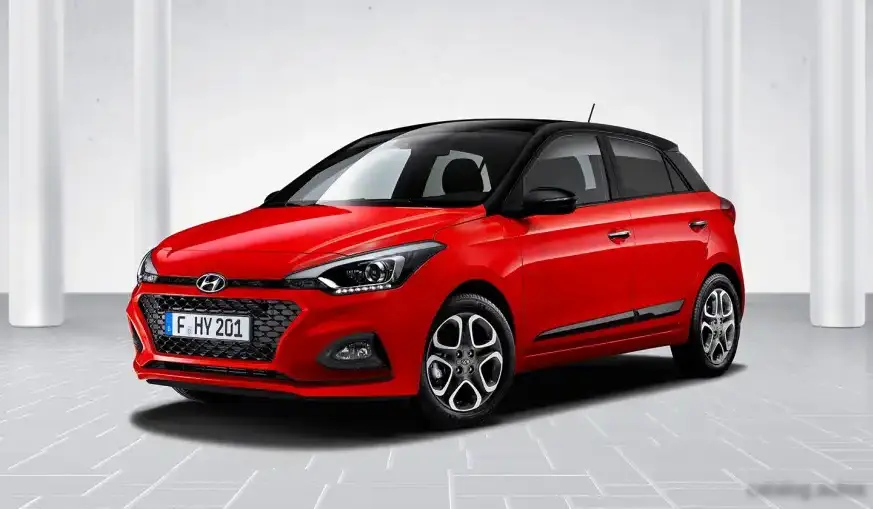
The Hyundai i20 II (GB facelift, produced from 2018 to 2020) represents a mid-cycle refresh of the second-generation i20 subcompact hatchback. This variant, equipped with the 1.2-liter gasoline engine producing 84 horsepower, served as a key entry point into the i20 range, particularly in European markets. Positioned below the more powerful 1.0 T-GDi turbocharged engine option, the 1.2L model prioritized affordability and fuel efficiency over outright performance. It was designed to appeal to buyers seeking a practical and economical city car. The facelift brought updated styling, improved safety features, and revised infotainment systems to the i20 lineup.
Technical Specifications
| Brand | Hyundai |
| Model | i20 |
| Generation | i20 II (GB facelift 2018) |
| Type (Engine) | 1.2 (84 Hp) |
| Start of production | 2018 |
| End of production | 2020 |
| Powertrain Architecture | Internal Combustion engine |
| Body type | Hatchback |
| Seats | 5 |
| Doors | 5 |
| Fuel consumption (urban) | 7.1 l/100 km (33.1 US mpg, 39.8 UK mpg, 14.1 km/l) |
| Fuel consumption (extra urban) | 5 l/100 km (47 US mpg, 56.5 UK mpg, 20 km/l) |
| Fuel consumption (combined) | 5.8 l/100 km (40.6 US mpg, 48.7 UK mpg, 17.2 km/l) |
| CO2 emissions | 132 g/km |
| Fuel Type | Petrol (Gasoline) |
| Acceleration 0 – 100 km/h | 12.8 sec |
| Acceleration 0 – 62 mph | 12.8 sec |
| Acceleration 0 – 60 mph | 12.2 sec |
| Maximum speed | 170 km/h (105.63 mph) |
| Emission standard | Euro 6d |
| Weight-to-power ratio | 12.6 kg/Hp, 79.6 Hp/tonne |
| Weight-to-torque ratio | 8.6 kg/Nm, 115.6 Nm/tonne |
| Power | 84 Hp @ 6000 rpm |
| Power per litre | 67.3 Hp/l |
| Torque | 122 Nm @ 4000 rpm (89.98 lb.-ft. @ 4000 rpm) |
| Engine layout | Front, Transverse |
| Engine Model/Code | G4LA |
| Engine displacement | 1248 cm3 (76.16 cu. in.) |
| Number of cylinders | 4 |
| Engine configuration | Inline |
| Cylinder Bore | 71 mm (2.8 in.) |
| Piston Stroke | 78.8 mm (3.1 in.) |
| Compression ratio | 10.5:1 |
| Number of valves per cylinder | 4 |
| Fuel injection system | Multi-port manifold injection |
| Engine aspiration | Naturally aspirated engine |
| Valvetrain | DOHC-CVVT |
| Engine oil capacity | 3.5 l (3.7 US qt | 3.08 UK qt) |
| Coolant | 4.3 l (4.54 US qt | 3.78 UK qt) |
| Kerb Weight | 1055-1233 kg (2325.88 – 2718.3 lbs.) |
| Max. weight | 1580 kg (3483.3 lbs.) |
| Max load | 347-525 kg (765 – 1157.43 lbs.) |
| Trunk (boot) space – minimum | 326 l (11.51 cu. ft.) |
| Trunk (boot) space – maximum | 1024 l (36.16 cu. ft.) |
| Fuel tank capacity | 50 l (13.21 US gal | 11 UK gal) |
| Max. roof load | 70 kg (154.32 lbs.) |
| Permitted trailer load with brakes (12%) | 910 kg (2006.21 lbs.) |
| Permitted trailer load without brakes | 450 kg (992.08 lbs.) |
| Permitted towbar download | 75 kg (165.35 lbs.) |
| Length | 4035 mm (158.86 in.) |
| Width | 1734 mm (68.27 in.) |
| Width including mirrors | 1985 mm (78.15 in.) |
| Height | 1474 mm (58.03 in.) |
| Wheelbase | 2570 mm (101.18 in.) |
| Front track | 1514-1520 mm (59.61 – 59.84 in.) |
| Rear (Back) track | 1513-1519 mm (59.57 – 59.8 in.) |
| Front overhang | 815 mm (32.09 in.) |
| Rear overhang | 650 mm (25.59 in.) |
| Ride height (ground clearance) | 140 mm (5.51 in.) |
| Minimum turning circle (turning diameter) | 10.2 m (33.46 ft.) |
| Drivetrain Architecture | The Internal combustion engine (ICE) drives the front wheels of the vehicle. |
| Drive wheel | Front wheel drive |
| Number of gears and type of gearbox | 5 gears, manual transmission |
| Front suspension | Independent, type McPherson with coil spring and anti-roll bar |
| Rear suspension | Independent coil spring |
| Front brakes | Ventilated discs |
| Rear brakes | Drum |
| Assisting systems | ABS (Anti-lock braking system) |
| Steering type | Steering rack and pinion |
| Power steering | Electric Steering |
| Tires size | 185/65 R15; 195/55 R16 |
| Wheel rims size | 6.0J x 15; 6.0J x 16 |
Powertrain & Engine Architecture
The heart of this i20 variant is the Hyundai G4LA 1.2-liter inline-four cylinder gasoline engine. This engine is a naturally aspirated unit, meaning it doesn’t utilize a turbocharger or supercharger. It employs multi-point fuel injection and a double overhead camshaft (DOHC) valvetrain with continuously variable valve timing (CVVT) on both intake and exhaust camshafts. This CVVT system helps optimize engine performance and fuel efficiency across a wider range of engine speeds. The G4LA engine is known for its simplicity and relatively low maintenance requirements. The engine’s 1248cc displacement and 10.5:1 compression ratio contribute to its fuel-efficient nature. The engine is transversely mounted at the front of the vehicle, driving the front wheels. The standard transmission for this model was a five-speed manual gearbox, although a four-speed automatic transmission was also offered as an option, impacting fuel economy and acceleration slightly.
Driving Characteristics
The 1.2-liter i20, particularly with the manual transmission, offers a light and nimble driving experience. With 84 horsepower and 122 Nm of torque, acceleration is modest, taking around 12.8 seconds to reach 62 mph (100 km/h). The engine feels most comfortable in the mid-range, providing adequate power for city driving and highway merging, though it requires downshifting for quicker overtaking maneuvers. The five-speed manual gearbox is generally well-matched to the engine’s characteristics, offering smooth shifts. The automatic transmission, while providing convenience, results in slightly slower acceleration and increased fuel consumption due to its less efficient power transfer. The steering is light and precise, making it easy to maneuver in tight spaces. The suspension is tuned for comfort, absorbing bumps and imperfections in the road reasonably well.
Equipment & Trim Levels
The 1.2-liter i20 typically came with a reasonable level of standard equipment, though it was less lavishly equipped than higher-trim models. Standard features generally included air conditioning, power steering, central locking, electric front windows, and a basic audio system with USB connectivity. Safety features such as ABS, airbags, and stability control were also standard. Higher trim levels, such as SE or Premium, added features like alloy wheels, rear electric windows, a more advanced audio system, and potentially features like a touchscreen infotainment system and parking sensors. Interior upholstery was typically cloth, with a relatively simple dashboard layout.
Chassis & Braking
The i20 II utilizes a McPherson strut front suspension and a torsion beam rear suspension. This setup provides a good balance between ride comfort and handling. The front brakes are ventilated discs, offering good stopping power, while the rear brakes are drums, a cost-saving measure common in this segment. The steering is a rack and pinion system with electric power assistance, providing light and responsive steering feel. Tire sizes typically ranged from 185/65 R15 to 195/55 R16, depending on the trim level.
Market Reception & Comparison
The 1.2-liter i20 was generally well-received as an affordable and practical city car. Critics praised its fuel efficiency, comfortable ride, and reasonable level of standard equipment. However, it was often criticized for its lack of outright performance compared to rivals with more powerful engines. Compared to the 1.0 T-GDi version, the 1.2L offered lower running costs but significantly less power and refinement. Against competitors like the Ford Fiesta, Volkswagen Polo, and Renault Clio, the i20 offered a competitive package, particularly in terms of value for money and warranty coverage.
Legacy
The Hyundai i20 II 1.2L has proven to be a reliable and durable vehicle. The G4LA engine is known for its longevity, and with regular maintenance, it can provide many years of trouble-free service. On the used car market, these models represent a good value proposition for buyers seeking an economical and practical hatchback. While not particularly exciting to drive, the 1.2L i20 remains a popular choice for those prioritizing affordability, fuel efficiency, and reliability.