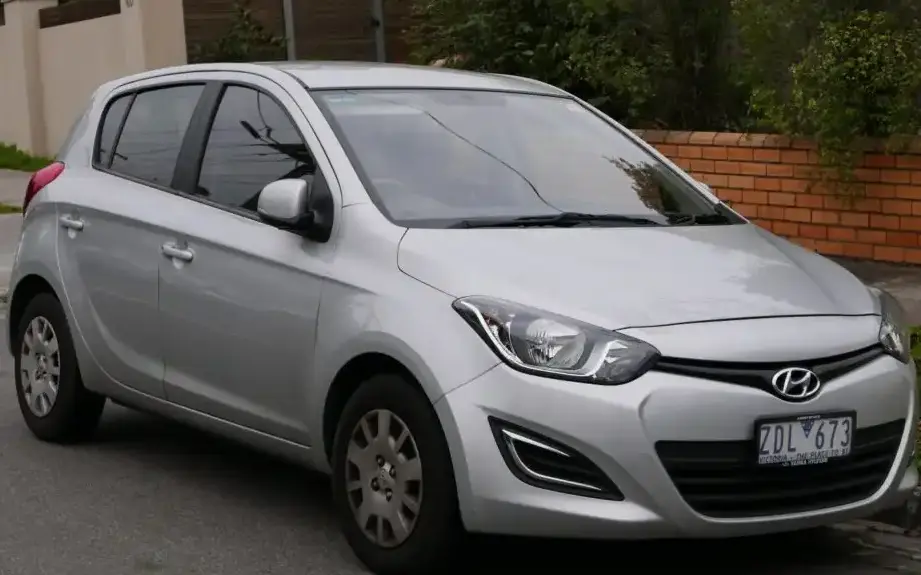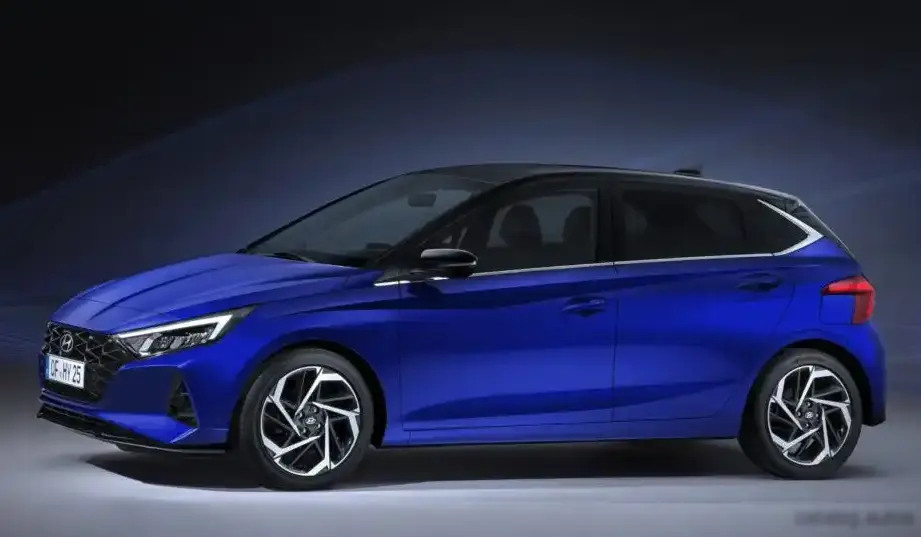
The Hyundai i20 III 1.0 T-GDi 48V (100 hp) Mild Hybrid DCT is a front-wheel-drive subcompact hatchback produced from October 2020 to August 2023. This variant represented an entry point into the third generation (i20 III) of Hyundai’s popular supermini, offering a blend of fuel efficiency and modern technology. It was primarily marketed in Europe and other regions where smaller, economical cars are in high demand. The introduction of the 48V mild hybrid system aimed to reduce emissions and improve fuel economy, aligning with increasingly stringent European emission standards.
Technical Specifications
| Brand | Hyundai |
| Model | i20 |
| Generation | i20 III |
| Type (Engine) | 1.0 T-GDi 48V (100 Hp) Mild Hybrid DCT |
| Start of production | October, 2020 |
| End of production | August, 2023 |
| Powertrain Architecture | MHEV (Mild Hybrid Electric Vehicle) |
| Body type | Hatchback |
| Seats | 5 |
| Doors | 5 |
| Fuel Type | Petrol (Gasoline) |
| Acceleration 0 – 100 km/h | 11.4 sec |
| Acceleration 0 – 62 mph | 11.4 sec |
| Acceleration 0 – 60 mph | 10.8 sec |
| Emission standard | Euro 6d |
| Power | 100 Hp @ 6000 rpm |
| Power per litre | 100.2 Hp/l |
| Torque | 172 Nm @ 1500 rpm (126.86 lb.-ft. @ 1500 rpm) |
| Engine Model/Code | G3LE |
| Engine displacement | 998 cm3 (60.9 cu. in.) |
| Number of cylinders | 3 |
| Engine configuration | Inline |
| Fuel injection system | Direct injection |
| Engine oil capacity | 3.6 l (3.8 US qt | 3.17 UK qt) |
| Coolant capacity | 5.85 l (6.18 US qt | 5.15 UK qt) |
| Trunk (boot) space – minimum | 351 l (12.4 cu. ft.) |
| Length | 4040 mm (159.06 in.) |
| Width | 1750 mm (68.9 in.) |
| Height | 1450 mm (57.09 in.) |
| Wheelbase | 2580 mm (101.57 in.) |
| Drivetrain Architecture | Front wheel drive, MHEV. ICE and electric motor drive front wheels in mixed mode. |
| Number of gears and type of gearbox | 7 gears, automatic transmission DCT |
| Assisting systems | ABS (Anti-lock braking system) |
| Wheel rims size | 17 |
Powertrain & Engine Architecture
The i20 1.0 T-GDi 48V utilizes Hyundai’s G3LE engine, a 998cc, three-cylinder turbocharged gasoline engine. This engine is part of Hyundai-Kia’s “Kappa” engine family. The ‘T-GDi’ designation stands for Turbocharged Gasoline Direct Injection. The direct injection system allows for precise fuel delivery, contributing to improved efficiency and reduced emissions. The turbocharger, coupled with an intercooler, provides a boost in power despite the small displacement. The 48V mild hybrid system consists of a 48V battery and a belt-driven starter generator (BSG). The BSG assists the engine during acceleration, providing a small power boost and enabling features like extended idle stop/start functionality. The dual-clutch transmission (DCT) with seven speeds provides quick and smooth gear changes, enhancing the driving experience. The engine’s architecture is designed for compactness and lightweight construction, contributing to the i20’s overall efficiency.
Driving Characteristics
The 100 hp output and 172 Nm (126.86 lb-ft) of torque delivered by the 1.0 T-GDi engine, combined with the seven-speed DCT, resulted in a reasonably responsive driving experience for a vehicle in this class. While not a performance-oriented variant, the i20 offered adequate acceleration for everyday driving situations. The DCT transmission provided quicker shifts compared to a traditional automatic, and the mild hybrid system offered a subtle boost during acceleration. Compared to the higher-output 1.25-liter naturally aspirated engine option, the 1.0 T-GDi provided more torque at lower RPMs, making it feel more flexible in urban driving. However, it lacked the outright power of the larger engine. The DCT’s gear ratios were tuned for fuel efficiency, prioritizing smooth transitions over aggressive acceleration. The 0-60 mph time of around 10.8 seconds reflects this focus. The engine, while eager, did exhibit some of the typical three-cylinder roughness, particularly at idle, though this was well-damped by the engine mounts.
Equipment & Trim Levels
The 1.0 T-GDi 48V variant was typically offered in mid-range trim levels, such as SE, Comfort, or similar designations depending on the specific market. Standard equipment generally included air conditioning, a touchscreen infotainment system with Apple CarPlay and Android Auto compatibility, Bluetooth connectivity, and a suite of safety features like lane keeping assist, forward collision avoidance assist, and automatic emergency braking. Higher trim levels added features like a larger touchscreen, navigation system, automatic climate control, rear parking sensors, and alloy wheels. Interior upholstery was typically cloth, with options for premium materials in higher trims. The dashboard layout was modern and functional, with a focus on ease of use. The availability of features like a wireless charging pad and a digital instrument cluster depended on the specific trim package selected.
Chassis & Braking
The i20 III utilized a front MacPherson strut suspension and a rear torsion beam suspension. This setup provided a good balance between ride comfort and handling. The torsion beam rear suspension was a cost-effective solution for the rear axle, while still offering acceptable handling characteristics. Braking systems varied depending on the trim level, with lower trims typically featuring drum brakes on the rear wheels and higher trims offering disc brakes all around. All variants were equipped with ABS (Anti-lock Braking System) and Electronic Stability Control (ESC) as standard safety features. The steering was electrically assisted, providing light and precise control. The suspension tuning prioritized comfort over sporty handling, making it well-suited for everyday driving conditions. Stabilizer bars were fitted front and rear to reduce body roll during cornering.
Market Reception & Comparison
The Hyundai i20 III 1.0 T-GDi 48V Mild Hybrid DCT was generally well-received by automotive critics. It was praised for its fuel efficiency, comfortable ride, and well-equipped interior. The mild hybrid system was seen as a positive step towards reducing emissions. Compared to rivals like the Volkswagen Polo, Ford Fiesta, and Renault Clio, the i20 offered a competitive package with a strong warranty and a good value proposition. Fuel economy figures typically ranged from 50-60 mpg (depending on driving conditions and testing standards), making it an attractive option for budget-conscious buyers. Reliability reports suggested that the G3LE engine and DCT transmission were generally reliable, although some owners reported minor issues with the mild hybrid system, such as occasional battery charging inconsistencies. The i20’s spacious interior and practical hatchback design were also frequently highlighted in reviews.
Legacy
The Hyundai i20 III 1.0 T-GDi 48V Mild Hybrid DCT played a significant role in Hyundai’s push towards electrification and fuel efficiency. The introduction of the 48V mild hybrid system demonstrated Hyundai’s commitment to reducing emissions and improving fuel economy. In the used car market, these models are generally considered a good value, offering a blend of practicality, efficiency, and modern features. The G3LE engine, while small, has proven to be relatively durable, and the DCT transmission, when properly maintained, can provide years of reliable service. As emission regulations continue to tighten, the demand for fuel-efficient vehicles like the i20 1.0 T-GDi 48V is likely to remain strong. The powertrain represents a transitional technology, bridging the gap between traditional internal combustion engines and full electric vehicles, and its success helped pave the way for Hyundai’s broader electrification strategy.