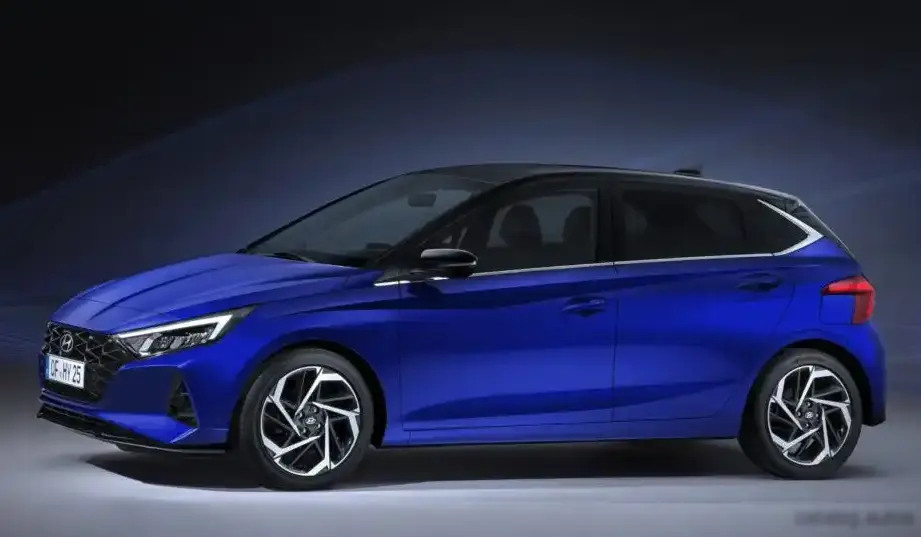
The Hyundai i20 III 1.2 MPi (84 hp) represents an entry-level offering within the third generation of Hyundai’s popular subcompact hatchback, produced from October 2020 through August 2023. Positioned as the most accessible powertrain option in the i20 III lineup, this variant aimed to provide affordable and efficient transportation for urban commuters and first-time car buyers. It served as the foundation for the i20 range, with more powerful engine and trim options available for those seeking enhanced performance or features. The i20 III itself is built on the Hyundai-Kia B-platform, shared with models like the Kia Rio, and was designed to compete with established rivals such as the Volkswagen Polo, Ford Fiesta, and Renault Clio in the European and global markets.
Technical Specifications
| Brand | Hyundai |
| Model | i20 |
| Generation | i20 III |
| Type (Engine) | 1.2 MPi (84 Hp) |
| Start of production | October, 2020 |
| End of production | August, 2023 |
| Powertrain Architecture | Internal Combustion engine |
| Body type | Hatchback |
| Seats | 5 |
| Doors | 5 |
| Fuel Type | Petrol (Gasoline) |
| Acceleration 0 – 100 km/h | 13.1 sec |
| Acceleration 0 – 62 mph | 13.1 sec |
| Acceleration 0 – 60 mph | 12.4 sec |
| Emission standard | Euro 6d |
| Power | 84 Hp @ 6000 rpm |
| Power per litre | 70.2 Hp/l |
| Torque | 118 Nm @ 4000 rpm (87.03 lb.-ft. @ 4000 rpm) |
| Engine Model/Code | G4LF |
| Engine displacement | 1197 cm3 (73.05 cu. in.) |
| Number of cylinders | 4 |
| Engine configuration | Inline |
| Fuel injection system | Multi-port manifold injection |
| Engine aspiration | Naturally aspirated engine |
| Engine oil capacity | 3.4 l (3.59 US qt | 2.99 UK qt) |
| Trunk (boot) space – minimum | 351 l (12.4 cu. ft.) |
| Length | 4040 mm (159.06 in.) |
| Width | 1750 mm (68.9 in.) |
| Height | 1450 mm (57.09 in.) |
| Wheelbase | 2580 mm (101.57 in.) |
| Drivetrain Architecture | Front wheel drive |
| Number of gears and type of gearbox | 5 gears, manual transmission |
| Assisting systems | ABS (Anti-lock braking system) |
| Wheel rims size | 17 |
Powertrain & Engine Architecture
The heart of the i20 III 1.2 MPi is the Hyundai G4LF engine, a 1.2-liter naturally aspirated inline-four cylinder gasoline engine. This engine utilizes a multi-point fuel injection (MPI) system, a relatively simple and cost-effective technology compared to direct injection. The G4LF engine is known for its durability and ease of maintenance. It features a single overhead camshaft (SOHC) valvetrain with two valves per cylinder. The 84 horsepower output is achieved at 6000 rpm, while peak torque of 118 Nm (87 lb-ft) arrives at 4000 rpm. This engine is paired with a five-speed manual transmission, providing a straightforward driving experience. The transmission is designed for efficiency and reliability, rather than sporty performance. A Start & Stop System was included as standard, contributing to improved fuel economy in urban driving conditions.
Driving Characteristics
The i20 III 1.2 MPi delivers a predictable and undemanding driving experience. Acceleration is modest, taking approximately 13.1 seconds to reach 62 mph (100 km/h). The engine feels most comfortable in the mid-range, providing adequate power for everyday driving situations. The five-speed manual transmission offers a relatively short throw, but the gear ratios are geared towards fuel efficiency rather than spirited acceleration. Compared to the more powerful 1.0 T-GDi turbocharged engine option available in the i20 III range, the 1.2 MPi feels noticeably less responsive. However, the naturally aspirated engine provides a more linear power delivery, making it easier to modulate for new drivers. The relatively low weight of the i20 helps to mitigate the effects of the modest power output.
Equipment & Trim Levels
The 1.2 MPi variant typically served as the entry point to the i20 III range. Standard equipment generally included air conditioning, a basic audio system with USB connectivity, power windows, and central locking. Safety features such as ABS, Electronic Stability Control (ESC), and multiple airbags were also standard. Higher trim levels, such as SE and Premium, added features like alloy wheels, a touchscreen infotainment system with Apple CarPlay and Android Auto compatibility, rear parking sensors, and a leather-wrapped steering wheel. Interior upholstery was typically cloth, with a focus on durability and practicality. Optional extras included a panoramic sunroof and a navigation system.
Chassis & Braking
The i20 III utilizes a front-wheel-drive platform with a MacPherson strut front suspension and a torsion beam rear suspension. This setup provides a comfortable ride quality, prioritizing smoothness over outright handling precision. The torsion beam rear suspension is a cost-effective solution that contributes to the i20’s affordability. Braking duties are handled by disc brakes on the front wheels and drum brakes on the rear wheels. ABS (Anti-lock Braking System) is standard, enhancing braking performance and stability. The steering is electrically assisted, providing light and easy maneuverability, particularly useful in urban environments. Stabilizer bars are fitted to both the front and rear axles to reduce body roll during cornering.
Market Reception & Comparison
The Hyundai i20 III 1.2 MPi was generally well-received as a practical and affordable city car. Critics praised its comfortable ride, spacious interior, and generous standard equipment. However, the engine’s modest power output was often cited as a drawback, particularly when compared to turbocharged rivals. Fuel economy was a strong point, with the 1.2 MPi achieving combined fuel consumption figures in the region of 5.3-5.6 liters per 100 kilometers (44-49 mpg). Compared to the 1.0 T-GDi version, the 1.2 MPi offered lower running costs due to its simpler engine design and potentially lower maintenance requirements. However, the T-GDi provided significantly more performance and a more engaging driving experience.
Legacy
The Hyundai i20 III 1.2 MPi has proven to be a reliable and durable powertrain combination. The G4LF engine is known for its longevity, and the five-speed manual transmission is relatively simple and robust. In the used car market, these models represent a good value proposition for buyers seeking an affordable and economical hatchback. While not the most exciting car to drive, the i20 III 1.2 MPi offers a practical and dependable transportation solution. Its simplicity and relatively low maintenance costs make it an attractive option for budget-conscious buyers and those seeking a hassle-free ownership experience. The i20 III, in general, helped solidify Hyundai’s reputation for building well-equipped and reliable vehicles at competitive prices.