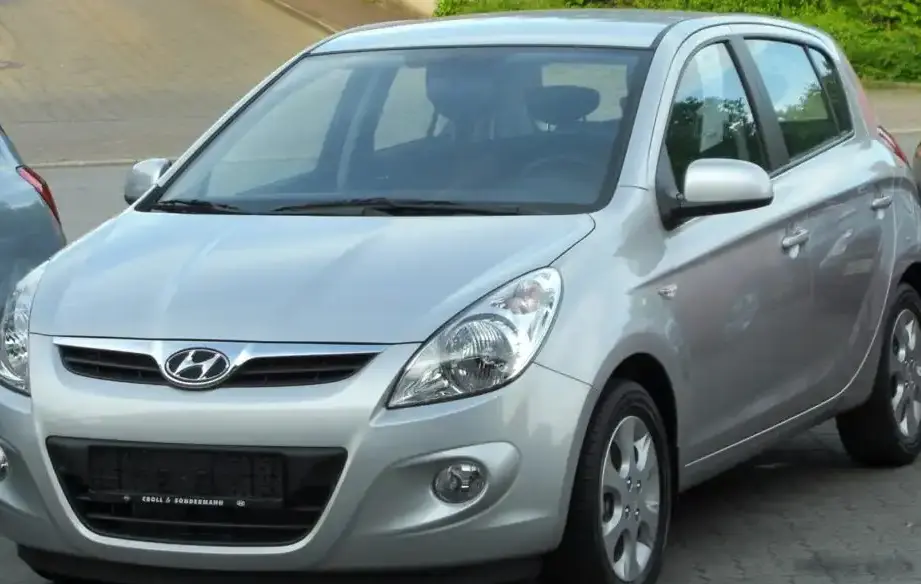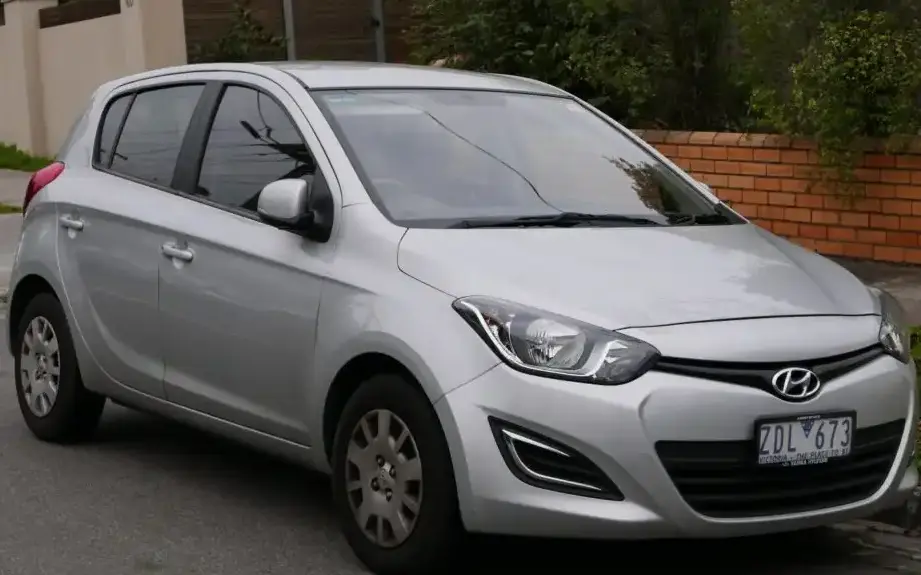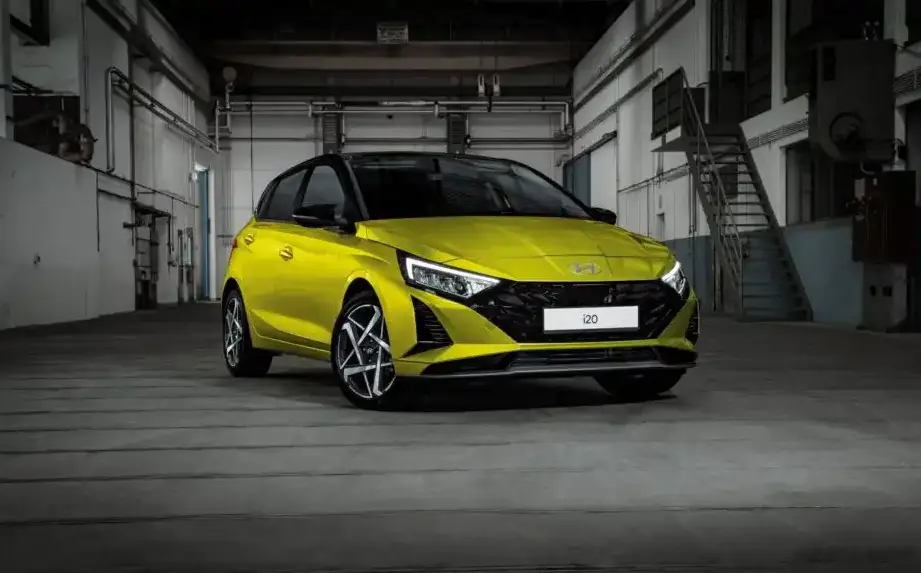
The Hyundai i20 III (facelift, introduced in May 2023) 1.0 T-GDI 100 Hp Mild Hybrid DCT represents a key offering within Hyundai’s subcompact hatchback lineup. Positioned as a fuel-efficient and technologically modern option, this variant arrived as part of a mid-cycle refresh for the third-generation i20 (launched in 2020). It aimed to appeal to buyers seeking a practical, well-equipped city car with a degree of hybrid assistance. Production of this specific configuration ran from May 2023 to May 2024, serving primarily the European market, where the i20 competes with vehicles like the Volkswagen Polo, Ford Fiesta (now discontinued), and Renault Clio. This model is part of the broader PB platform family.
Technical Specifications
| Brand | Hyundai |
| Model | i20 |
| Generation | i20 III (facelift 2023) |
| Type (Engine) | 1.0 T-GDI (100 Hp) Mild Hybrid DCT |
| Start of production | May, 2023 |
| End of production | May, 2024 |
| Powertrain Architecture | MHEV (Mild Hybrid Electric Vehicle) |
| Body type | Hatchback |
| Seats | 5 |
| Doors | 5 |
| Combined fuel consumption (WLTP) | 5.1-5.6 l/100 km (46.1 – 42 US mpg, 55.4 – 50.4 UK mpg, 19.6 – 17.9 km/l) |
| CO2 emissions (WLTP) | 115-128 g/km |
| Fuel Type | Petrol (Gasoline) |
| Acceleration 0 – 100 km/h | 11.4 sec |
| Acceleration 0 – 62 mph | 11.4 sec |
| Acceleration 0 – 60 mph | 10.8 sec |
| Maximum speed | 185 km/h (114.95 mph) |
| Emission standard | Euro 6d |
| Weight-to-power ratio | 11.2 kg/Hp, 89.7 Hp/tonne |
| Weight-to-torque ratio | 6.5 kg/Nm, 154.3 Nm/tonne |
| Battery voltage | 48 V |
| Power | 100 Hp @ 4500-6000 rpm |
| Power per litre | 100.2 Hp/l |
| Torque | 172 Nm @ 1500-4000 rpm (126.86 lb.-ft. @ 1500-4000 rpm) |
| Engine layout | Front, Transverse |
| Engine Model/Code | G3LF |
| Engine displacement | 998 cm3 (60.9 cu. in.) |
| Number of cylinders | 3 |
| Engine configuration | Inline |
| Number of valves per cylinder | 4 |
| Fuel injection system | Direct injection |
| Engine aspiration | Turbocharger, Intercooler |
| Engine oil capacity | 3.6 l (3.8 US qt | 3.17 UK qt) |
| Coolant capacity | 5.77 l (6.1 US qt | 5.08 UK qt) |
| Kerb Weight | 1115-1225 kg (2458.15 – 2700.66 lbs.) |
| Max. weight | 1650 kg (3637.63 lbs.) |
| Max load | 425-535 kg (936.96 – 1179.47 lbs.) |
| Fuel tank capacity | 40 l (10.57 US gal | 8.8 UK gal) |
| Max. roof load | 70 kg (154.32 lbs.) |
| Length | 4065 mm (160.04 in.) |
| Width | 1775 mm (69.88 in.) |
| Height | 1450 mm (57.09 in.) |
| Wheelbase | 2580 mm (101.57 in.) |
| Front track | 1531-1545 mm (60.28 – 60.83 in.) |
| Rear track | 1536-1549 mm (60.47 – 60.98 in.) |
| Drivetrain Architecture | Front wheel drive, MHEV |
| Number of gears | 7 |
| Gearbox type | Automatic transmission DCT |
| Front suspension | Independent type McPherson |
| Rear suspension | Torsion |
| Front brakes | Ventilated discs |
| Rear brakes | Disc |
| Steering type | Steering rack and pinion |
| Power steering | Electric |
| Tires size | 185/65 R15; 195/55 R16; 215/45 R17 |
| Wheel rims size | 15; 16; 17 |
Introduction
The Hyundai i20 III 1.0 T-GDI 100 Hp Mild Hybrid DCT, introduced with the 2023 facelift, builds upon the success of the third-generation i20. This version incorporates a 48-volt mild hybrid system to enhance fuel efficiency and reduce emissions. It slots into the i20 range as a mid-level offering, providing a balance between affordability and features. The facelift brought revised styling, updated technology, and refinements to the powertrain. The i20, in general, is a crucial model for Hyundai in Europe, offering a competitive alternative in the highly contested supermini segment.
Powertrain & Engine Architecture
At the heart of this i20 variant lies the Hyundai-Kia ‘Kappa’ family 1.0 T-GDI (Turbocharged Gasoline Direct Injection) engine, specifically the G3LF code. This is a three-cylinder engine displacing 998cc. The engine utilizes a single-scroll turbocharger with an intercooler to boost power and torque. Direct injection ensures precise fuel delivery, optimizing combustion efficiency. The mild hybrid system consists of a 48V battery and a belt-driven starter generator (BSG). The BSG allows for extended start-stop operation, regenerative braking (recapturing energy during deceleration), and a small power assist during acceleration. The engine produces 100 horsepower at 4500-6000 rpm and 172 Nm (126.86 lb-ft) of torque between 1500-4000 rpm. The transmission is a 7-speed dual-clutch transmission (DCT), offering quick and smooth gear changes. This DCT is known for its efficiency and responsiveness compared to traditional automatic transmissions.
Driving Characteristics
The 1.0 T-GDI 100 Hp with the DCT delivers a surprisingly refined driving experience for a three-cylinder engine. While not overtly sporty, it provides adequate performance for urban and highway driving. Acceleration from 0-60 mph takes around 10.8 seconds, and the top speed is 185 km/h (114.95 mph). The DCT transmission contributes to a smooth power delivery, and the mild hybrid system provides a subtle boost during acceleration. Compared to the base 1.2-liter naturally aspirated engine, the 1.0 T-GDI offers significantly more punch. However, it doesn’t match the performance of higher-spec i20 models equipped with more powerful engines. The DCT’s gear ratios are tuned for fuel efficiency, meaning it prioritizes economy over outright acceleration. The mild hybrid system is most noticeable during start-stop operation, where the engine restarts quickly and smoothly.
Equipment & Trim Levels
The 1.0 T-GDI 100 Hp Mild Hybrid DCT typically comes with a good level of standard equipment. Depending on the specific market and optional packages, features often include air conditioning, a touchscreen infotainment system with Apple CarPlay and Android Auto compatibility, Bluetooth connectivity, a rearview camera, and various safety systems like lane keeping assist and forward collision avoidance assist. Interior upholstery is usually cloth, with options for partial leather. Higher trim levels add features like automatic climate control, a larger touchscreen, a premium sound system, and heated seats. Exterior features often include alloy wheels, LED headlights, and body-colored door handles and mirrors.
Chassis & Braking
The i20 III utilizes a McPherson strut front suspension and a torsion beam rear suspension. This setup provides a good balance between ride comfort and handling. The steering is electrically assisted, offering light and precise control. Braking is handled by ventilated discs at the front and solid discs at the rear. ABS (Anti-lock Braking System) is standard, along with Electronic Stability Control (ESC). The suspension is tuned for comfort, prioritizing a smooth ride over sporty handling. Stabilizer bars are fitted to both the front and rear axles to reduce body roll during cornering.
Market Reception & Comparison
The Hyundai i20 III 1.0 T-GDI Mild Hybrid DCT has been generally well-received by automotive critics. It’s praised for its fuel efficiency, comfortable ride, and well-equipped interior. However, some reviewers have noted that the engine can feel a little strained at higher speeds. Compared to other trims in the i20 lineup, this variant offers a compelling balance between performance and economy. The 1.2-liter engine is more affordable but less powerful, while the higher-output engines offer more performance but at a higher price point and with potentially lower fuel economy. Against competitors like the Volkswagen Polo and Renault Clio, the i20 offers a competitive package with a generous warranty and a strong value proposition.
Legacy
The 1.0 T-GDI engine, coupled with the 7-speed DCT, has proven to be a relatively reliable powertrain. While some early examples of the Kappa engine experienced minor issues, Hyundai has addressed these through software updates and design revisions. The mild hybrid system adds a layer of complexity, but it has also proven to be durable. On the used car market, the i20 III 1.0 T-GDI Mild Hybrid DCT is becoming increasingly popular due to its fuel efficiency and affordability. Its relatively low running costs and Hyundai’s reputation for reliability make it a sensible choice for buyers seeking a practical and economical supermini.