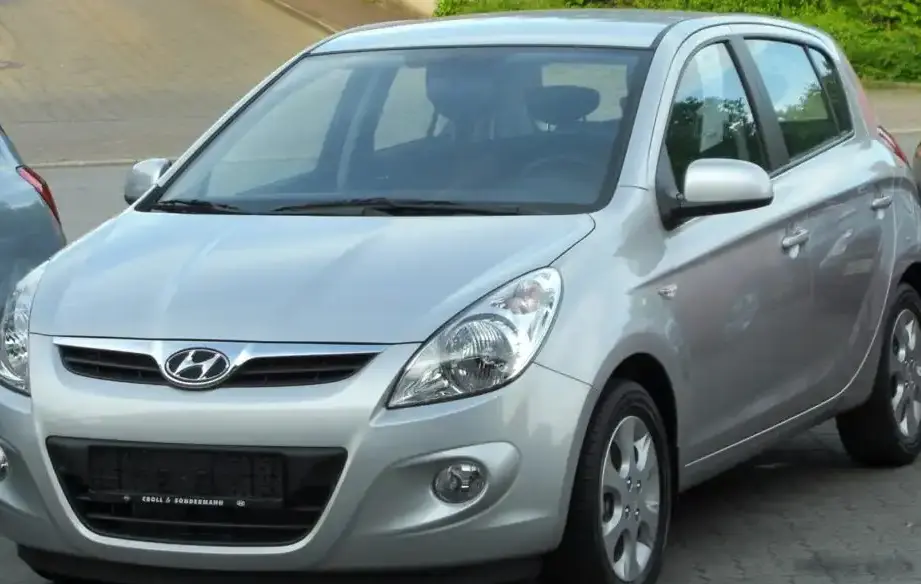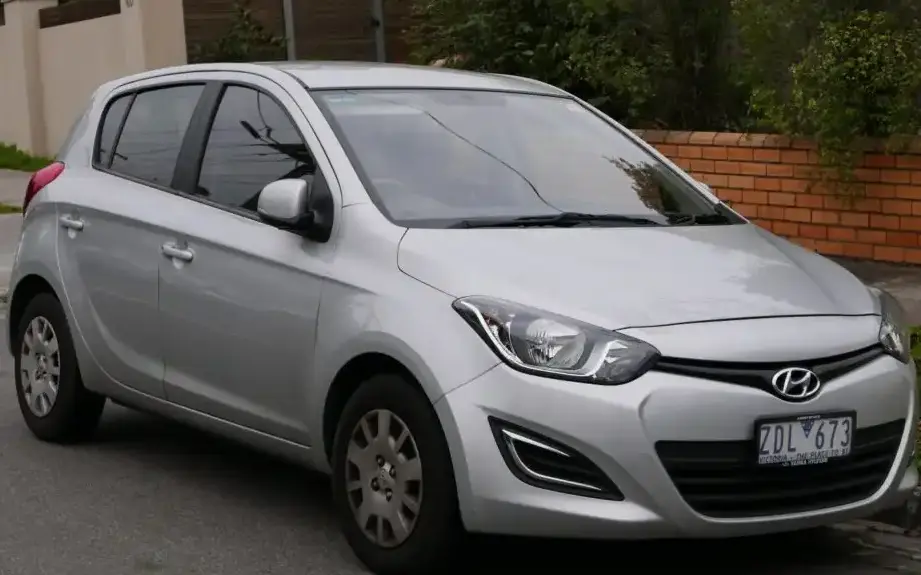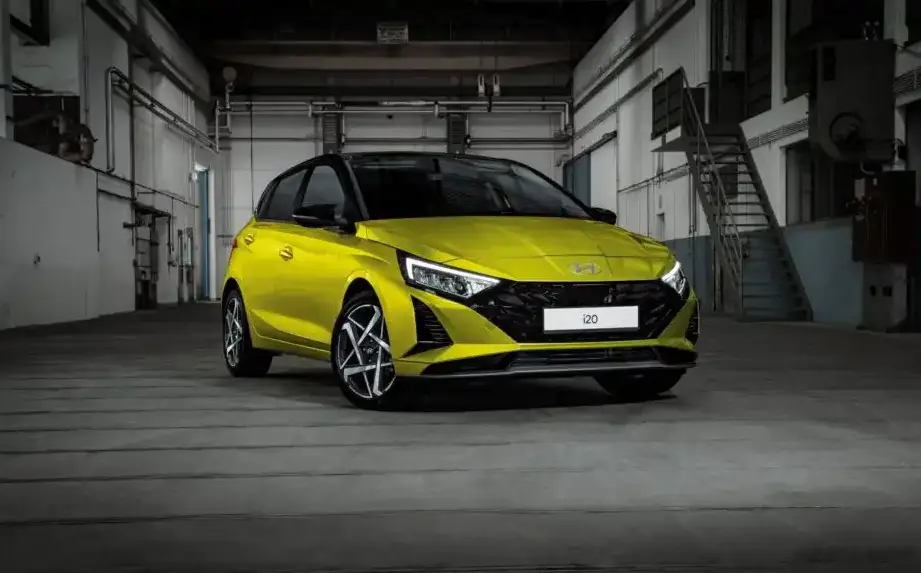
The Hyundai i20 III (facelift, introduced in late 2023 for the 2024 model year) represents a significant update to Hyundai’s subcompact hatchback, aimed primarily at the European and Asian markets. While not initially sold in the United States, the i20 competes with vehicles like the Toyota Yaris, Volkswagen Polo, and Renault Clio. The 1.0 T-GDi 90 hp variant, equipped with a manual transmission, served as an entry-level offering, balancing fuel efficiency with acceptable performance for urban driving. Production began in December 2025, building upon the foundation of the PB platform (also known as the 1HX0/A3 platform) used for the third-generation i20.
Technical Specifications
| Brand | Hyundai |
| Model | i20 |
| Generation | i20 III (facelift 2023) |
| Type (Engine) | 1.0 T-GDi (90 Hp) |
| Start of production | December, 2025 |
| Powertrain Architecture | Internal Combustion engine |
| Body type | Hatchback |
| Seats | 5 |
| Doors | 5 |
| Fuel consumption at Low speed (WLTP) | 7.2-7.3 l/100 km (32.7 – 32.2 US mpg, 39.2 – 38.7 UK mpg, 13.9 – 13.7 km/l) |
| Fuel consumption at Medium speed (WLTP) | 5.5-5.6 l/100 km (42.8 – 42 US mpg, 51.4 – 50.4 UK mpg, 18.2 – 17.9 km/l) |
| Fuel consumption at high speed (WLTP) | 4.9-5 l/100 km (48 – 47 US mpg, 57.6 – 56.5 UK mpg, 20.4 – 20 km/l) |
| Fuel consumption at very high speed (WLTP) | 6.1-6.3 l/100 km (38.6 – 37.3 US mpg, 46.3 – 44.8 UK mpg, 16.4 – 15.9 km/l) |
| Combined fuel consumption (WLTP) | 5.7-5.9 l/100 km (41.3 – 39.9 US mpg, 49.6 – 47.9 UK mpg, 17.5 – 16.9 km/l) |
| CO2 emissions (WLTP) | 130-134 g/km |
| Fuel Type | Petrol (Gasoline) |
| Acceleration 0 – 100 km/h | 11.5 sec |
| Acceleration 0 – 62 mph | 11.5 sec |
| Acceleration 0 – 60 mph | 10.9 sec |
| Maximum speed | 180 km/h (111.85 mph) |
| Emission standard | Euro 6D |
| Weight-to-power ratio | 11.9 kg/Hp, 84.1 Hp/tonne |
| Weight-to-torque ratio | 6.2 kg/Nm, 160.7 Nm/tonne |
| Power | 90 Hp @ 4800-5700 rpm |
| Power per litre | 90.2 Hp/l |
| Torque | 172 Nm @ 1500-3000 rpm (126.86 lb.-ft. @ 1500-3000 rpm) |
| Engine layout | Front, Transverse |
| Engine Model/Code | G3LE |
| Engine displacement | 998 cm3 (60.9 cu. in.) |
| Number of cylinders | 3 |
| Engine configuration | Inline |
| Cylinder Bore | 71 mm (2.8 in.) |
| Piston Stroke | 84 mm (3.31 in.) |
| Compression ratio | 10.5:1 |
| Number of valves per cylinder | 4 |
| Fuel injection system | Direct injection |
| Engine aspiration | Turbocharger, Intercooler |
| Valvetrain | DOHC |
| Engine oil capacity | 3.6 l (3.8 US qt | 3.17 UK qt) |
| Coolant | 5.77 l (6.1 US qt | 5.08 UK qt) |
| Kerb Weight | 1070-1185 kg (2358.95 – 2612.48 lbs.) |
| Max. weight | 1610 kg (3549.44 lbs.) |
| Max load | 425-540 kg (936.96 – 1190.5 lbs.) |
| Trunk (boot) space – minimum | 352 l (12.43 cu. ft.) |
| Trunk (boot) space – maximum | 1165 l (41.14 cu. ft.) |
| Fuel tank capacity | 40 l (10.57 US gal | 8.8 UK gal) |
| Max. roof load | 75 kg (165.35 lbs.) |
| Permitted trailer load with brakes (12%) | 910 kg (2006.21 lbs.) |
| Permitted trailer load without brakes | 450 kg (992.08 lbs.) |
| Length | 4065 mm (160.04 in.) |
| Width | 1775 mm (69.88 in.) |
| Height | 1450 mm (57.09 in.) |
| Wheelbase | 2580 mm (101.57 in.) |
| Front track | 1531-1539 mm (60.28 – 60.59 in.) |
| Rear (Back) track | 1536-1543 mm (60.47 – 60.75 in.) |
| Minimum turning circle (turning diameter) | 10.4 m (34.12 ft.) |
| Drivetrain Architecture | The Internal combustion engine (ICE) drives the front wheels of the vehicle. |
| Drive wheel | Front wheel drive |
| Number of gears and type of gearbox | 6 gears, manual transmission |
| Front suspension | Independent type McPherson |
| Rear suspension | Torsion |
| Front brakes | Ventilated discs, 280 mm |
| Rear brakes | Disc, 262 mm |
| Assisting systems | ABS (Anti-lock braking system) |
| Steering type | Steering rack and pinion |
| Power steering | Electric Steering |
| Tires size | 195/55 R16; 215/45 R17 |
| Wheel rims size | 6.0J x 16; 7.0J x 17 |
INTRODUCTION
The 1.0 T-GDi 90 hp variant of the Hyundai i20 III facelift is a front-wheel-drive, five-door hatchback designed as an affordable and fuel-efficient option within the i20 range. Introduced as part of the mid-cycle refresh, this model builds upon the strengths of the PB platform, offering improved styling, technology, and safety features. Positioned as the entry-level engine option, it targeted buyers prioritizing economy and practicality over outright performance. This trim level was particularly popular in Europe, where subcompact hatchbacks are a dominant segment, and also found a niche in Asian markets.
Powertrain & Engine Architecture
At the heart of this i20 variant lies the Hyundai-Kia G3LE engine, a 998cc, three-cylinder turbocharged gasoline engine. This engine utilizes direct fuel injection and a twin-scroll turbocharger to deliver a balance of power and efficiency. The engine code ‘G3LE’ signifies a specific iteration of this powerplant. The G3LE features a DOHC (Dual Overhead Camshaft) valvetrain with four valves per cylinder, optimizing airflow for improved combustion. The engine’s turbocharger and intercooler work in tandem to increase air density, boosting power output. The 90 hp version is tuned for fuel economy, with a relatively conservative boost pressure. The engine is paired with a six-speed manual transmission, chosen for its efficiency and driver engagement. While an automatic transmission was available on other i20 trims, the 90 hp version was primarily offered with the manual gearbox.
Driving Characteristics
The 1.0 T-GDi 90 hp i20 offers adequate performance for everyday driving, particularly in urban environments. Acceleration from 0-60 mph takes approximately 10.9 seconds, and top speed is limited to 111.85 mph. The engine delivers its peak torque of 172 Nm (126.86 lb-ft) between 1500 and 3000 rpm, providing reasonable responsiveness for overtaking and merging. However, compared to higher-output i20 variants (like those with the 1.0 T-GDi 100 hp or 1.2 MPI engines), the 90 hp version feels less powerful, especially when fully loaded or on inclines. The six-speed manual transmission is well-matched to the engine’s characteristics, offering precise shifts and helping to keep the engine within its optimal power band. The gear ratios are tuned for fuel efficiency, rather than outright acceleration.
Equipment & Trim Levels
The 1.0 T-GDi 90 hp i20 typically came equipped with a base level of features, focusing on essential comfort and safety. Standard equipment generally included air conditioning, power windows, central locking, a basic audio system with USB connectivity, and safety features like ABS, ESC (Electronic Stability Control), and multiple airbags. Higher trim levels, such as SE or Premium, added features like alloy wheels, a touchscreen infotainment system with Apple CarPlay and Android Auto, rear parking sensors, and a rearview camera. Interior upholstery was typically cloth, with a functional and durable design. Optional extras included metallic paint, a panoramic sunroof, and advanced safety systems like lane departure warning and forward collision avoidance assist.
Chassis & Braking
The i20 III utilizes a McPherson strut front suspension and a torsion beam rear suspension. This setup provides a good balance of ride comfort and handling for a subcompact hatchback. The torsion beam rear suspension is a cost-effective solution that minimizes complexity while offering acceptable handling characteristics. The front brakes are ventilated discs measuring 280mm, while the rear brakes are solid discs measuring 262mm. ABS (Anti-lock Braking System) is standard, providing enhanced braking performance and stability. The steering is electrically assisted, offering light and precise control. The chassis is designed to be lightweight, contributing to the car’s overall fuel efficiency.
Market Reception & Comparison
The Hyundai i20 III 1.0 T-GDi 90 hp received generally positive reviews for its fuel efficiency, practicality, and value for money. Critics praised its comfortable ride and well-equipped interior, especially considering its price point. However, some reviewers noted that the engine could feel underpowered in certain situations, particularly when carrying passengers or luggage. Compared to the higher-output i20 variants, the 90 hp version offered lower running costs but sacrificed some performance. Against competitors like the Volkswagen Polo and Toyota Yaris, the i20 offered a compelling package with a longer warranty and a competitive price. Fuel economy figures of 5.7-5.9 l/100 km (41.3 – 39.9 US mpg) were considered excellent for its class.
Legacy
The 1.0 T-GDi engine has proven to be a relatively reliable unit, although some owners have reported minor issues with the turbocharger and fuel injectors. Regular maintenance, including oil changes and timely replacement of wear items, is crucial for ensuring long-term reliability. In the used car market, the i20 III 1.0 T-GDi 90 hp represents a sensible and affordable option for buyers seeking a fuel-efficient and practical subcompact hatchback. Its relatively low running costs and Hyundai’s generous warranty make it an attractive proposition for those on a budget. While not the most exciting car to drive, it offers a dependable and economical transportation solution.