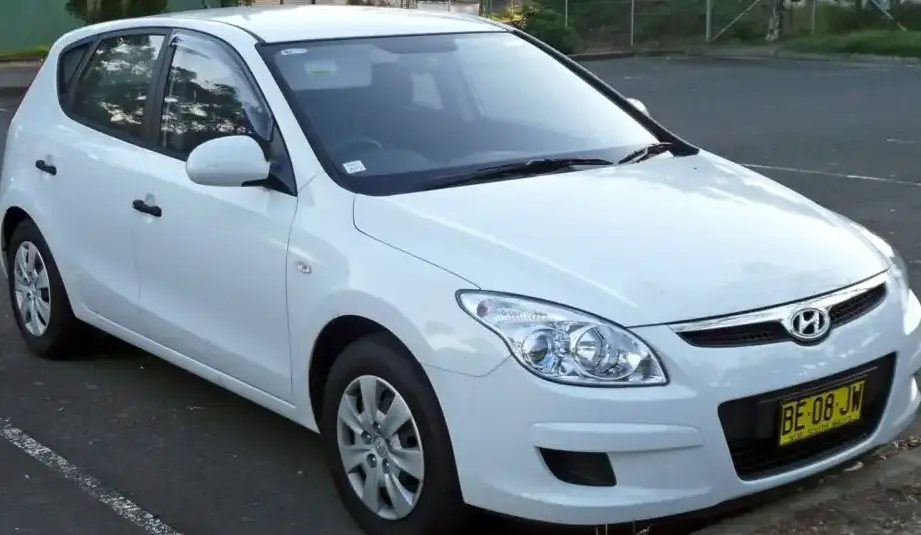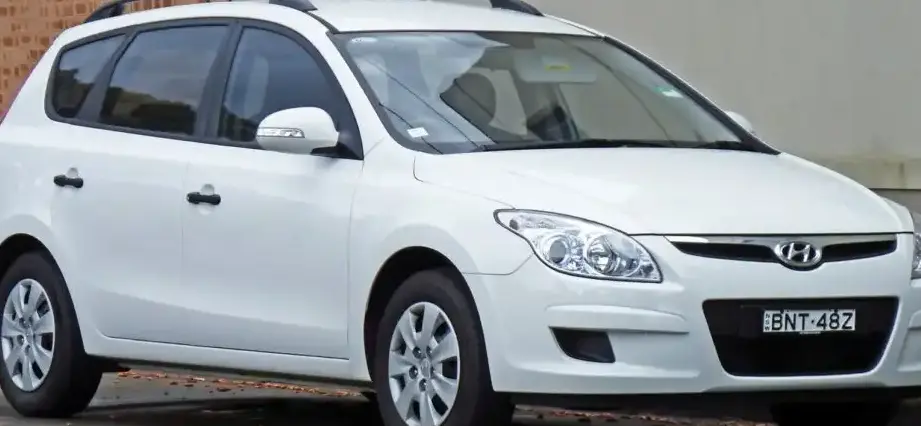
The Hyundai i30 I CW 2.0 (143 hp) Automatic, produced between 2008 and 2010, represents a key variant within the first generation (i30 I, internally designated CW) of Hyundai’s compact wagon. Positioned as a mid-range offering, it aimed to provide a blend of practicality, comfort, and reasonable performance for family-oriented buyers. This model was primarily marketed in Europe, where the station wagon (estate) body style held significant appeal. It was built on the Hyundai-Kia ED platform, shared with the Kia Cee’d and other compact models. The i30 CW sought to establish Hyundai as a more credible competitor in the European compact car segment, offering a compelling alternative to established brands.
Technical Specifications
| Brand | Hyundai |
| Model | i30 |
| Generation | i30 I CW |
| Type (Engine) | 2.0 (143 Hp) Automatic |
| Start of production | 2008 |
| End of production | 2010 |
| Powertrain Architecture | Internal Combustion engine |
| Body type | Station wagon (estate) |
| Seats | 5 |
| Doors | 5 |
| Fuel consumption (urban) | 10.3 l/100 km (22.8 US mpg) |
| Fuel consumption (extra urban) | 6.1 l/100 km (38.6 US mpg) |
| Fuel consumption (combined) | 7.6 l/100 km (30.9 US mpg) |
| Fuel Type | Petrol (Gasoline) |
| Acceleration 0 – 100 km/h | 11.1 sec |
| Acceleration 0 – 62 mph | 11.1 sec |
| Acceleration 0 – 60 mph | 10.5 sec |
| Maximum speed | 195 km/h (121.17 mph) |
| Emission standard | Euro 4 |
| Weight-to-power ratio | 9.2 kg/Hp |
| Weight-to-torque ratio | 7 kg/Nm |
| Power | 143 Hp @ 6000 rpm |
| Torque | 186 Nm @ 4600 rpm (137.19 lb.-ft. @ 4600 rpm) |
| Engine layout | Front, Transverse |
| Engine Model/Code | G4GC |
| Engine displacement | 1975 cm3 (120.52 cu. in.) |
| Number of cylinders | 4 |
| Engine configuration | Inline |
| Cylinder Bore | 82 mm (3.23 in.) |
| Piston Stroke | 93.5 mm (3.68 in.) |
| Compression ratio | 10.1:1 |
| Number of valves per cylinder | 4 |
| Fuel injection system | Multi-port manifold injection |
| Engine aspiration | Naturally aspirated engine |
| Valvetrain | DOHC |
| Engine oil capacity | 4 l (4.23 US qt | 3.52 UK qt) |
| Coolant capacity | 6.6 l (6.97 US qt | 5.81 UK qt) |
| Kerb Weight | 1310 kg (2888.06 lbs.) |
| Max. weight | 1900 kg (4188.78 lbs.) |
| Max load | 590 kg (1300.73 lbs.) |
| Trunk (boot) space – minimum | 415 l (14.66 cu. ft.) |
| Trunk (boot) space – maximum | 1395 l (49.26 cu. ft.) |
| Fuel tank capacity | 53 l (14 US gal | 11.66 UK gal) |
| Length | 4475 mm (176.18 in.) |
| Width | 1775 mm (69.88 in.) |
| Height | 1565 mm (61.61 in.) |
| Wheelbase | 2700 mm (106.3 in.) |
| Front track | 1538 mm (60.55 in.) |
| Rear track | 1536 mm (60.47 in.) |
| Drag coefficient (Cd) | 0.31 |
| Minimum turning circle | 10.4 m (34.12 ft.) |
| Drivetrain Architecture | Front wheel drive |
| Number of gears | 4 |
| Gearbox type | Automatic transmission |
| Front suspension | Independent, McPherson with coil spring and anti-roll bar |
| Rear suspension | Independent multi-link with stabilizer |
| Front brakes | Ventilated discs |
| Rear brakes | Disc |
| Assisting systems | ABS (Anti-lock braking system) |
| Steering type | Steering rack and pinion |
| Tires size | 205/55 R16 H |
| Wheel rims size | 16 |
Powertrain & Engine Architecture
The i30 CW 2.0 Automatic is powered by Hyundai’s G4GC engine, a 1.975-liter (120.52 cubic inches) inline-four cylinder gasoline engine. This engine utilizes a naturally aspirated configuration with multi-point fuel injection and a double overhead camshaft (DOHC) valvetrain. The G4GC engine produces 143 horsepower at 6000 rpm and 186 Nm (137.19 lb-ft) of torque at 4600 rpm. The engine’s design prioritized reliability and fuel efficiency over outright performance. The automatic transmission is a conventional 4-speed unit, chosen for its smoothness and ease of use, catering to a broader demographic than a manual gearbox. While not particularly advanced, this transmission was known for its durability.
Driving Characteristics
The 2.0-liter engine paired with the 4-speed automatic transmission delivers adequate, but not exhilarating, performance. Acceleration from 0 to 60 mph takes approximately 10.5 seconds, and the top speed is around 121 mph. The automatic transmission’s gear ratios are tuned for comfort and fuel economy, resulting in a relatively relaxed driving experience. Compared to the manual transmission version of the same engine, the automatic suffers a slight performance penalty due to the transmission’s inherent efficiency losses. It also feels less responsive during quick acceleration. However, the automatic provides a smoother and more convenient driving experience, particularly in urban traffic. Compared to the more economical 1.6L variants, the 2.0L offers noticeably more power for highway cruising and overtaking.
Equipment & Trim Levels
The i30 CW 2.0 Automatic typically came equipped with a reasonable level of standard features. These included air conditioning, power windows, central locking, and an audio system with CD player. Higher trim levels added features such as alloy wheels, fog lights, a multi-function steering wheel, and upgraded interior trim. Interior upholstery was typically cloth, with options for leather available on higher-spec models. Safety features included ABS brakes, front airbags, and seatbelt pretensioners. Optional extras included a sunroof, parking sensors, and a more advanced audio system.
Chassis & Braking
The i30 CW features an independent suspension setup, with a McPherson strut configuration at the front and a multi-link system at the rear. This setup provides a comfortable ride quality and decent handling characteristics. The front brakes are ventilated discs, while the rear brakes are solid discs. The steering is rack and pinion, providing precise and responsive steering feel. The car rides on 205/55 R16 tires, offering a good balance of grip and comfort. Stabilizer bars are fitted to both the front and rear axles to reduce body roll during cornering.
Market Reception & Comparison
The Hyundai i30 CW 2.0 Automatic was generally well-received by automotive critics. It was praised for its spacious interior, comfortable ride, and reasonable price. However, some critics noted that the engine and transmission combination lacked the refinement and performance of some of its competitors. Fuel economy was considered average for its class. Compared to the 1.6L i30 variants, the 2.0L offered more power but at the cost of slightly higher fuel consumption. The 2.0L automatic was positioned as a more premium option, appealing to buyers who prioritized comfort and convenience over outright performance.
Legacy
The Hyundai i30 CW 2.0 Automatic has proven to be a relatively reliable vehicle in the long term. The G4GC engine is known for its durability, and the 4-speed automatic transmission is generally robust. Common issues include wear and tear on suspension components and occasional problems with the electrical system. In the used car market, these models represent a good value proposition, offering a practical and affordable family car. While not a performance icon, the i30 CW 2.0 Automatic played a significant role in establishing Hyundai as a credible competitor in the European compact car segment.