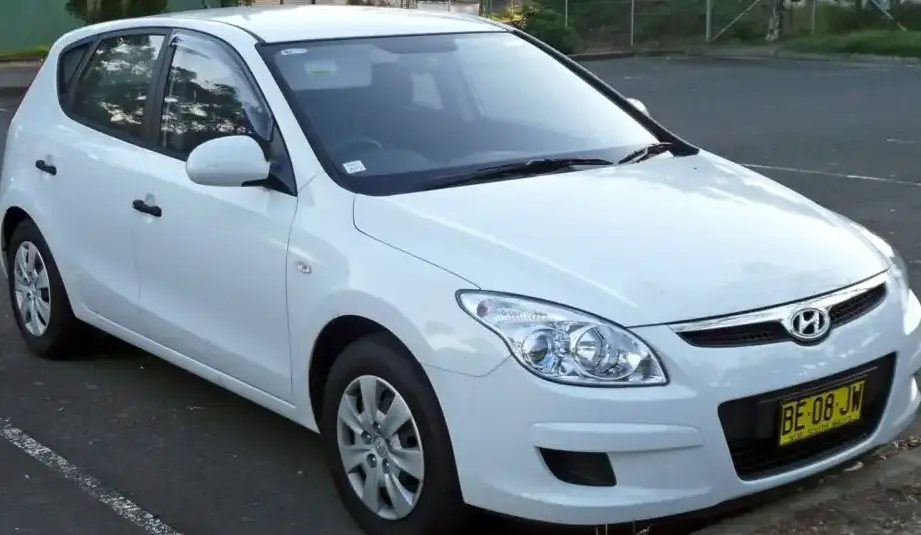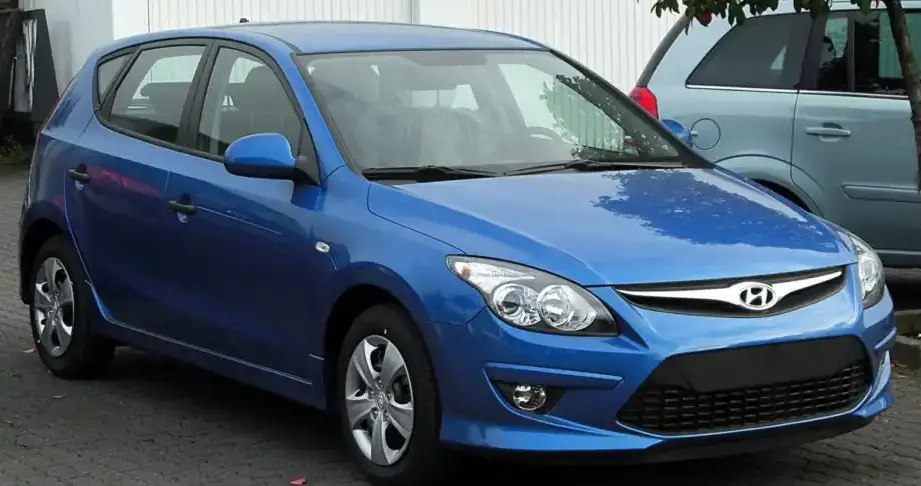
The Hyundai i30 (first generation, facelifted in 2010) 1.6-liter model, producing 126 horsepower, represented a key offering in Hyundai’s expanding European lineup. Introduced as a competitor to established hatchbacks like the Ford Focus and Volkswagen Golf, the i30 aimed to deliver a blend of practicality, affordability, and a surprisingly generous warranty. Production of this specific variant ran from 2010 to 2012, falling within the broader first-generation i30 (FD) lifecycle which spanned from 2007-2012. This facelift brought styling updates and refinements to the original design, enhancing its appeal in a competitive market. The 1.6L engine with 126 hp was positioned as a mid-range option, offering a balance between fuel economy and performance, appealing to buyers seeking a versatile daily driver.
Technical Specifications
| Brand | Hyundai |
| Model | i30 |
| Generation | i30 I (facelift 2010) |
| Type (Engine) | 1.6 (126 Hp) |
| Start of production | 2010 |
| End of production | 2012 |
| Powertrain Architecture | Internal Combustion engine |
| Body type | Hatchback |
| Seats | 5 |
| Doors | 5 |
| Fuel consumption (urban) | 8 l/100 km (29.4 US mpg) |
| Fuel consumption (extra urban) | 5.5 l/100 km (42.8 US mpg) |
| Fuel consumption (combined) | 6.5 l/100 km (36.2 US mpg) |
| CO2 emissions | 152 g/km |
| Fuel Type | Petrol (Gasoline) |
| Acceleration 0 – 100 km/h | 11.1 sec |
| Acceleration 0 – 62 mph | 11.1 sec |
| Acceleration 0 – 60 mph | 10.5 sec |
| Maximum speed | 192 km/h (119.3 mph) |
| Emission standard | Euro 5 |
| Weight-to-power ratio | 9.5 kg/Hp |
| Weight-to-torque ratio | 7.7 kg/Nm |
| Power | 126 Hp @ 6200 rpm |
| Torque | 154 Nm @ 4200 rpm (113.58 lb.-ft. @ 4200 rpm) |
| Engine layout | Front, Transverse |
| Engine Model/Code | G4FC |
| Engine displacement | 1591 cm3 (97.09 cu. in.) |
| Number of cylinders | 4 |
| Engine configuration | Inline |
| Cylinder Bore | 77 mm (3.03 in.) |
| Piston Stroke | 85.4 mm (3.36 in.) |
| Compression ratio | 10.5:1 |
| Number of valves per cylinder | 4 |
| Fuel injection system | Multi-port manifold injection |
| Engine aspiration | Naturally aspirated engine |
| Valvetrain | DOHC |
| Engine oil capacity | 3.3 l (3.49 US qt | 2.9 UK qt) |
| Coolant capacity | 6 l (6.34 US qt | 5.28 UK qt) |
| Kerb Weight | 1193 kg (2630.11 lbs.) |
| Max. weight | 1720 kg (3791.95 lbs.) |
| Max load | 527 kg (1161.84 lbs.) |
| Trunk (boot) space – minimum | 340 l (12.01 cu. ft.) |
| Trunk (boot) space – maximum | 1250 l (44.14 cu. ft.) |
| Fuel tank capacity | 53 l (14 US gal | 11.66 UK gal) |
| Permitted trailer load with brakes (12%) | 1200 kg (2645.55 lbs.) |
| Permitted trailer load without brakes | 550 kg (1212.54 lbs.) |
| Length | 4280 mm (168.5 in.) |
| Width | 1775 mm (69.88 in.) |
| Height | 1480 mm (58.27 in.) |
| Wheelbase | 2650 mm (104.33 in.) |
| Front track | 1546 mm (60.87 in.) |
| Rear (Back) track | 1544 mm (60.79 in.) |
| Drag coefficient (Cd) | 0.33 |
| Minimum turning circle | 10.2 m (33.46 ft.) |
| Drivetrain Architecture | Front wheel drive |
| Drive wheel | Front wheel drive |
| Number of gears and type of gearbox | 6 gears, manual transmission |
| Front brakes | Ventilated discs |
| Rear brakes | Disc |
| Assisting systems | ABS (Anti-lock braking system) |
| Steering type | Steering rack and pinion |
| Tires size | 185/65 R15 H |
| Wheel rims size | 15 |
INTRODUCTION
The 2010-2012 Hyundai i30 1.6, with its 126 horsepower output, was a crucial model for Hyundai as it sought to establish itself as a serious contender in the European C-segment hatchback market. Building upon the initial i30 launched in 2007, the facelift brought revised front and rear styling, interior enhancements, and improvements to the chassis. This variant utilized Hyundai’s G4FC engine, a naturally aspirated 1.6-liter inline-four, paired with a six-speed manual transmission. It was designed to appeal to buyers prioritizing fuel efficiency and affordability without sacrificing practicality. The i30, in general, was Hyundai’s first car to be designed entirely in Europe, specifically at their Rüsselsheim design center in Germany, reflecting a commitment to tailoring vehicles to European tastes.
Powertrain & Engine Architecture
The heart of the i30 1.6 is the G4FC engine, a 1591cc (97.09 cu. in.) naturally aspirated inline-four cylinder. This engine features multi-point fuel injection and a double overhead camshaft (DOHC) valvetrain with four valves per cylinder. The G4FC is known for its relatively simple design, contributing to its reliability. The 126 hp output is achieved at 6200 rpm, while peak torque of 154 Nm (113.58 lb-ft) arrives at 4200 rpm. The six-speed manual transmission was the standard offering for this trim, providing a decent spread of gears for both urban driving and highway cruising. The transmission’s gear ratios were tuned for fuel efficiency, with a taller final drive compared to some of the higher-performance i30 variants. While a four-speed automatic transmission was available in some markets, the manual was the more common choice, particularly in Europe.
Driving Characteristics
The i30 1.6 offered a comfortable, if not particularly exhilarating, driving experience. Acceleration from 0-60 mph took around 10.5 seconds, and top speed was approximately 119.3 mph. The engine felt adequate for everyday driving, providing sufficient power for overtaking and merging onto highways, but it lacked the punch of the more powerful 1.8L or diesel options. The six-speed manual transmission allowed drivers to keep the engine in its optimal power band, but the relatively low torque output meant frequent downshifts were necessary when tackling hills or carrying a full load. The steering was light and precise, making it easy to maneuver in urban environments. The suspension, tuned for comfort, absorbed bumps and imperfections in the road well, but this came at the expense of some body roll in corners.
Equipment & Trim Levels
The i30 1.6 typically came with a reasonable level of standard equipment. Base models included air conditioning, power steering, electric front windows, and a basic audio system with CD player. Higher trim levels, such as the Style or Comfort variants, added features like alloy wheels, fog lights, a trip computer, and upgraded interior trim. Optional extras included a sunroof, leather upholstery, and a more advanced audio system with Bluetooth connectivity. Interior upholstery was typically cloth, with a dark color scheme. The dashboard layout was functional and straightforward, with easy-to-read gauges and logically placed controls.
Chassis & Braking
The i30 utilized a MacPherson strut front suspension and a coupled torsion beam rear suspension. This setup provided a good balance between ride comfort and handling. Braking duties were handled by ventilated discs at the front and solid discs at the rear. Anti-lock Braking System (ABS) was standard, enhancing safety. The i30’s chassis was relatively lightweight, contributing to its fuel efficiency and agility. Stabilizer bars were fitted to both the front and rear axles to reduce body roll during cornering.
Market Reception & Comparison
The Hyundai i30 1.6 was generally well-received by automotive critics. It was praised for its value for money, spacious interior, and generous warranty (Hyundai offered a five-year unlimited mileage warranty, a significant advantage over many competitors). However, some reviewers noted that the engine lacked refinement and that the driving experience wasn’t as engaging as some of its rivals. Compared to the higher-output 1.8L i30, the 1.6 offered significantly lower performance but better fuel economy. The diesel variants (1.6 CRDi) provided even better fuel efficiency and more torque, but at a higher purchase price. Against competitors like the Ford Focus and Volkswagen Golf, the i30 1.6 offered a compelling alternative, particularly for budget-conscious buyers.
Legacy
The Hyundai i30 1.6 has proven to be a reliable and durable vehicle. The G4FC engine is known for its longevity, and the six-speed manual transmission is generally trouble-free. On the used car market, these i30s represent a good value proposition, offering a practical and affordable mode of transportation. Maintenance costs are relatively low, and parts are readily available. While not a performance icon, the i30 1.6 played a significant role in establishing Hyundai as a credible player in the European hatchback market, paving the way for future success with subsequent generations of the i30.