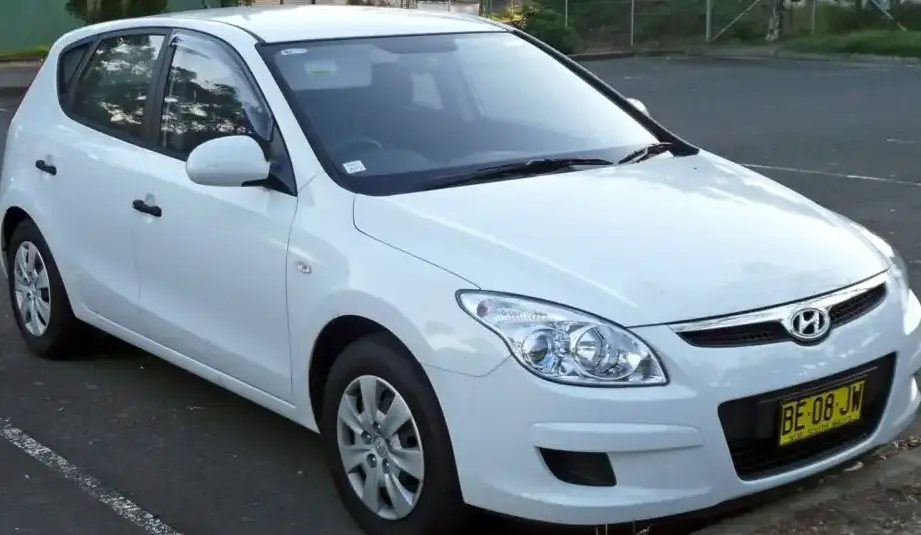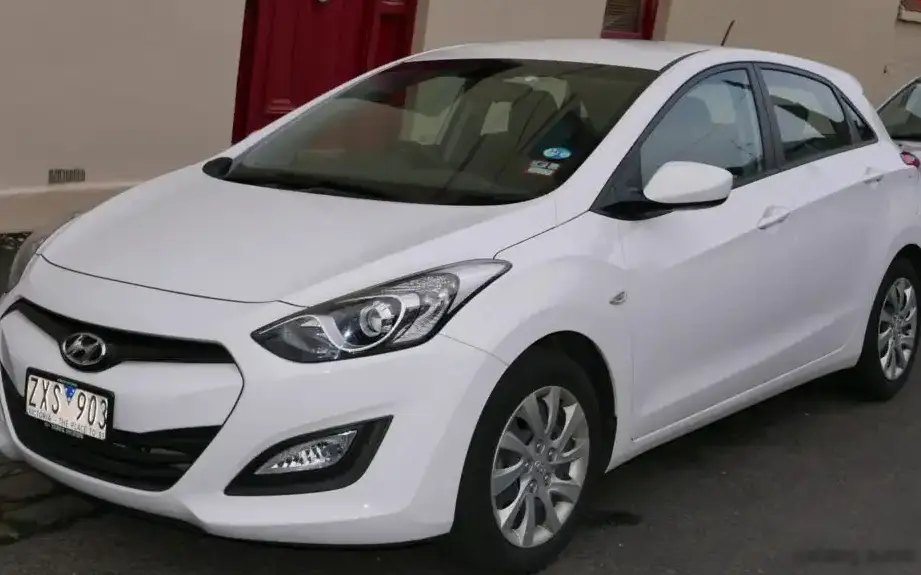
The Hyundai i30 II 1.6 CRDi Automatic, produced between 2012 and 2015, represented a significant offering in the compact hatchback segment. Positioned as a mid-range trim within the second generation i30 (codenamed GD), this variant combined a fuel-efficient diesel engine with the convenience of an automatic transmission. It was primarily aimed at European markets, where diesel-powered vehicles held a substantial share of the automotive landscape, offering a balance between economy, practicality, and reasonable performance. The i30 II itself was a crucial model for Hyundai, demonstrating the brand’s increasing focus on quality, design, and European driving dynamics.
Technical Specifications
| Brand | Hyundai |
| Model | i30 |
| Generation | i30 II |
| Type (Engine) | 1.6 CRDi (128 Hp) Automatic |
| Start of production | 2012 |
| End of production | 2015 |
| Powertrain Architecture | Internal Combustion engine |
| Body type | Hatchback |
| Seats | 5 |
| Doors | 5 |
| Fuel consumption (urban) | 4.9 l/100 km (48 US mpg, 57.6 UK mpg, 20.4 km/l) |
| Fuel consumption (extra urban) | 3.7 l/100 km (63.6 US mpg, 76.3 UK mpg, 27 km/l) |
| Fuel consumption (combined) | 4.1 l/100 km (57.4 US mpg, 68.9 UK mpg, 24.4 km/l) |
| Fuel Type | Diesel |
| Acceleration 0 – 100 km/h | 11.7 sec |
| Acceleration 0 – 62 mph | 11.7 sec |
| Acceleration 0 – 60 mph | 11.1 sec |
| Maximum speed | 190 km/h (118.06 mph) |
| Emission standard | Euro 5 |
| Weight-to-power ratio | 10.2 kg/Hp |
| Weight-to-torque ratio | 5 kg/Nm |
| Power | 128 Hp @ 4000 rpm |
| Torque | 260 Nm @ 1900-2750 rpm (191.77 lb.-ft. @ 1900-2750 rpm) |
| Engine layout | Front, Transverse |
| Engine Model/Code | D4FB |
| Engine displacement | 1582 cm3 (96.54 cu. in.) |
| Number of cylinders | 4 |
| Engine configuration | Inline |
| Cylinder Bore | 77.2 mm (3.04 in.) |
| Piston Stroke | 84.5 mm (3.33 in.) |
| Compression ratio | 17.3:1 |
| Number of valves per cylinder | 4 |
| Fuel injection system | Diesel Commonrail |
| Engine aspiration | Turbocharger, Intercooler |
| Valvetrain | DOHC |
| Engine oil capacity | 5.3 l (5.6 US qt | 4.66 UK qt) |
| Coolant capacity | 6.7 l (7.08 US qt | 5.9 UK qt) |
| Kerb Weight | 1310 kg (2888.06 lbs.) |
| Max. weight | 1940 kg (4276.97 lbs.) |
| Max load | 630 kg (1388.91 lbs.) |
| Trunk (boot) space – minimum | 378 l (13.35 cu. ft.) |
| Trunk (boot) space – maximum | 1316 l (46.47 cu. ft.) |
| Fuel tank capacity | 53 l (14 US gal | 11.66 UK gal) |
| Length | 4300 mm (169.29 in.) |
| Width | 1780 mm (70.08 in.) |
| Height | 1470 mm (57.87 in.) |
| Wheelbase | 2650 mm (104.33 in.) |
| Front track | 1563 mm (61.54 in.) |
| Rear track | 1571 mm (61.85 in.) |
| Minimum turning circle | 10.6 m (34.78 ft.) |
| Drivetrain | Front wheel drive |
| Number of gears | 6 |
| Gearbox type | Automatic transmission |
| Front suspension | Independent type McPherson |
| Rear suspension | Independent coil spring |
| Front brakes | Ventilated discs |
| Rear brakes | Disc |
| Steering type | Steering rack and pinion |
| Power steering | Electric |
| Tires size | 195/65 R15; 205/55 R16; 225/45 R17 |
| Wheel rims size | 6.0J x 15; 6.5J x 16; 7.0J x 17 |
Powertrain & Engine Architecture
The heart of the i30 II 1.6 CRDi Automatic is the Hyundai D4FB engine, a 1.6-liter inline-four cylinder diesel. This engine utilizes a second-generation common-rail direct injection system, delivering fuel at extremely high pressures for optimized combustion. A turbocharger with an intercooler is employed to boost power and torque, mitigating the typical turbo lag associated with smaller displacement engines. The engine features a double overhead camshaft (DOHC) valvetrain with four valves per cylinder, enhancing volumetric efficiency. The automatic transmission is a conventional six-speed torque converter unit, chosen for its smoothness and ease of use, particularly in urban driving conditions. While not offering the outright performance of a dual-clutch transmission (DCT), it provided a comfortable and accessible driving experience for the target audience.
Driving Characteristics
The 128 hp output and 260 Nm of torque, combined with the six-speed automatic, resulted in a respectable, though not particularly sporty, driving experience. Acceleration from 0-60 mph took around 11.1 seconds, and top speed was rated at 190 km/h (118 mph). The automatic transmission was tuned for fuel efficiency, meaning gear changes were often subtle and prioritized economy over aggressive acceleration. Compared to the manual version of the same engine, the automatic offered slightly reduced performance due to transmission losses. Higher output versions of the i30, such as those equipped with the 1.6 GDI gasoline engine, provided significantly more spirited performance, but at the expense of fuel economy. The CRDi Automatic excelled in providing relaxed cruising and predictable power delivery, making it well-suited for long journeys and everyday commuting.
Equipment & Trim Levels
The 1.6 CRDi Automatic typically came equipped with a reasonable level of standard features. These included air conditioning, electric front and rear windows, a radio/CD player with USB connectivity, and central locking. Safety features such as ABS, Electronic Stability Control (ESC), and multiple airbags were also standard. Higher trim levels offered upgrades such as alloy wheels, a touchscreen infotainment system, rear parking sensors, and climate control. Interior upholstery was typically cloth, with options for upgraded materials available. The dashboard layout was functional and user-friendly, prioritizing ergonomics and ease of use.
Chassis & Braking
The i30 II utilized a McPherson strut front suspension and an independent coil spring rear suspension. This setup provided a good balance between ride comfort and handling. The front brakes were ventilated discs, while the rear brakes were solid discs, providing adequate stopping power for the vehicle’s weight and performance. The steering was electrically assisted, offering light and precise control. Stabilizer bars were fitted to both the front and rear axles to reduce body roll during cornering. The chassis was designed to be relatively lightweight, contributing to the car’s fuel efficiency and agility.
Market Reception & Comparison
The Hyundai i30 II 1.6 CRDi Automatic was generally well-received by automotive critics. It was praised for its fuel efficiency, comfortable ride, and spacious interior. However, some reviewers noted that the engine could feel strained when accelerating hard, and the automatic transmission wasn’t as responsive as some of its competitors. Compared to other diesel hatchbacks in its class, such as the Volkswagen Golf and Ford Focus, the i30 offered a competitive price point and a longer warranty. The Golf, while more refined, was typically more expensive. The Focus offered a more engaging driving experience, but the i30 provided a more comfortable and relaxed ride.
Legacy
The D4FB engine, while generally reliable, is known to require regular maintenance, particularly regarding the diesel particulate filter (DPF). Proper servicing and the use of high-quality diesel fuel are crucial to prevent DPF blockages. The six-speed automatic transmission is also relatively durable, but fluid changes should be performed according to the manufacturer’s recommendations. Today, the i30 II 1.6 CRDi Automatic represents a good value proposition in the used car market. Its fuel efficiency, practicality, and relatively low running costs make it an attractive option for buyers seeking an affordable and reliable compact hatchback. However, potential buyers should be aware of the potential maintenance costs associated with the DPF and ensure the vehicle has been properly serviced throughout its life.