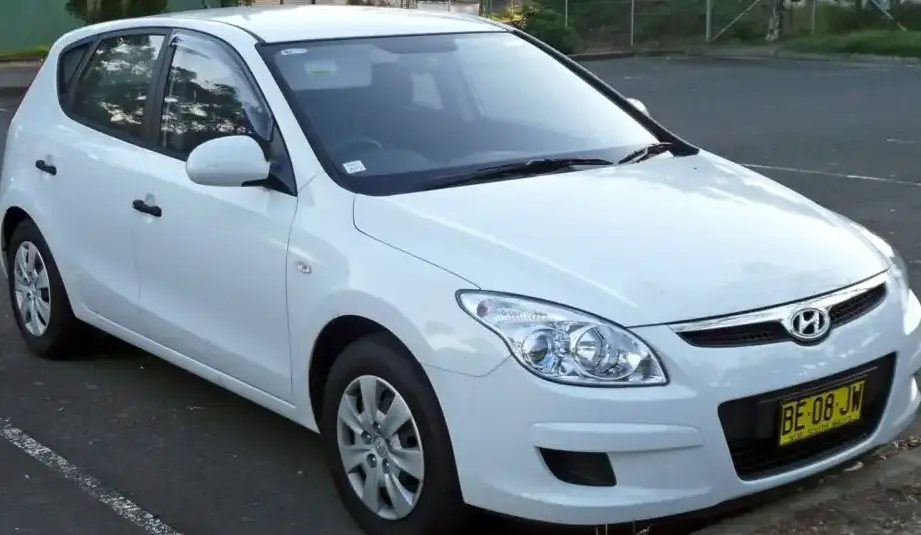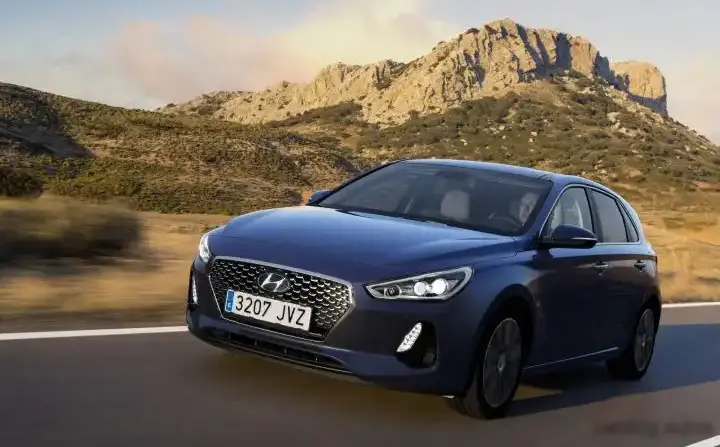
The Hyundai i30 III 1.0 T-GDi (120 hp) represents an entry point into the third generation of Hyundai’s globally successful compact hatchback. Introduced in 2016 and continuing through 2018, this variant was positioned as a fuel-efficient and affordable option within the i30 III lineup, which also included larger engine displacements and performance-oriented trims. It was primarily aimed at the European market, where the compact hatchback segment is highly competitive, offering a blend of practicality, modern styling, and a downsized turbocharged engine. This model is built on the PD platform, shared with the Kia Cerato and Hyundai Elantra.
Technical Specifications
| Brand | Hyundai |
| Model | i30 |
| Generation | i30 III |
| Type (Engine) | 1.0 T-GDi (120 Hp) |
| Start of production | 2016 |
| End of production | 2018 |
| Powertrain Architecture | Internal Combustion engine |
| Body type | Hatchback |
| Seats | 5 |
| Doors | 5 |
| CO2 emissions | 112-117 g/km |
| Fuel Type | Petrol (Gasoline) |
| Acceleration 0 – 100 km/h | 11.1 sec |
| Acceleration 0 – 62 mph | 11.1 sec |
| Acceleration 0 – 60 mph | 10.5 sec |
| Maximum speed | 190 km/h (118.06 mph) |
| Weight-to-power ratio | 10 kg/Hp, 100.5 Hp/tonne |
| Weight-to-torque ratio | 7 kg/Nm, 143.2 Nm/tonne |
| Power | 120 Hp @ 6000 rpm |
| Power per litre | 120.2 Hp/l |
| Torque | 171 Nm @ 1500-4000 rpm (126.12 lb.-ft. @ 1500-4000 rpm) |
| Engine layout | Front, Transverse |
| Engine Model/Code | Kappa II / G3LC |
| Engine displacement | 998 cm3 (60.9 cu. in.) |
| Number of cylinders | 3 |
| Engine configuration | Inline |
| Cylinder Bore | 71 mm (2.8 in.) |
| Piston Stroke | 84 mm (3.31 in.) |
| Compression ratio | 10:1 |
| Number of valves per cylinder | 4 |
| Fuel injection system | Direct injection |
| Engine aspiration | Turbocharger, Intercooler |
| Valvetrain | DOHC |
| Engine oil capacity | 3.6 l (3.8 US qt | 3.17 UK qt) |
| Coolant | 6 l (6.34 US qt | 5.28 UK qt) |
| Kerb Weight | 1194-1342 kg (2632.32 – 2958.6 lbs.) |
| Max. weight | 1800 kg (3968.32 lbs.) |
| Max load | 458-606 kg (1009.72 – 1336 lbs.) |
| Trunk (boot) space – minimum | 395 l (13.95 cu. ft.) |
| Trunk (boot) space – maximum | 1301 l (45.94 cu. ft.) |
| Fuel tank capacity | 50 l (13.21 US gal | 11 UK gal) |
| Length | 4340 mm (170.87 in.) |
| Width | 1795 mm (70.67 in.) |
| Height | 1455 mm (57.28 in.) |
| Wheelbase | 2650 mm (104.33 in.) |
| Front overhang | 905 mm (35.63 in.) |
| Rear overhang | 785 mm (30.91 in.) |
| Ride height (ground clearance) | 140 mm (5.51 in.) |
| Minimum turning circle | 10.6 m (34.78 ft.) |
| Drivetrain Architecture | The Internal combustion engine (ICE) drives the front wheels of the vehicle. |
| Drive wheel | Front wheel drive |
| Number of gears and type of gearbox | 6 gears, manual transmission |
| Front suspension | Independent type McPherson |
| Rear suspension | Independent multi-link suspension |
| Front brakes | Ventilated discs |
| Rear brakes | Disc |
| Assisting systems | ABS (Anti-lock braking system) |
| Steering type | Steering rack and pinion |
| Power steering | Electric Steering |
| Tires size | 195/65 R15; 205/55 R16; 225/45 R17 |
| Wheel rims size | 6.0J x 15; 6.5J x 16; 7.0J x 17 |
INTRODUCTION
The Hyundai i30 III 1.0 T-GDi (120 hp) was introduced as part of the third generation i30 (PD) lineup, launched in 2016. This generation marked a significant step forward for Hyundai in terms of design, build quality, and technology. The 1.0 T-GDi variant specifically targeted buyers seeking a fuel-efficient and affordable hatchback for daily commuting and urban driving. It occupied the entry-level position in the powertrain options, sitting below the 1.4 T-GDi and larger 1.6-liter gasoline engines. The i30 III was a crucial model for Hyundai in Europe, competing directly with established rivals like the Volkswagen Golf, Ford Focus, and Opel Astra.
Powertrain & Engine Architecture
At the heart of the i30 III 1.0 T-GDi is Hyundai’s Kappa II engine, specifically the G3LC code. This is a 998cc, three-cylinder turbocharged gasoline engine. The engine utilizes direct injection, a technology that improves fuel efficiency and power output by injecting fuel directly into the combustion chamber. The turbocharger, coupled with an intercooler, helps to boost power and torque, mitigating the typical power deficit associated with smaller displacement engines. The engine features a dual overhead camshaft (DOHC) valvetrain with four valves per cylinder, optimizing airflow for improved performance. The 1.0 T-GDi engine was paired with a six-speed manual transmission in most configurations, although a seven-speed dual-clutch transmission (DCT) was also available as an option in some markets. The DCT offered quicker shifts and improved fuel economy, but at a higher cost.
Driving Characteristics
The 120 hp output of the 1.0 T-GDi engine, while not exceptionally powerful, provided adequate performance for everyday driving. Acceleration from 0 to 62 mph (0-100 km/h) took approximately 11.1 seconds. The engine’s 171 Nm (126 lb-ft) of torque, available from 1500-4000 rpm, provided decent responsiveness in urban environments and during overtaking maneuvers. Compared to the more powerful 1.4 T-GDi or 1.6 GDI variants, the 1.0 T-GDi felt less eager to rev and required more downshifting when tackling hills or performing quicker acceleration. The six-speed manual transmission was well-matched to the engine’s characteristics, offering precise shifts and a reasonable gear spread. The overall driving experience was comfortable and refined, with a focus on fuel efficiency rather than outright performance.
Equipment & Trim Levels
The i30 III 1.0 T-GDi typically came equipped with a respectable level of standard features. Base trims included air conditioning, power windows, central locking, and a basic audio system with USB connectivity. Higher trim levels, such as SE Nav or Premium, added features like a touchscreen infotainment system with navigation, Apple CarPlay and Android Auto compatibility, rear parking sensors, cruise control, and alloy wheels. Interior upholstery was typically cloth, with options for leather seats on higher trims. Safety features included ABS, ESC (Electronic Stability Control), and multiple airbags. Optional extras included a panoramic sunroof, automatic climate control, and advanced driver-assistance systems (ADAS) like lane departure warning and autonomous emergency braking.
Chassis & Braking
The i30 III utilized a McPherson strut front suspension and a multi-link rear suspension, providing a good balance between ride comfort and handling. The suspension was tuned to prioritize comfort over sporty handling, resulting in a smooth and controlled ride. Braking duties were handled by ventilated discs at the front and solid discs at the rear. ABS (Anti-lock Braking System) was standard, ensuring safe and effective braking performance in various conditions. Steering was provided by an electric power steering system, offering light and precise steering feel. The i30 III’s chassis was designed to be relatively lightweight, contributing to its fuel efficiency and agility.
Market Reception & Comparison
The Hyundai i30 III 1.0 T-GDi was generally well-received by automotive critics. It was praised for its fuel efficiency, comfortable ride, and competitive pricing. However, some reviewers noted that the engine could feel strained when fully loaded or driving uphill. Compared to the 1.4 T-GDi, the 1.0 T-GDi offered lower running costs but sacrificed some performance. The 1.6 GDI provided more power but at the expense of fuel economy. In terms of reliability, the Kappa II engine proved to be generally dependable, although some owners reported minor issues with the turbocharger and fuel injectors. Fuel economy figures typically ranged from 47 to 53 mpg (combined cycle), making it an attractive option for budget-conscious buyers.
Legacy
The Hyundai i30 III 1.0 T-GDi remains a popular choice in the used car market, particularly for those seeking an affordable and fuel-efficient compact hatchback. The Kappa II engine has proven to be relatively durable, and maintenance costs are generally reasonable. While not the most exciting car to drive, the i30 III 1.0 T-GDi offers a practical and reliable transportation solution. Its success helped to solidify Hyundai’s reputation as a manufacturer of well-built and value-for-money vehicles in the European market, paving the way for future models like the i30 N performance variant.