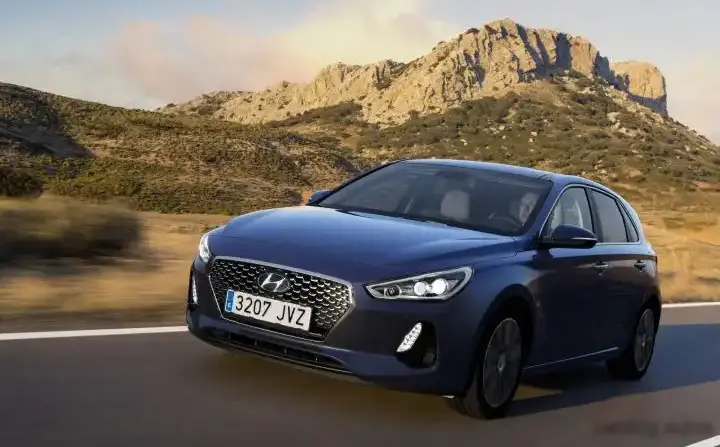
The Hyundai i30 III 1.0 T-GDi (120 hp) Eco, produced from 2016 to 2018, represented an entry point into the third generation of Hyundai’s globally successful compact hatchback. Positioned within the i30 III range (platform PD), this variant aimed to deliver fuel efficiency and affordability without completely sacrificing practicality. It was primarily marketed in Europe, where smaller displacement, turbocharged engines were gaining popularity due to favorable tax regulations and growing environmental awareness. The “Eco” designation signified Hyundai’s focus on minimizing emissions and maximizing fuel economy within this trim level. This model served as a key competitor to vehicles like the Volkswagen Golf, Ford Focus, and Opel Astra, offering a compelling value proposition with a modern design and a comprehensive warranty.
Technical Specifications
| Brand | Hyundai |
| Model | i30 |
| Generation | i30 III |
| Type (Engine) | 1.0 T-GDi (120 Hp) Eco |
| Start of production | 2016 |
| End of production | 2018 |
| Powertrain Architecture | Internal Combustion engine |
| Body type | Hatchback |
| Seats | 5 |
| Doors | 5 |
| CO2 emissions | 103-108 g/km |
| Fuel Type | Petrol (Gasoline) |
| Acceleration 0 – 100 km/h | 11.3 sec |
| Acceleration 0 – 62 mph | 11.3 sec |
| Acceleration 0 – 60 mph | 10.7 sec |
| Maximum speed | 187 km/h (116.2 mph) |
| Weight-to-power ratio | 10 kg/Hp, 100.5 Hp/tonne |
| Weight-to-torque ratio | 7 kg/Nm, 143.2 Nm/tonne |
| Power | 120 Hp @ 6000 rpm |
| Power per litre | 120.2 Hp/l |
| Torque | 171 Nm @ 1500-4000 rpm (126.12 lb.-ft. @ 1500-4000 rpm) |
| Engine layout | Front, Transverse |
| Engine Model/Code | Kappa II / G3LC |
| Engine displacement | 998 cm3 (60.9 cu. in.) |
| Number of cylinders | 3 |
| Engine configuration | Inline |
| Cylinder Bore | 71 mm (2.8 in.) |
| Piston Stroke | 84 mm (3.31 in.) |
| Compression ratio | 10:1 |
| Number of valves per cylinder | 4 |
| Fuel injection system | Direct injection |
| Engine aspiration | Turbocharger, Intercooler |
| Valvetrain | DOHC |
| Engine oil capacity | 3.6 l (3.8 US qt | 3.17 UK qt) |
| Coolant | 6 l (6.34 US qt | 5.28 UK qt) |
| Kerb Weight | 1194-1342 kg (2632.32 – 2958.6 lbs.) |
| Max. weight | 1800 kg (3968.32 lbs.) |
| Max load | 458-606 kg (1009.72 – 1336 lbs.) |
| Trunk (boot) space – minimum | 395 l (13.95 cu. ft.) |
| Trunk (boot) space – maximum | 1301 l (45.94 cu. ft.) |
| Fuel tank capacity | 50 l (13.21 US gal | 11 UK gal) |
| Length | 4340 mm (170.87 in.) |
| Width | 1795 mm (70.67 in.) |
| Height | 1450 mm (57.09 in.) |
| Wheelbase | 2650 mm (104.33 in.) |
| Front overhang | 905 mm (35.63 in.) |
| Rear overhang | 785 mm (30.91 in.) |
| Ride height (ground clearance) | 135 mm (5.31 in.) |
| Minimum turning circle | 10.6 m (34.78 ft.) |
| Drivetrain Architecture | The Internal combustion engine (ICE) drives the front wheels of the vehicle. |
| Drive wheel | Front wheel drive |
| Number of gears and type of gearbox | 6 gears, manual transmission |
| Front suspension | Independent type McPherson |
| Rear suspension | Independent multi-link suspension |
| Front brakes | Ventilated discs |
| Rear brakes | Disc |
| Assisting systems | ABS (Anti-lock braking system) |
| Steering type | Steering rack and pinion |
| Power steering | Electric Steering |
| Tires size | 195/65 R15; 205/55 R16; 225/45 R17 |
| Wheel rims size | 6.0J x 15; 6.5J x 16; 7.0J x 17 |
Powertrain & Engine Architecture
The heart of the i30 1.0 T-GDi Eco is the Hyundai-Kia Kappa II engine, specifically the G3LC code. This is a 998cc, three-cylinder turbocharged gasoline engine. The Kappa II family was designed to be lightweight and efficient, utilizing aluminum construction for the cylinder block and head. Direct injection is a key feature, allowing for precise fuel delivery and improved combustion efficiency. The engine employs a single scroll turbocharger with an intercooler to boost power output. The valvetrain utilizes a Dual Overhead Camshaft (DOHC) configuration with four valves per cylinder, optimizing airflow for enhanced performance. The engine is transversely mounted at the front of the vehicle. The six-speed manual transmission was standard, chosen to maximize fuel economy and provide a more engaging driving experience. The transmission’s gear ratios were tuned to complement the engine’s torque curve, prioritizing acceleration in lower gears and efficient cruising at highway speeds.
Driving Characteristics
The 120 hp output of the 1.0 T-GDi, coupled with the manual transmission, resulted in a driving experience focused on fuel efficiency rather than outright performance. Acceleration from 0-60 mph took approximately 10.7 seconds, which was noticeably slower than the higher-powered 1.4 T-GDi or diesel variants. However, the engine delivered a respectable 171 Nm (126 lb-ft) of torque between 1500-4000 rpm, providing adequate pulling power for everyday driving situations. The turbocharger provided a noticeable boost in power during acceleration, but turbo lag was present, particularly at lower engine speeds. The six-speed manual transmission offered precise shifts and allowed drivers to maintain optimal engine speed for efficiency or performance. Compared to the automatic transmissions offered on other i30 variants, the manual provided a more connected and engaging driving experience.
Equipment & Trim Levels
The “Eco” trim level of the i30 III 1.0 T-GDi was designed to be an affordable and efficient option. Standard equipment typically included air conditioning, a basic audio system with USB connectivity, power windows, and central locking. Safety features such as ABS, Electronic Stability Control (ESC), and multiple airbags were also standard. Interior upholstery was typically cloth, with a functional but not luxurious design. Optional extras included alloy wheels, a touchscreen infotainment system with navigation, rear parking sensors, and cruise control. The Eco trim generally represented the base level of equipment, with higher trim levels (such as SE Nav or Premium) offering more features and a more refined interior.
Chassis & Braking
The i30 III utilized a McPherson strut front suspension and a multi-link rear suspension, providing a good balance between ride comfort and handling. The suspension was tuned to prioritize comfort over sporty handling, resulting in a relatively soft ride quality. Front brakes were ventilated discs, while rear brakes were solid discs. The braking system was adequate for everyday driving, but lacked the stopping power of the larger brake systems found on higher-performance i30 variants. Electric power steering provided light and easy steering, making it well-suited for urban driving. Stabilizer bars were fitted to both the front and rear axles to reduce body roll during cornering.
Market Reception & Comparison
The Hyundai i30 III 1.0 T-GDi Eco was generally well-received by automotive critics as a practical and fuel-efficient option. Its low CO2 emissions and competitive fuel economy were key selling points. However, some critics noted that the engine lacked the refinement and power of its larger counterparts. Compared to the 1.4 T-GDi, the 1.0 T-GDi offered lower running costs but sacrificed performance. The diesel variants (such as the 1.6 CRDi) provided even better fuel economy but were more expensive to purchase and maintain. The i30 1.0 T-GDi Eco offered a compelling alternative to rivals like the Volkswagen Golf 1.0 TSI and Ford Focus 1.0 EcoBoost, often undercutting them on price while offering a similar level of equipment.
Legacy
The Kappa II 1.0 T-GDi engine proved to be a reliable and durable powertrain when properly maintained. While not known for exceptional performance, it offered a good balance of efficiency and affordability. In the used car market, the i30 III 1.0 T-GDi Eco remains a popular choice for buyers seeking a practical and economical hatchback. Common issues are relatively minor, often related to routine maintenance items such as spark plugs, air filters, and oil changes. The engine’s direct injection system requires regular fuel system cleaning to prevent carbon buildup. Overall, the i30 III 1.0 T-GDi Eco represents a solid and dependable choice in the used car market, offering a good value proposition for budget-conscious buyers.