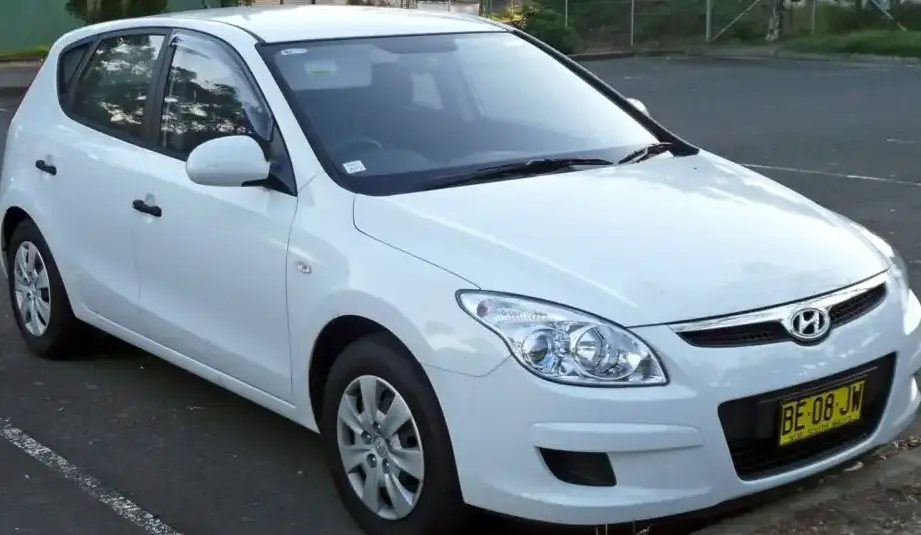
The Hyundai i30 III 1.4 MPi (100 hp) represents an entry-level offering within the third generation of Hyundai’s globally successful i30 compact hatchback. Produced from 2016 to 2018, this variant was primarily aimed at the European market, where fuel efficiency and affordability were key purchasing considerations. It occupied the lower end of the i30 III lineup, serving as a more accessible alternative to the more powerful turbocharged engines and higher trim levels. The i30 III itself was built on the PD platform, representing a significant step forward in refinement, technology, and overall driving experience compared to its predecessors.
Technical Specifications
| Brand | Hyundai |
| Model | i30 |
| Generation | i30 III |
| Type (Engine) | 1.4 MPi (100 Hp) |
| Start of production | 2016 |
| End of production | 2018 |
| Powertrain Architecture | Internal Combustion engine |
| Body type | Hatchback |
| Seats | 5 |
| Doors | 5 |
| CO2 emissions | 126-130 g/km |
| Fuel Type | Petrol (Gasoline) |
| Acceleration 0 – 100 km/h | 12.7 sec |
| Acceleration 0 – 62 mph | 12.7 sec |
| Acceleration 0 – 60 mph | 12.1 sec |
| Maximum speed | 183 km/h (113.71 mph) |
| Weight-to-power ratio | 11.7 kg/Hp, 85.5 Hp/tonne |
| Weight-to-torque ratio | 8.7 kg/Nm, 114.6 Nm/tonne |
| Power | 100 Hp @ 6000 rpm |
| Power per litre | 73.1 Hp/l |
| Torque | 134 Nm @ 4000 rpm (98.83 lb.-ft. @ 4000 rpm) |
| Engine layout | Front, Transverse |
| Engine Model/Code | Kappa / G4LC |
| Engine displacement | 1368 cm3 (83.48 cu. in.) |
| Number of cylinders | 4 |
| Engine configuration | Inline |
| Cylinder Bore | 72 mm (2.83 in.) |
| Piston Stroke | 84 mm (3.31 in.) |
| Compression ratio | 10.5:1 |
| Number of valves per cylinder | 4 |
| Fuel injection system | Multi-port manifold injection |
| Engine aspiration | Naturally aspirated engine |
| Valvetrain | DOHC |
| Engine oil capacity | 3.6 l (3.8 US qt | 3.17 UK qt) |
| Coolant | 5.8 l (6.13 US qt | 5.1 UK qt) |
| Kerb Weight | 1169-1316 kg (2577.2 – 2901.28 lbs.) |
| Max. weight | 1760 kg (3880.14 lbs.) |
| Max load | 444-591 kg (978.85 – 1302.93 lbs.) |
| Trunk (boot) space – minimum | 395 l (13.95 cu. ft.) |
| Trunk (boot) space – maximum | 1301 l (45.94 cu. ft.) |
| Fuel tank capacity | 50 l (13.21 US gal | 11 UK gal) |
| Length | 4340 mm (170.87 in.) |
| Width | 1795 mm (70.67 in.) |
| Height | 1455 mm (57.28 in.) |
| Wheelbase | 2650 mm (104.33 in.) |
| Front overhang | 905 mm (35.63 in.) |
| Rear overhang | 785 mm (30.91 in.) |
| Ride height (ground clearance) | 140 mm (5.51 in.) |
| Minimum turning circle | 10.6 m (34.78 ft.) |
| Drivetrain Architecture | The Internal combustion engine (ICE) drives the front wheels of the vehicle. |
| Drive wheel | Front wheel drive |
| Number of gears and type of gearbox | 6 gears, manual transmission |
| Front suspension | Independent type McPherson |
| Rear suspension | Independent multi-link suspension |
| Front brakes | Ventilated discs |
| Rear brakes | Disc |
| Assisting systems | ABS (Anti-lock braking system) |
| Steering type | Steering rack and pinion |
| Power steering | Electric Steering |
| Tires size | 195/65 R15; 205/55 R16; 225/45 R17 |
| Wheel rims size | 6.0J x 15; 6.5J x 16; 7.0J x 17 |
Powertrain & Engine Architecture
At the heart of the i30 III 1.4 MPi is Hyundai’s Kappa G4LC engine, a 1.4-liter naturally aspirated inline-four cylinder. This engine utilizes multi-point fuel injection, a relatively simple and reliable system that delivers fuel directly into the intake ports. The engine features a double overhead camshaft (DOHC) valvetrain, operating 16 valves (four per cylinder) to optimize airflow and combustion efficiency. The G4LC engine is known for its relatively smooth operation and acceptable refinement for its class. The 100 horsepower output is achieved at 6000 rpm, while peak torque of 134 Nm (98.83 lb-ft) arrives at 4000 rpm. This engine was paired exclusively with a six-speed manual transmission in most markets, offering a direct and engaging driving experience. The transmission’s gear ratios were tuned for fuel economy and everyday usability rather than outright performance.
Driving Characteristics
The i30 III 1.4 MPi, with its 100 hp and manual transmission, delivers a driving experience focused on practicality and efficiency. Acceleration from 0 to 60 mph takes approximately 12.1 seconds, and top speed is around 113.71 mph. While not particularly quick, the engine provides adequate power for typical urban and highway driving. The six-speed manual transmission allows drivers to maintain optimal engine speed for fuel economy or to extract the most performance when needed. Compared to the more powerful 1.6-liter turbocharged engines available in the i30 III range, the 1.4 MPi feels noticeably less responsive. However, it offers a lighter steering feel and a more forgiving power delivery, making it a suitable choice for new drivers or those prioritizing ease of use. The gear ratios are spaced to provide reasonable acceleration in each gear, but require frequent shifting to maintain momentum on inclines or during overtaking maneuvers.
Equipment & Trim Levels
The 1.4 MPi variant of the i30 III typically came equipped with a base level of features, designed to offer good value for money. Standard equipment generally included air conditioning, power windows, central locking, a basic audio system with USB connectivity, and stability control. Interior upholstery was typically cloth, with a functional and durable design. Higher trim levels, such as SE Nav or Premium, added features like alloy wheels, a touchscreen infotainment system with navigation, rear parking sensors, and cruise control. Optional extras available for the 1.4 MPi included a panoramic sunroof, leather upholstery, and upgraded audio systems.
Chassis & Braking
The i30 III utilizes a McPherson strut front suspension and a multi-link rear suspension, providing a good balance between ride comfort and handling. The suspension setup was tuned to prioritize comfort over sporty handling, resulting in a smooth and controlled ride quality. Braking duties are handled by ventilated discs at the front and solid discs at the rear, providing adequate stopping power for the vehicle’s weight and performance. Anti-lock Braking System (ABS) is standard, enhancing safety during emergency braking situations. The steering is electrically assisted, offering a light and precise feel.
Market Reception & Comparison
The Hyundai i30 III 1.4 MPi was generally well-received by automotive critics as a sensible and affordable option within the compact hatchback segment. It was praised for its fuel efficiency, comfortable ride, and well-equipped interior for its price point. However, it was often criticized for its lack of outright performance compared to rivals with turbocharged engines. Compared to other engines in the i30 III lineup, such as the 1.6 GDI turbo, the 1.4 MPi offered significantly lower running costs but at the expense of performance. The 1.6 diesel variants provided better fuel economy but were more expensive to purchase and maintain. The 1.4 MPi appealed to buyers who prioritized value, reliability, and low running costs over sporty driving dynamics.
Legacy
The Hyundai i30 III 1.4 MPi has proven to be a reliable and durable powertrain in the used car market. The naturally aspirated engine is known for its longevity and relatively low maintenance requirements. While not as technologically advanced as some of its rivals, the simplicity of the engine and transmission contributes to its robustness. Today, these i30s represent a cost-effective and practical option for buyers seeking a dependable compact hatchback. Common issues are relatively minor, often related to wear and tear on suspension components or routine maintenance items. The i30 III 1.4 MPi remains a popular choice for those seeking an affordable and reliable mode of transportation.