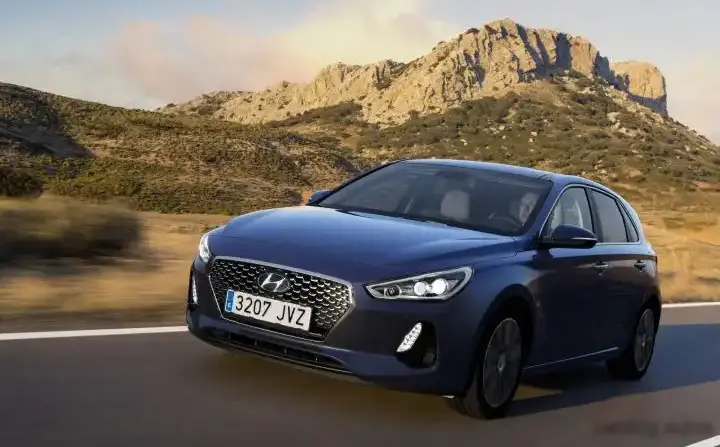
The Hyundai i30 III 1.4 T-GDi (140 hp) represents a significant offering within the third generation of Hyundai’s globally successful compact hatchback. Produced from 2016 to 2018, this variant occupied a key position in the i30 lineup, bridging the gap between the entry-level engine options and the more performance-oriented trims. It was designed to appeal to buyers seeking a balance of fuel efficiency, respectable performance, and modern features. The i30 III, built on the PD platform, aimed to elevate Hyundai’s presence in the highly competitive European C-segment, and the 1.4 T-GDi played a crucial role in achieving that goal.
Technical Specifications
| Brand | Hyundai |
| Model | i30 |
| Generation | i30 III |
| Type (Engine) | 1.4 T-GDi (140 Hp) |
| Start of production | 2016 |
| End of production | 2018 |
| Powertrain Architecture | Internal Combustion engine |
| Body type | Hatchback |
| Seats | 5 |
| Doors | 5 |
| CO2 emissions | 119-123 g/km |
| Fuel Type | Petrol (Gasoline) |
| Acceleration 0 – 100 km/h | 8.9 sec |
| Acceleration 0 – 62 mph | 8.9 sec |
| Acceleration 0 – 60 mph | 8.5 sec |
| Maximum speed | 210 km/h (130.49 mph) |
| Weight-to-power ratio | 8.6 kg/Hp, 116.3 Hp/tonne |
| Weight-to-torque ratio | 5 kg/Nm, 201 Nm/tonne |
| Power | 140 Hp @ 6000 rpm |
| Power per litre | 103.5 Hp/l |
| Torque | 242 Nm @ 1500 rpm (178.49 lb.-ft. @ 1500 rpm) |
| Engine layout | Front, Transverse |
| Engine Model/Code | Kappa II / G4LD |
| Engine displacement | 1353 cm3 (82.57 cu. in.) |
| Number of cylinders | 4 |
| Engine configuration | Inline |
| Cylinder Bore | 71.6 mm (2.82 in.) |
| Piston Stroke | 84 mm (3.31 in.) |
| Compression ratio | 10:1 |
| Number of valves per cylinder | 4 |
| Fuel injection system | Direct injection |
| Engine aspiration | Turbocharger, Intercooler |
| Valvetrain | DOHC |
| Engine oil capacity | 4.2 l (4.44 US qt | 3.7 UK qt) |
| Coolant | 6.1 l (6.45 US qt | 5.37 UK qt) |
| Kerb Weight | 1204-1352 kg (2654.37 – 2980.65 lbs.) |
| Max. weight | 1820 kg (4012.41 lbs.) |
| Max load | 468-616 kg (1031.76 – 1358.05 lbs.) |
| Trunk (boot) space – minimum | 395 l (13.95 cu. ft.) |
| Trunk (boot) space – maximum | 1301 l (45.94 cu. ft.) |
| Fuel tank capacity | 50 l (13.21 US gal | 11 UK gal) |
| Length | 4340 mm (170.87 in.) |
| Width | 1795 mm (70.67 in.) |
| Height | 1455 mm (57.28 in.) |
| Wheelbase | 2650 mm (104.33 in.) |
| Front overhang | 905 mm (35.63 in.) |
| Rear overhang | 785 mm (30.91 in.) |
| Ride height (ground clearance) | 140 mm (5.51 in.) |
| Minimum turning circle | 10.6 m (34.78 ft.) |
| Drivetrain Architecture | The Internal combustion engine (ICE) drives the front wheels of the vehicle. |
| Drive wheel | Front wheel drive |
| Number of gears and type of gearbox | 6 gears, manual transmission |
| Front suspension | Independent type McPherson |
| Rear suspension | Independent multi-link suspension |
| Front brakes | Ventilated discs |
| Rear brakes | Disc |
| Assisting systems | ABS (Anti-lock braking system) |
| Steering type | Steering rack and pinion |
| Power steering | Electric Steering |
| Tires size | 195/65 R15; 205/55 R16; 225/45 R17 |
| Wheel rims size | 6.0J x 15; 6.5J x 16; 7.0J x 17 |
INTRODUCTION
The Hyundai i30 III 1.4 T-GDi (140 hp) was introduced as part of the third-generation i30 (PD) lineup, launched in 2016. This generation marked a significant step forward for Hyundai in terms of design, build quality, and technology. The 1.4 T-GDi variant was positioned as a mid-range option, offering a compelling blend of performance and efficiency. It aimed to attract buyers who desired a more engaging driving experience than the base 1.0 T-GDi engine, without the higher running costs associated with the more powerful 1.6 T-GDi. The i30 III was primarily targeted at the European market, where the compact hatchback segment is fiercely competitive.
Powertrain & Engine Architecture
At the heart of the i30 III 1.4 T-GDi lies the Kappa II engine family, specifically the G4LD code. This 1.4-liter, inline-four cylinder engine utilizes direct fuel injection (GDI) and a single scroll turbocharger with an intercooler. The direct injection system allows for precise fuel delivery, optimizing combustion efficiency and power output. The turbocharger provides a boost in power and torque, enhancing responsiveness and acceleration. The engine features a dual continuous variable valve timing (D-CVVT) system, further optimizing performance and fuel economy. The 1.4 T-GDi engine produces 140 horsepower at 6,000 rpm and 242 Nm (178 lb-ft) of torque at 1,500 rpm. This engine was typically paired with a six-speed manual transmission, although a seven-speed dual-clutch transmission (DCT) was also available as an option in some markets. The DCT offered quicker shifts and a more refined driving experience, but the manual transmission remained popular due to its lower cost and driver engagement.
Driving Characteristics
The i30 III 1.4 T-GDi delivers a balanced driving experience. Acceleration from 0 to 62 mph (0-100 km/h) takes approximately 8.9 seconds, which is respectable for a compact hatchback in this class. The turbocharger provides a noticeable boost in power during acceleration, making overtaking maneuvers relatively effortless. The six-speed manual transmission offers precise shifts and allows drivers to maintain control over the engine’s power delivery. Compared to the base 1.0 T-GDi, the 1.4 T-GDi feels significantly more responsive and capable, particularly when fully loaded or driving on inclines. However, it doesn’t offer the same level of outright performance as the 1.6 T-GDi. The suspension setup provides a comfortable ride, absorbing bumps and imperfections in the road surface effectively. The steering is light and precise, making it easy to maneuver in urban environments.
Equipment & Trim Levels
The i30 III 1.4 T-GDi was typically offered in several trim levels, including S, SE, and Premium. The base S trim included standard features such as air conditioning, electric front windows, a USB port, and a basic audio system. The SE trim added features such as alloy wheels, cruise control, a touchscreen infotainment system, and rear parking sensors. The Premium trim offered even more luxurious features, such as leather upholstery, heated front seats, a panoramic sunroof, and a more advanced safety suite. Optional extras included a navigation system, a rearview camera, and automatic climate control.
Chassis & Braking
The i30 III features a McPherson strut front suspension and a multi-link rear suspension. This setup provides a good balance of ride comfort and handling. The front brakes are ventilated discs, while the rear brakes are solid discs. ABS (Anti-lock Braking System) is standard on all models. The i30 III’s chassis is designed to provide a stable and predictable driving experience. The steering is electrically assisted, providing a light and responsive feel. The car’s weight, ranging from 1204 to 1352 kg (2654 to 2981 lbs) depending on the trim level and options, is relatively low, contributing to its agility.
Market Reception & Comparison
The Hyundai i30 III 1.4 T-GDi was generally well-received by automotive critics. It was praised for its stylish design, comfortable ride, and generous equipment levels. The 1.4 T-GDi engine was considered a good compromise between performance and fuel economy. Compared to rivals such as the Volkswagen Golf, Ford Focus, and Opel Astra, the i30 III offered a compelling value proposition. Its fuel economy, typically around 5.6-6.5 liters per 100 kilometers (42-36 mpg), was competitive with other engines in its class. Reliability reports suggest that the Kappa II engine is generally reliable, although some owners have reported issues with the turbocharger and fuel injectors.
Legacy
The Hyundai i30 III 1.4 T-GDi has proven to be a popular choice in the used car market. Its combination of practicality, affordability, and modern features makes it an attractive option for buyers seeking a reliable and well-equipped compact hatchback. The Kappa II engine, while not without its potential issues, has generally proven to be durable and long-lasting. The i30 III helped to establish Hyundai as a major player in the European C-segment, and the 1.4 T-GDi variant played a key role in that success. Today, well-maintained examples of the i30 III 1.4 T-GDi continue to offer a compelling driving experience and represent a good value for money.