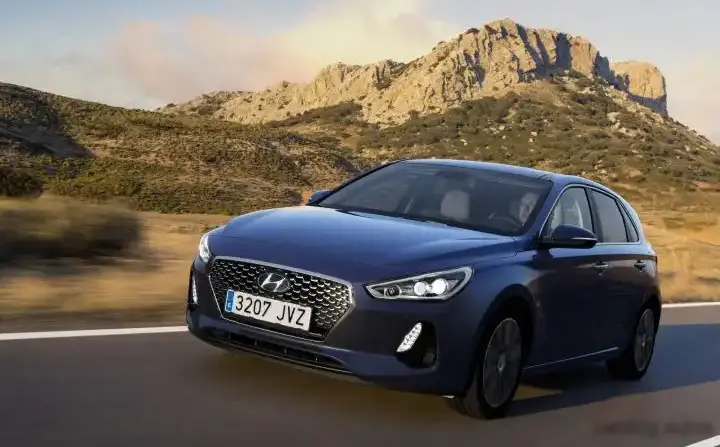
The Hyundai i30 III 1.6 CRDi (136 hp) represents a significant offering within the third generation of Hyundai’s globally successful compact hatchback. Produced from 2016 to 2018, this variant aimed to balance fuel efficiency with respectable performance, catering to a broad segment of the European and international markets. Positioned as a mid-range option within the i30 III lineup, it slotted between the lower-powered diesel variants and the more potent gasoline engines, offering a compelling package for drivers prioritizing economy and everyday usability. The i30 III itself was built on the PD platform, sharing components with the Kia Ceed, and represented a substantial step forward in terms of refinement, technology, and overall build quality for Hyundai.
Technical Specifications
| Brand | Hyundai |
| Model | i30 |
| Generation | i30 III |
| Type (Engine) | 1.6 CRDi (136 Hp) |
| Start of production | 2016 |
| End of production | 2018 |
| Powertrain Architecture | Internal Combustion engine |
| Body type | Hatchback |
| Seats | 5 |
| Doors | 5 |
| CO2 emissions | 99-102 g/km |
| Fuel Type | Diesel |
| Acceleration 0 – 100 km/h | 10.2 sec |
| Acceleration 0 – 62 mph | 10.2 sec |
| Acceleration 0 – 60 mph | 9.7 sec |
| Maximum speed | 200 km/h (124.27 mph) |
| Weight-to-power ratio | 9.3 kg/Hp, 107.7 Hp/tonne |
| Weight-to-torque ratio | 4.5 kg/Nm, 221.7 Nm/tonne |
| Power | 136 Hp @ 4000 rpm |
| Power per litre | 86 Hp/l |
| Torque | 280 Nm @ 1500-3000 rpm (206.52 lb.-ft. @ 1500-3000 rpm) |
| Engine layout | Front, Transverse |
| Engine Model/Code | D4FB |
| Engine displacement | 1582 cm3 (96.54 cu. in.) |
| Number of cylinders | 4 |
| Engine configuration | Inline |
| Cylinder Bore | 77.2 mm (3.04 in.) |
| Piston Stroke | 84.5 mm (3.33 in.) |
| Compression ratio | 16:1 |
| Number of valves per cylinder | 4 |
| Fuel injection system | Diesel Commonrail |
| Engine aspiration | Turbocharger, Intercooler |
| Valvetrain | DOHC |
| Engine oil capacity | 5.3 l (5.6 US qt | 4.66 UK qt) |
| Coolant | 6.7 l (7.08 US qt | 5.9 UK qt) |
| Kerb Weight | 1263-1411 kg (2784.44 – 3110.72 lbs.) |
| Max. weight | 1860 kg (4100.6 lbs.) |
| Max load | 449-597 kg (989.88 – 1316.16 lbs.) |
| Trunk (boot) space – minimum | 395 l (13.95 cu. ft.) |
| Trunk (boot) space – maximum | 1301 l (45.94 cu. ft.) |
| Fuel tank capacity | 50 l (13.21 US gal | 11 UK gal) |
| Length | 4340 mm (170.87 in.) |
| Width | 1795 mm (70.67 in.) |
| Height | 1455 mm (57.28 in.) |
| Wheelbase | 2650 mm (104.33 in.) |
| Front overhang | 905 mm (35.63 in.) |
| Rear overhang | 785 mm (30.91 in.) |
| Ride height (ground clearance) | 140 mm (5.51 in.) |
| Minimum turning circle | 10.6 m (34.78 ft.) |
| Drivetrain Architecture | The Internal combustion engine (ICE) drives the front wheels of the vehicle. |
| Drive wheel | Front wheel drive |
| Number of gears and type of gearbox | 6 gears, manual transmission |
| Front suspension | Independent type McPherson |
| Rear suspension | Independent multi-link suspension |
| Front brakes | Ventilated discs |
| Rear brakes | Disc |
| Assisting systems | ABS (Anti-lock braking system) |
| Steering type | Steering rack and pinion |
| Power steering | Electric Steering |
| Tires size | 195/65 R15; 205/55 R16; 225/45 R17 |
| Wheel rims size | 6.0J x 15; 6.5J x 16; 7.0J x 17 |
INTRODUCTION
The Hyundai i30 III 1.6 CRDi (136 hp) was introduced as part of the third-generation i30 (codenamed PD) in 2016. This generation marked a significant evolution for Hyundai, with a greater emphasis on European design cues and driving dynamics. The 1.6 CRDi engine, utilizing the D4FB engine code, was a mainstay of the i30 lineup, offering a balance between fuel economy and performance. This particular variant, producing 136 horsepower, was aimed at buyers seeking a practical and efficient hatchback for daily commuting and longer journeys. It competed directly with other European and Asian compact diesel offerings like the Volkswagen Golf, Ford Focus, and Peugeot 308.
Powertrain & Engine Architecture
The heart of the i30 III 1.6 CRDi is the D4FB engine, a 1.6-liter inline-four cylinder diesel engine. This engine utilizes a second-generation common rail direct injection system, delivering fuel at extremely high pressures for optimized combustion. A turbocharger with an intercooler is employed to boost power and torque, providing a noticeable increase in performance over naturally aspirated engines. The engine features a double overhead camshaft (DOHC) valvetrain with four valves per cylinder, contributing to efficient gas exchange. The 136 hp output is achieved through careful calibration of the engine management system. The engine is transversely mounted in the front of the vehicle. The six-speed manual transmission was the standard gearbox for this variant, offering precise shifts and contributing to the car’s overall efficiency. The transmission’s gear ratios were tuned to maximize fuel economy while still providing adequate acceleration.
Driving Characteristics
The i30 III 1.6 CRDi (136 hp) delivers a composed and refined driving experience. While not a performance-oriented model, the engine provides sufficient power for everyday driving situations. Acceleration from 0-60 mph takes around 9.7 seconds, and the car feels responsive in most scenarios. The turbocharger provides a noticeable boost in torque at lower engine speeds, making overtaking maneuvers relatively effortless. Compared to the higher-powered gasoline versions of the i30 III, the 1.6 CRDi prioritizes fuel efficiency over outright speed. The manual transmission offers a satisfyingly direct feel, and the gear ratios are well-matched to the engine’s powerband. The suspension setup provides a comfortable ride, absorbing bumps and imperfections in the road surface effectively. However, it’s not as sporty or engaging as some of its rivals.
Equipment & Trim Levels
The i30 III 1.6 CRDi (136 hp) typically came equipped with a respectable level of standard features. Base models included air conditioning, power windows, central locking, and a basic audio system. Higher trim levels, such as SE Nav and Premium, added features like a touchscreen infotainment system with navigation, Bluetooth connectivity, rear parking sensors, and alloy wheels. Interior upholstery was typically cloth, with higher trims offering partial leather options. Optional extras included a panoramic sunroof, automatic climate control, and advanced safety features like lane departure warning and autonomous emergency braking.
Chassis & Braking
The i30 III utilizes a McPherson strut front suspension and a multi-link rear suspension, providing a good balance between ride comfort and handling. The front brakes are ventilated discs, offering strong stopping power, while the rear brakes are solid discs. Anti-lock Braking System (ABS) is standard, enhancing safety during emergency braking situations. The chassis is relatively lightweight, contributing to the car’s agility and fuel efficiency. Stabilizer bars are fitted to both the front and rear axles to reduce body roll during cornering.
Market Reception & Comparison
The Hyundai i30 III 1.6 CRDi (136 hp) was generally well-received by automotive critics. It was praised for its fuel efficiency, comfortable ride, and well-equipped interior. However, some critics noted that the engine could be somewhat noisy under hard acceleration. Compared to the 1.0 T-GDI gasoline engine, the 1.6 CRDi offered superior torque and fuel economy, making it a better choice for drivers who frequently cover long distances. Compared to the more powerful diesel variants, the 136 hp version offered a more affordable entry point into the i30 range. Reliability reports have generally been positive, with the D4FB engine proving to be a durable and dependable unit.
Legacy
The Hyundai i30 III 1.6 CRDi (136 hp) remains a popular choice in the used car market. Its combination of fuel efficiency, practicality, and affordability makes it an attractive option for budget-conscious buyers. The D4FB engine has proven to be relatively reliable, although regular maintenance is essential to ensure long-term durability. Common issues include diesel particulate filter (DPF) clogging, particularly on vehicles that are primarily used for short journeys. Overall, the i30 III 1.6 CRDi represents a solid and dependable compact hatchback that continues to offer good value for money.