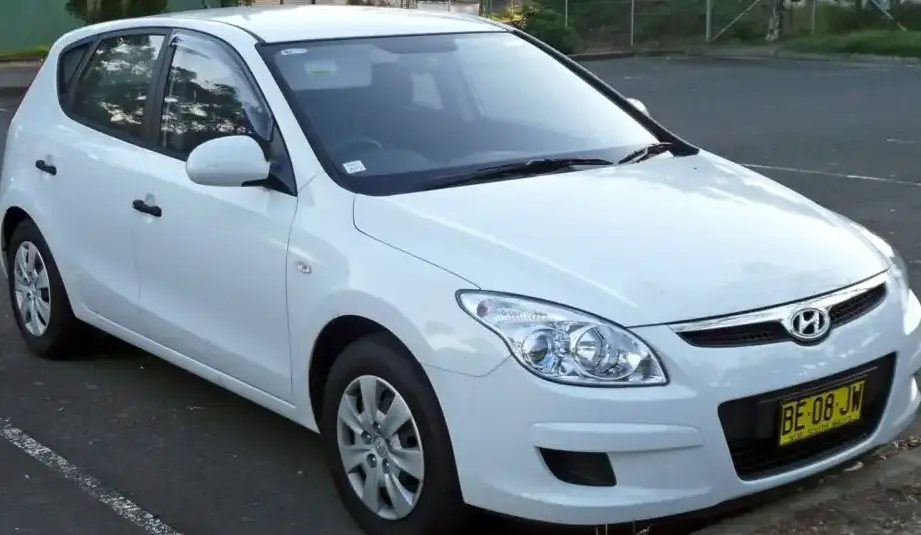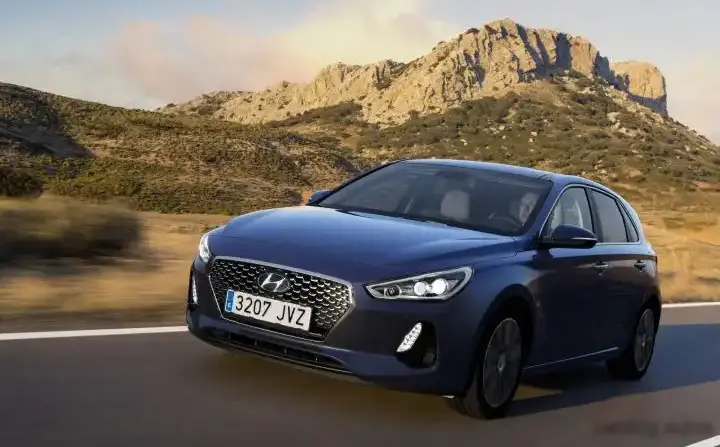
The Hyundai i30 III 1.6 CRDi (95 hp) represents an entry-level diesel variant within the third generation of Hyundai’s globally successful i30 compact hatchback. Produced between 2016 and 2018, this model aimed to provide fuel efficiency and reasonable running costs to buyers in the European market, where diesel engines held significant popularity. It occupied the lower end of the i30 III lineup, serving as a more affordable alternative to the higher-powered diesel and gasoline options. The i30 III itself was built on the PD platform, shared with the Kia Ceed, and represented a significant step forward in terms of refinement, technology, and overall build quality for Hyundai.
Technical Specifications
| Brand | Hyundai |
| Model | i30 |
| Generation | i30 III |
| Type (Engine) | 1.6 CRDi (95 Hp) |
| Start of production | 2016 |
| End of production | 2018 |
| Powertrain Architecture | Internal Combustion engine |
| Body type | Hatchback |
| Seats | 5 |
| Doors | 5 |
| CO2 emissions | 95-98 g/km |
| Fuel Type | Diesel |
| Acceleration 0 – 100 km/h | 12.2 sec |
| Acceleration 0 – 62 mph | 12.2 sec |
| Acceleration 0 – 60 mph | 11.6 sec |
| Maximum speed | 186 km/h (115.58 mph) |
| Weight-to-power ratio | 13.3 kg/Hp, 75.2 Hp/tonne |
| Weight-to-torque ratio | 4.5 kg/Nm, 221.7 Nm/tonne |
| Power | 95 Hp @ 4000 rpm |
| Power per litre | 60.1 Hp/l |
| Torque | 280 Nm @ 1500-2000 rpm (206.52 lb.-ft. @ 1500-2000 rpm) |
| Engine layout | Front, Transverse |
| Engine Model/Code | D4FB |
| Engine displacement | 1582 cm3 (96.54 cu. in.) |
| Number of cylinders | 4 |
| Engine configuration | Inline |
| Cylinder Bore | 77.2 mm (3.04 in.) |
| Piston Stroke | 84.5 mm (3.33 in.) |
| Compression ratio | 16:1 |
| Number of valves per cylinder | 4 |
| Fuel injection system | Diesel Commonrail |
| Engine aspiration | Turbocharger, Intercooler |
| Valvetrain | DOHC |
| Engine oil capacity | 5.3 l (5.6 US qt | 4.66 UK qt) |
| Coolant | 6.7 l (7.08 US qt | 5.9 UK qt) |
| Kerb Weight | 1263-1411 kg (2784.44 – 3110.72 lbs.) |
| Max. weight | 1860 kg (4100.6 lbs.) |
| Max load | 449-597 kg (989.88 – 1316.16 lbs.) |
| Trunk (boot) space – minimum | 395 l (13.95 cu. ft.) |
| Trunk (boot) space – maximum | 1301 l (45.94 cu. ft.) |
| Fuel tank capacity | 50 l (13.21 US gal | 11 UK gal) |
| Length | 4340 mm (170.87 in.) |
| Width | 1795 mm (70.67 in.) |
| Height | 1455 mm (57.28 in.) |
| Wheelbase | 2650 mm (104.33 in.) |
| Front overhang | 905 mm (35.63 in.) |
| Rear overhang | 785 mm (30.91 in.) |
| Ride height (ground clearance) | 140 mm (5.51 in.) |
| Minimum turning circle | 10.6 m (34.78 ft.) |
| Drivetrain Architecture | The Internal combustion engine (ICE) drives the front wheels of the vehicle. |
| Drive wheel | Front wheel drive |
| Number of gears and type of gearbox | 6 gears, manual transmission |
| Front suspension | Independent type McPherson |
| Rear suspension | Independent multi-link suspension |
| Front brakes | Ventilated discs |
| Rear brakes | Disc |
| Assisting systems | ABS (Anti-lock braking system) |
| Steering type | Steering rack and pinion |
| Power steering | Electric Steering |
| Tires size | 195/65 R15; 205/55 R16; 225/45 R17 |
| Wheel rims size | 6.0J x 15; 6.5J x 16; 7.0J x 17 |
INTRODUCTION
The Hyundai i30 III 1.6 CRDi 95 hp, launched in 2016, was a key component of Hyundai’s strategy to capture a larger share of the European C-segment hatchback market. This variant was specifically designed to appeal to buyers prioritizing fuel economy and low running costs. The “CRDi” designation signifies a Common Rail Diesel injection system, a technology that had become standard for diesel engines by this point. The i30 III, built on the PD platform, represented a significant improvement over its predecessor in terms of refinement, interior quality, and available technology. This particular engine and transmission combination was positioned as the entry-level diesel option, offering a balance between affordability and practicality.
Powertrain & Engine Architecture
At the heart of the i30 III 1.6 CRDi (95 hp) lies the D4FB engine, a 1.6-liter inline-four cylinder diesel. This engine utilizes a second-generation common rail direct injection system, delivering fuel at extremely high pressures for optimized combustion. The D4FB engine is a turbocharged engine, employing a variable geometry turbocharger (VGT) to improve low-end torque and overall responsiveness. An intercooler is also present, cooling the compressed intake air to further enhance performance and efficiency. The engine features a double overhead camshaft (DOHC) valvetrain with four valves per cylinder, contributing to efficient gas exchange. The 95 hp output is achieved at 4000 rpm, while peak torque of 280 Nm (206.52 lb-ft) is available between 1500-2000 rpm. This engine was typically paired with a six-speed manual transmission, although a six-speed automatic transmission was also available as an option, albeit less common. The automatic transmission was a conventional torque converter type, prioritizing smooth shifts over outright performance.
Driving Characteristics
The i30 III 1.6 CRDi (95 hp) offered a comfortable, if not particularly exhilarating, driving experience. Acceleration from 0-62 mph (0-100 km/h) took around 12.2 seconds, making it slower than higher-powered i30 variants. The focus was on fuel efficiency and usability in everyday driving conditions. The engine’s strong low-end torque made it well-suited for urban driving and overtaking maneuvers, but it lacked the punch of the more powerful 1.6 CRDi (128 hp) or the gasoline engines. The six-speed manual transmission provided precise shifts, while the optional automatic offered convenience but at the expense of some responsiveness. Gear ratios were tuned for economy, with a relatively long final drive. Compared to the 1.6 GDI gasoline engine, the CRDi offered significantly better fuel economy, but with a noticeable difference in refinement and engine noise.
Equipment & Trim Levels
The i30 III 1.6 CRDi (95 hp) typically came equipped with a reasonable level of standard equipment. Base models included air conditioning, electric front windows, a basic audio system with USB connectivity, and stability control. Higher trim levels, such as SE Nav or Premium, added features like alloy wheels, a touchscreen infotainment system with navigation, rear parking sensors, cruise control, and automatic headlights. Interior upholstery was typically cloth, with a dark color scheme. Optional extras included a panoramic sunroof, leather upholstery, and advanced safety features like lane departure warning and autonomous emergency braking.
Chassis & Braking
The i30 III featured a McPherson strut front suspension and a multi-link rear suspension, providing a good balance between ride comfort and handling. The suspension was tuned for everyday driving, prioritizing comfort over sporty handling. Braking duties were handled by ventilated discs at the front and solid discs at the rear. Anti-lock Braking System (ABS) was standard, ensuring safe and controlled braking in emergency situations. Steering was provided by an electric power steering system, offering light and precise control. Wheel sizes varied depending on the trim level, ranging from 15-inch steel wheels to 17-inch alloy wheels.
Market Reception & Comparison
The Hyundai i30 III 1.6 CRDi (95 hp) was generally well-received by automotive critics as a practical and economical choice. It was praised for its fuel efficiency, comfortable ride, and reasonable price point. However, some critics noted its lack of outright performance compared to rivals and higher-powered i30 variants. Compared to the 1.6 GDI gasoline engine, the CRDi offered superior fuel economy but was less refined and had a more noticeable diesel engine sound. Against competitors like the Volkswagen Golf, Ford Focus, and Opel Astra, the i30 offered a compelling value proposition, often undercutting them on price while offering a similar level of equipment.
Legacy
The D4FB engine, while generally reliable, is known to require regular maintenance, particularly regarding the diesel particulate filter (DPF). Proper servicing and the use of high-quality diesel fuel are crucial to prevent DPF issues. The i30 III 1.6 CRDi (95 hp) remains a popular choice in the used car market, particularly for buyers seeking an economical and reliable hatchback. Its relatively simple mechanicals and readily available parts contribute to its affordability and ease of maintenance. While not a performance icon, this variant played a significant role in establishing Hyundai as a major player in the European automotive market.